
Understanding Soft Condensed Matter Via Modeling and Computation (Series in Soft Condensed Matter 3)
Wenbing Hu,An-Chang Shi,Editors
2010
View book
Book guide and evaluation
Lee Smolin
0 reviews
Published
pages
views
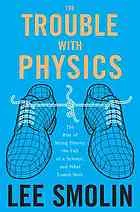
Welcome to an in-depth exploration of 'The Trouble with Physics: The Rise of String Theory, the Fall of a Science, and What Comes Next' by Lee Smolin. This book takes a critical look at the landscape of theoretical physics, particularly focusing on the dominance of string the
Before you read
Welcome to an in-depth exploration of 'The Trouble with Physics: The Rise of String Theory, the Fall of a Science, and What Comes Next' by Lee Smolin. This book takes a critical look at the landscape of theoretical physics, particularly focusing on the dominance of string theory and its implications for the progress of science.
In 'The Trouble with Physics,' Lee Smolin examines the past few decades of advancements and stagnations in theoretical physics. Smolin, a distinguished physicist, delves deeply into the rise of string theory and its eventual stranglehold over the physics community. While initially promising as a potential 'Theory of Everything,' capable of reconciling general relativity and quantum mechanics, string theory has not met its early expectations due to a lack of empirical evidence.
The book is divided into sections that first outline the appeal and promise of string theory. Smolin captures the initial excitement surrounding the field, explains the complex scientific concepts behind it, and describes how string theory came to dominate high-energy theoretical physics. He then addresses the shortcomings that became apparent: despite decades of work, string theory has not provided testable predictions or contributed significantly to solving existing problems in physics.
Smolin raises concerns about the scientific methodology when dominated by a single unproven theory. He critiques the community culture that has favored string theory over alternative hypotheses and pushed out unconventional thinkers. The book concludes with a hopeful discussion of what could come next, advocating for diversity in scientific thought and approaches to drive progress in understanding the universe.
"The frontier is always on the edge of what is known, and we can never be sure what will come out of the fog of speculation."
"A healthy science is one in which dominant ideas are challenged, not reinforced."
'The Trouble with Physics' holds a significant place in the discourse of modern science, highlighting the risks of dogmatic adherence to a single theory at the expense of others. In an era where complex problems require innovative solutions, understanding the dynamics that limit theoretical openness is crucial. The book encourages physicists and thinkers from all fields to maintain a balance between established theories and pioneering exploration. Smolin's perspective emphasizes the importance of fostering a scientific environment where evidence-based practice guides research, allowing novel ideas to compete and thrive. This modus operandi not only benefits physics but all scientific endeavors. 'The Trouble with Physics' underscores that with collaboration and open discourse, science can continue to explore and answer the pressing questions about our universe.
Your question is answered in the context of this title and author. Each answer uses 2 points.
0 reviews, 4.0 average out of 5
Sign in to publish a review.
Ask a focused question and learn from the community.
Related references that continue this learning path.
Wenbing Hu,An-Chang Shi,Editors
Richard P. Feynman,Robert B. Leighton,Matthew Sands
Richard P. Feynman,Robert B. Leighton,Matthew Sands