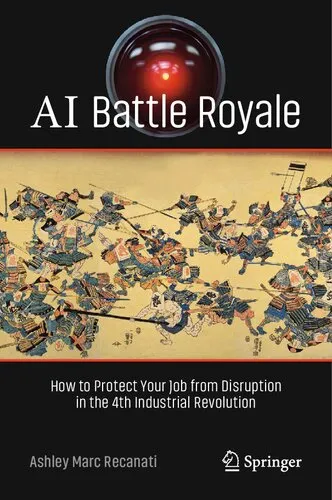
AI Battle Royale: How to Protect Your Job from Disruption in the 4th Industrial Revolution
Ashley Marc Recanati
2023
View book
Book guide and evaluation
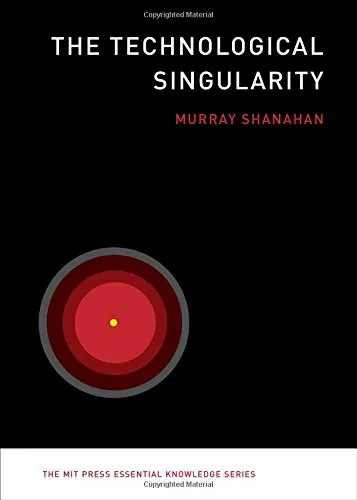
Murray Shanahan
0 reviews
Published
pages
views
Introduction to 'The Technological Singularity' Murray Shanahan's 'The Technological Singularity' delves into a thought-provoking and often debated topic in the realm of future technology and artificial intelligence (AI). The concept of the singularity raises q
Before you read
Murray Shanahan's 'The Technological Singularity' delves into a thought-provoking and often debated topic in the realm of future technology and artificial intelligence (AI). The concept of the singularity raises questions about a point in the future when technological growth becomes uncontrollable and irreversible, resulting in unforeseeable changes to human civilization.
The book 'The Technological Singularity' aims to demystify the concept of the singularity—what it means, how it might come about, and its potential implications for humanity. Murray Shanahan provides a thorough examination of the singularity theory, tracing its origins back to the birth of computing and artificial intelligence theories. He discusses how an exponential growth in technological development could lead to machines that surpass human intelligence. Shanahan offers a balanced perspective; he neither wholly embraces the utopian visions of a singularity nor does he succumb to the dystopian narratives often associated with it.
Shanahan also explores the ethical and philosophical questions that arise from the possibility of machines possessing or exceeding human-like intelligence. By analyzing various predictions and scenarios, he encourages readers to critically think about the role AI might play in the future. The book does not aim to be a definitive guide to the singularity, but rather a comprehensive introduction to the possibilities and challenges it presents.
“The singularity is a point—hypothetical of course—when technological growth becomes uncontrollable and irreversible, resulting in unforeseeable changes to human civilization.”
“While some thinkers look forward to the singularity as a moment of liberation, others regard it as doomsday.”
'The Technological Singularity' by Murray Shanahan is crucial for anyone interested in understanding the future of AI and its profound impact on society. In an age where technology is rapidly advancing, understanding the potential trajectory and implications of AI is more important than ever. The book offers invaluable insights into both the optimistic and cautionary tales of AI's future, urging readers to ponder the ethical responsibilities that come with technological power.
Through a balanced narrative, Shanahan equips readers with the knowledge needed to engage in informed discussions about the future. This book is an essential read for academics, policymakers, technologists, and anyone intrigued by the prospects of human evolution in tandem with machine intelligence.
Your question is answered in the context of this title and author. Each answer uses 2 points.
0 reviews, 4.3 average out of 5
Sign in to publish a review.
Ask a focused question and learn from the community.
Related references that continue this learning path.
Ashley Marc Recanati
Nick Dyer-Witheford,Atle Mikkola Kjøsen,James Steinhoff