
Book guide and evaluation
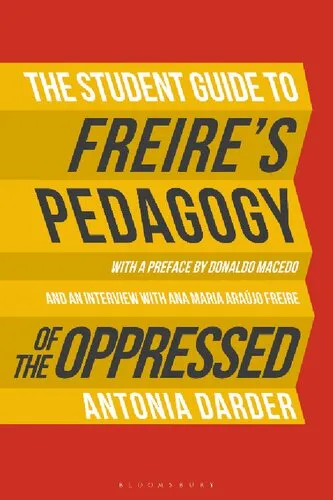
The Student Guide To Freire’s Pedagogy Of The Oppressed
Antonia Darder
English
Advanced
Personal Development
5.0 / 5
0 reviews
2018
Published
217
pages
482
views
The Student Guide To Freire’s Pedagogy Of The Oppressed critical pedagogy, social justice education The Student Guide To Freire’s Pedagogy Of The Oppressed offers clear analysis for engaging with Freire’s transformative educational vision. Analytical Summary The S
Before you read
What will you get from this book?
Analytical Summary
The Student Guide To Freire’s Pedagogy Of The Oppressed serves as a comprehensive interpretive companion to Paulo Freire’s influential work, crafted to make his dense and critical ideas more accessible to students, educators, and professionals committed to transformative education. As the author, my intention was to engage readers in a rigorous yet approachable examination of Freire’s theory of oppression, liberation, and the praxis of freedom.
Paulo Freire’s original text, *Pedagogy of the Oppressed*, is a landmark in critical pedagogy and social justice education, foregrounding the dialogical method and the necessity of humanization in the learning process. My guide breaks down these major theoretical contributions, connecting them to contemporary contexts—whether in classrooms, community work, or institutional reform—without diluting their radical edge.
Rather than simply retelling Freire’s arguments, this guide situates them historically and politically, identifying the colonial legacies and socio-economic structures that undergird oppression. It also considers how the pedagogy of the oppressed can be adapted across educational landscapes worldwide, highlighting its enduring relevance in times of inequality and sociopolitical unrest.
Information about the exact publication year of this guide is unavailable due to the absence of a reliable public record in widely accessible bibliographies. Nevertheless, its content continues to resonate, offering a bridge between Freire’s theoretical rigor and the lived realities of those engaged in the struggle for educational justice.
Key Takeaways
This book distills complex theories into actionable insights for students and educators, maintaining fidelity to Freire’s emancipatory ethos while encouraging critical reflection.
Readers learn how dialogue replaces top-down models of knowledge transmission, allowing students to become co-creators of understanding rather than passive recipients.
The guide underscores that education is never neutral: it either domesticates or liberates, depending on the social relations and purposes it serves.
It highlights the importance of conscientização—critical consciousness—as both a personal and collective process that fuels transformative social action.
Practical frameworks and discussion prompts help readers connect theory with classroom experiences, policy debates, and grassroots organizing.
Memorable Quotes
“Education either functions as an instrument to bring about conformity or freedom.” Unknown
“To speak a true word is to transform the world.” Unknown
“Dialogue cannot exist without humility.” Unknown
Why This Book Matters
In an era defined by growing educational inequities and global crises, The Student Guide To Freire’s Pedagogy Of The Oppressed offers a beacon for rethinking the role of education in society.
For academics, it provides a framework to engage students in deep critique, ensuring they understand how socio-political conditions shape both opportunities and constraints in learning. For practitioners, it translates theory into practical interventions that can be applied immediately within classrooms or community initiatives.
Beyond academic relevance, the book sustains a moral imperative: to resist dehumanization through collective action and to claim education as a site of possibility, renewal, and justice.
Inspiring Conclusion
The Student Guide To Freire’s Pedagogy Of The Oppressed is more than a companion text—it’s an invitation to engage with education as a practice of freedom.
Whether you are a scholar, teacher, community organizer, or a learner navigating your own educational path, this guide equips you with the tools to critically analyze the systems around you and to act in ways that foster collective empowerment. By embracing the liberatory vision outlined here, readers contribute to a legacy of pedagogy that challenges oppression and nurtures human dignity.
Your next step is clear: read, reflect, share, and put these ideas into practice. The transformation of education—and society—begins with informed, committed individuals willing to engage in dialogue and action.
Ask this book
Your question is answered in the context of this title and author. Each answer uses 2 points.
Sign in to ask the book assistant.
Reader reviews
0 reviews, 5.0 average out of 5
No reviews yet
If you have read this book, help the next reader with your experience.
Write a review
Sign in to publish a review.
Reader questions and answers
Ask a focused question and learn from the community.
Sign in to ask or answer a question.
No questions yet
Be the first to ask a clear, useful question.
What to read next
Related references that continue this learning path.
Invent and Wander: The Collected Writings of Jeff Bezos, With an Introduction by Walter Isaacson
Walter Isaacson;Jeff Bezos
2020
View book
The Book of Joy: Lasting Happiness in a Changing World
Dalai Lama,Desmond Tutu,Douglas Carlton Abrams
2016
View book
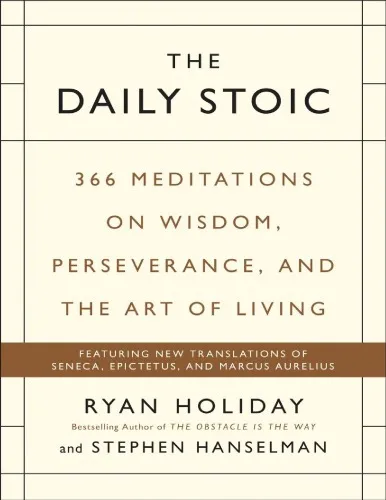
The daily stoic : 366 meditations on wisdom, perseverance, and the art of living
Hanselman, Stephen;Holiday, Ryan
2016
View book