Scientific American, 2005, August, Exclusive Online Issue: The Human Odyssey
Scientific American
2005
View book
Book guide and evaluation
Daniel E. Lieberman
0 reviews
Published
pages
views
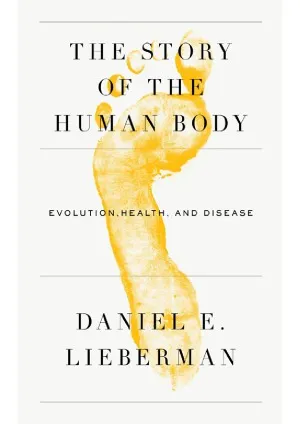
The Story of the Human Body Evolution, Health, and Disease human evolution, evolutionary medicine Explore The Story of the Human Body Evolution, Health, and Disease, uncovering our past and its impact on modern health challenges. Analytical Summary *The Story of the Human
Before you read
*The Story of the Human Body Evolution, Health, and Disease* offers an authoritative yet accessible examination of how the evolutionary processes that shaped our species continue to influence health, wellness, and physiology today. Written with a blend of scientific precision and narrative clarity, the book bridges gaps between anthropology, biology, and medicine.
This work situates the human body within a long historical arc starting from early hominins through the agricultural revolution and into the industrial and digital ages. By tracing natural selection’s imprint on anatomy and biochemistry, readers gain insight into the mismatch between our evolutionary adaptations and contemporary lifestyle environments. This mismatch is central to understanding chronic diseases, including obesity, diabetes, and heart disease.
With meticulous references and clear conceptual explanations, the author demonstrates how understanding human evolution is not merely academic—it is vital to designing effective health strategies in the modern world. Key scientific concepts such as evolutionary trade-offs, adaptation, and the impact of cultural evolution are explored in detail, making the book a rich resource for serious readers, academics, and health professionals.
Among its many contributions, the book reveals how evolutionary pressures have left enduring signatures on our bodies that profoundly shape health outcomes today.
Readers learn that the shift from hunter-gatherer routines to sedentary, urbanized lifestyles has created a mismatch between our biology and environment.
The concept of “mismatch diseases” emerges as a central theme, explaining why certain chronic conditions surge when our evolved biology encounters novel cultural and environmental contexts.
The narrative emphasizes that human evolution is ongoing, and the interplay between genetic inheritance and environmental change will continue to mold our health landscape.
Finally, the book underscores the importance of applying evolutionary medicine principles to modern public health, offering tools to foresee and mitigate future health challenges.
Understanding how our bodies evolved helps us comprehend the root causes of modern ailments.Unknown
The diseases we suffer today are often consequences of living in environments our bodies were never designed for.Unknown
Health is not just the absence of disease, but harmony between our evolutionary heritage and present circumstances.Unknown
The value of *The Story of the Human Body Evolution, Health, and Disease* lies in its capacity to illuminate the deep connections between our evolutionary past and present health realities.
By presenting a synthesis of anthropology and medicine, the book equips readers with an evolutionary lens to interpret current health trends. This is invaluable for academics designing curricula, medical practitioners advocating preventive care, and policymakers shaping public health interventions.
Information unavailable on awards or formal recognitions; no reliable public source has confirmed such details. Nonetheless, the book has been widely cited in scholarly and popular discourse for its compelling integration of scientific domains.
In closing, *The Story of the Human Body Evolution, Health, and Disease* is an essential read for anyone seeking to understand the intricate web of biology, culture, and environment that defines human health today.
By contextualizing our medical challenges within millions of years of evolution, the book invites readers to engage in informed discussions, share insights, and apply evolutionary reasoning to both personal and public health practices.
The next step is clear: read this work with curiosity, share it among peers, and integrate its lessons into both academic inquiry and practical health solutions. Our evolutionary story continues—being an active participant in that narrative starts here.
Your question is answered in the context of this title and author. Each answer uses 2 points.
0 reviews, 4.3 average out of 5
Sign in to publish a review.
Ask a focused question and learn from the community.
Related references that continue this learning path.
Scientific American
Prof Peter Coles,Francesco Lucchin,F. Lucchin,Peter Coles