
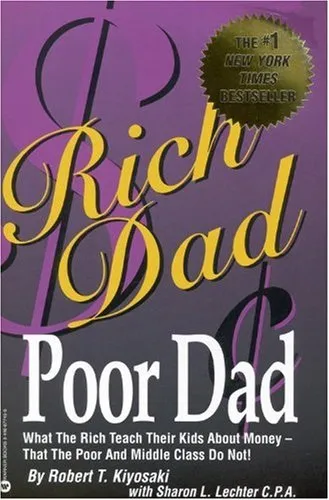
Rich Dad, Poor Dad: What the Rich Teach Their Kids About Money--That the Poor and Middle Class Do Not!
Robert T. Kiyosaki,Sharon L. Lechter
2000
View book
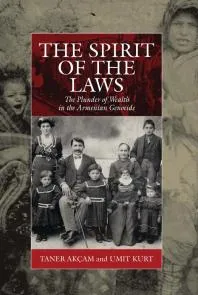
Book guide and evaluation
Taner Akçam;Umit Kurt
0 reviews
Published
pages
views
Introduction The Armenian Genocide stands as a grim testament to the extremes of human cruelty, marking one of history's darkest chapters. "The Spirit of the Laws: The Plunder of Wealth in the Armenian Genocide" delves deep into the systematic economic disenfra
Before you read
The Armenian Genocide stands as a grim testament to the extremes of human cruelty, marking one of history's darkest chapters. "The Spirit of the Laws: The Plunder of Wealth in the Armenian Genocide" delves deep into the systematic economic disenfranchisement and plunder that accompanied the physical annihilation of the Armenian people in the Ottoman Empire during World War I. Authored by Taner Akçam and Ümit Kurt, this book meticulously uncovers the complex interplay of laws, bureaucratic measures, and social dynamics that facilitated the economic aspect of the genocide, revealing it as a pivotal component of genocidal processes.
The book unfolds against the backdrop of the Ottoman Empire's deteriorating condition in the late 19th and early 20th centuries. As the empire faced existential threats, it conceived policies that targeted the minority Armenian population under the guise of national security. However, beyond mass deportations and killings, there existed a more insidious motive—economic enrichment through the confiscation of Armenian properties and wealth.
The narrative explores the legal and administrative frameworks that were instrumentalized to legitimize and facilitate the seizure of Armenian properties. These included provisional laws, decrees, and local governance practices that were adapted to ensure the thorough plunder of the Armenian community's wealth. This plunder was not an anomalous by-product of wartime chaos but a well-orchestrated scheme that involved various layers of society—from government officials to local actors who saw opportunities to enrich themselves.
Akçam and Kurt meticulously chart these processes, drawing from primary sources such as state archives, undercover communications between officials, and survivor testimonies. The authors provide an illuminating account of how the displacement of Armenians was considered incomplete without the destruction of their capacity to return or rebuild—achieved through economic dispossession.
"The Armenian Genocide was not merely a crime against humanity but a crime against a people's right to wealth, property, and self-sustenance."
"The silence around the economic plunder of the Armenians is one of history's most enduring injustices."
This work is a seminal contribution to genocide studies, adding depth to our understanding of the Armenian Genocide's comprehensive impact. By focusing on the economic dimensions, Akçam and Kurt challenge the conventional narratives that often overlook the interconnectedness of material destruction and mass violence. The book serves as an essential resource for historians, legal experts, and anyone interested in the broader implications of genocidal processes. It offers critical insights into how displacement and disenfranchisement are utilized as tools of genocide, underscoring the need for recognition and justice for the Armenian community's suffering.
Your question is answered in the context of this title and author. Each answer uses 2 points.
0 reviews, 4.4 average out of 5
Sign in to publish a review.
Ask a focused question and learn from the community.
Related references that continue this learning path.
Robert T. Kiyosaki,Sharon L. Lechter

Andrew Hallam,Scott Burns

Brendan Kelly,Simon Buckingham
William Bernstein