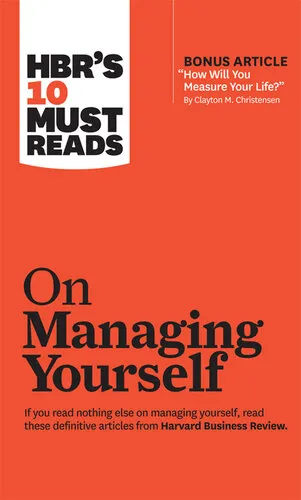
HBR's 10 Must Reads on Managing Yourself (with bonus article "How Will You Measure Your Life?" by Clayton M. Christensen)
Harvard Business Review,Peter F. Drucker,Clayton M. Christensen,Daniel Goleman
2011
View book
Book guide and evaluation
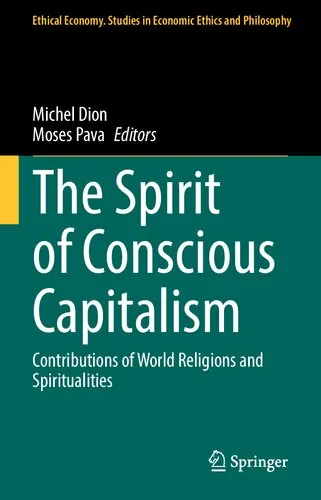
Michel Dion (editor),Moses Pava (editor)
0 reviews
Published
pages
views
The book "The Spirit of Conscious Capitalism: Contributions of World Religions and Spiritualities" is a profound exploration of the intersection between economic systems and spiritual values. As part of the Ethical Economy series, it delves into how world religions and spiritua
Before you read
The book "The Spirit of Conscious Capitalism: Contributions of World Religions and Spiritualities" is a profound exploration of the intersection between economic systems and spiritual values. As part of the Ethical Economy series, it delves into how world religions and spiritual traditions can inform and enrich the practice of capitalism, making it more ethical, sustainable, and beneficial for all stakeholders involved. Edited by Michel Dion and Moses Pava, this volume presents a collection of essays and analyses contributed by scholars and practitioners from diverse backgrounds, each offering a unique perspective on how spiritual and ethical principles can shape contemporary capitalism.
The book begins by setting the stage for a critical examination of conscious capitalism, which seeks to harmonize profit-making with societal good. It challenges the traditional view of capitalism as solely profit-driven and posits that integrating spiritual insights can lead to a more ethical economic system. The contributors explore various religious and spiritual traditions, including Christianity, Judaism, Buddhism, Hinduism, and Indigenous spiritualities, among others, to uncover how these ancient wisdoms can influence modern economic practices.
A key theme is the idea that spirituality offers not just a moral compass but also practical tools for reimagining capitalism. From promoting ethical leadership and corporate social responsibility to fostering a sense of community and environmental stewardship, the book argues for a multidimensional approach to economic life, enriched by spiritual insights.
Another significant focus of the book is on the concept of interconnectedness, a common thread in many religious teachings. This interconnectedness emphasizes the idea that businesses do not operate in isolation but are part of a larger ecological, social, and economic system. The essays collectively advocate for a shift towards business models that prioritize long-term sustainability and mutual benefit over short-term gains.
"The spirit of conscious capitalism resides not merely in the quest for profit, but in the aspiration for prosperity shared across communities."
"Religions and spiritualities teach us that the true measure of success extends beyond financial metrics to include the well-being of all stakeholders."
"Incorporating ethical and spiritual values into business revitalizes not just the corporate world but the societies in which they operate."
The significance of "The Spirit of Conscious Capitalism" lies in its potential to ignite change in how we perceive and practice capitalism. In a world grappling with economic disparities, environmental challenges, and social injustices, the book serves as a call to action for rethinking the role of business in society. By drawing on time-honored wisdom from various spiritual traditions, it provides a roadmap for developing economic systems that are not only efficient but also equitable and empathetic.
Furthermore, this book challenges business leaders, policymakers, and academics to consider the broader implications of their decisions and to foster an economy that nurtures human dignity and ecological health. It underscores the possibility that when grounded in spiritual and ethical foundations, capitalism can be a force for good, promoting not just wealth but well-being for all.
This comprehensive volume is essential reading for anyone interested in ethical business practices, sustainable development, and the role of spirituality in modern life. Its diverse perspectives and practical insights make it a valuable resource for inspiring and guiding the next wave of conscious business leaders.
Your question is answered in the context of this title and author. Each answer uses 2 points.
0 reviews, 4.9 average out of 5
Sign in to publish a review.
Ask a focused question and learn from the community.
Related references that continue this learning path.
Harvard Business Review,Peter F. Drucker,Clayton M. Christensen,Daniel Goleman