
Gray's anatomy for students
Drake, Richard Lee;Gray, Henry;Mitchell, Adam W. M.;Vogl, Wayne
2015
View book
Book guide and evaluation
Anne Fadiman
0 reviews
Published
pages
views
Introduction to "The Spirit Catches You and You Fall Down" "The Spirit Catches You and You Fall Down" is a profound and deeply moving exploration of cultural collisions within the American healthcare system. Written by Anne Fadiman, this non-fiction masterpiece delves into the
Before you read
"The Spirit Catches You and You Fall Down" is a profound and deeply moving exploration of cultural collisions within the American healthcare system. Written by Anne Fadiman, this non-fiction masterpiece delves into the story of Lia Lee, a Hmong child with epilepsy, and the tragic misunderstandings between her family and the medical professionals in California who sought to treat her. In this brilliantly written book, Fadiman offers readers a nuanced look at how cultural beliefs, medical systems, and human relationships collide — often with heartbreaking consequences.
This book is more than just the story of one family; it is a testament to the complexities of cross-cultural communication and a stunning critique of how Western medicine sometimes fails to properly acknowledge other worldviews. Through meticulous research and sensitive storytelling, "The Spirit Catches You and You Fall Down" reveals the profound challenges of navigating cultural differences in life-and-death situations.
"The Spirit Catches You and You Fall Down" is centered around the life of Lia Lee, a young girl born into a Hmong refugee family in Merced, California, during the 1980s. At just three months old, Lia began experiencing severe epileptic seizures — a condition the Hmong refer to as "qaug dab peg," loosely translated as "the spirit catches you and you fall down." In Hmong culture, epilepsy is seen not merely as a medical condition but as a sign of spiritual giftedness, marking someone as special and significant within the community.
The book describes the immense challenges Lia’s parents, Foua and Nao Kao, faced as they tried to reconcile their traditional Hmong cultural beliefs with the practices of Western medicine. The American doctors treating Lia, bound by their scientific training and hospital protocols, viewed epilepsy strictly through a biomedical lens — as a disorder to be treated with medication. This clash of perspectives led to miscommunication, mistrust, and devastating consequences for Lia's health.
As Fadiman recounts Lia's story, she also offers a sweeping history of the Hmong people: their migration from Southeast Asia, their struggles as refugees in the United States, and their deep-rooted traditions and values. The narrative alternates between Lia's medical journey and the cultural background of her family, painting a poignant portrait of a community caught in the margins of two vastly different worlds.
"Cultural brokers are the ones who can see both sides of an issue, who can bring the pieces together, and who can help you commemorate how diverse and extraordinary humans are."
"Doctors can fix some, but not all, biological problems, and they can alleviate pain; but they do not always convey respect for their patients' experience of illness, or their patients' experience of pain."
"In the Hmong tradition, it is not just the individual who is ill; it is the entire family, the entire community."
"The Spirit Catches You and You Fall Down" is more than a medical drama; it is a critical exploration of how systems fail when cultural understanding is neglected. In an increasingly globalized world, the book serves as an important reminder of the need for cultural literacy, especially in professions where human lives are at stake.
For healthcare practitioners, it challenges the very framework of Western medicine, urging empathy and collaboration when treating culturally diverse patients. For general readers, it sheds light on the immigrant and refugee experience, fostering a greater appreciation for resilience and the importance of traditions.
Ultimately, Anne Fadiman’s work stands as a timeless lesson about the need to bridge cultural divides with compassion, curiosity, and open-mindedness. This book challenges us to think deeply about the intersections of culture, politics, and health, and how our collective humanity might be served by honoring differences rather than resisting them.
Your question is answered in the context of this title and author. Each answer uses 2 points.
0 reviews, 4.9 average out of 5
Sign in to publish a review.
Ask a focused question and learn from the community.
Related references that continue this learning path.
Drake, Richard Lee;Gray, Henry;Mitchell, Adam W. M.;Vogl, Wayne
Betty J. Ackley;Gail B. Ladwig;Mary Beth Flynn Makic
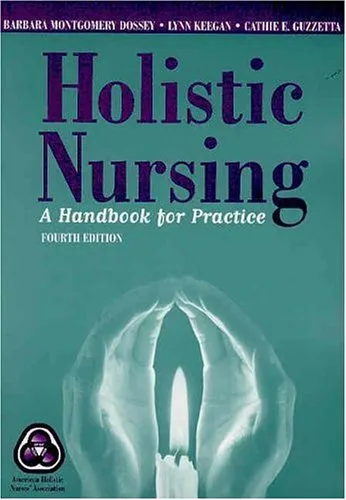
Barbara Montgomery Dossey,Lynn Keegan,Cathie E. Guzzetta