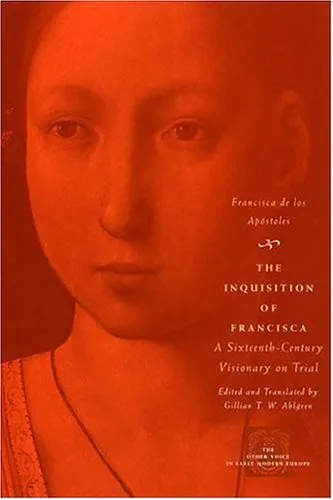
The Inquisition of Francisca: A Sixteenth-Century Visionary on Trial
Francisca de los Apostoles,Gillian T. W. Ahlgren
2005
View book
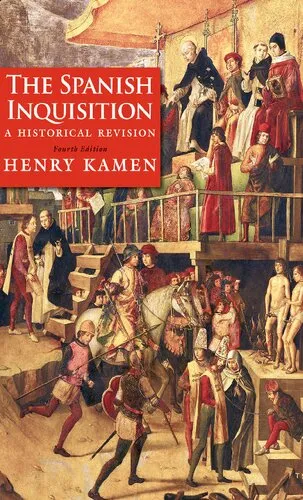
Book guide and evaluation
Henry Kamen
0 reviews
Published
pages
views
Introduction to 'The Spanish Inquisition: A Historical Revision' Welcome to an in-depth exploration of "The Spanish Inquisition: A Historical Revision," a comprehensive work that re-evaluates one of the most discussed yet often misinterpreted chapters in history. Authored by H
Before you read
Welcome to an in-depth exploration of "The Spanish Inquisition: A Historical Revision," a comprehensive work that re-evaluates one of the most discussed yet often misinterpreted chapters in history. Authored by Henry Kamen, this book delves into the myths, realities, and lasting impressions left by the Spanish Inquisition. As a critically acclaimed revision, Kamen's narrative challenges preconceived notions and provides new insights into the political, social, and religious climate of the era.
The Spanish Inquisition is often portrayed as a period of rampant religious fanaticism characterized by brutal persecution and systemic oppression. However, Henry Kamen's "The Spanish Inquisition: A Historical Revision" offers a nuanced perspective by meticulously re-examining historical documents and evidence. The book traces the Inquisition's origins, objectives, and operational methods, while providing context within the broader framework of European religious and political dynamics.
Kamen argues that the Inquisition was far less prosecutorial than traditionally believed. He highlights how its influence was often limited by political powers and local authorities who manipulated its machinery for their own ends. The narrative unfolds across various reigns, from Ferdinand and Isabella to the later Habsburgs, illustrating the complex interplay between monarchy, church, and inquisitorial power.
Through a detailed analysis of case records, Kamen illustrates that many common perceptions about the Inquisition - such as its ubiquitous presence in daily life and high mortality rates - are overstated. The book emphasizes the importance of understanding the Inquisition in its time rather than through the lens of modern values, clarifying misconceptions perpetuated over centuries.
"Inquisition must be viewed as an integral part of the Spanish Kingdom’s administrative machinery, deeply interwoven into the religious and political fabric of Europe."
"The myth of the Inquisition as an engine of oppression is better understood as part of the conflict between different cultural and religious powers."
"The Spanish Inquisition: A Historical Revision" is imperative for historians and the general reader alike because it dismantles longstanding myths with careful scholarship. Henry Kamen's approach to revisiting the Spanish Inquisition uses empirical evidence that upends the hyperbolic narratives of cruelty and tyranny commonly found in popular accounts.
By highlighting the complexities and often the relative moderation of the Inquisition's practices, Kamen enriches our comprehension of European history and the nuanced evolution of religious institutions. In an age where misinformation persists, this book stands as a bulwark of factual inquiry and intellectual honesty.
Your question is answered in the context of this title and author. Each answer uses 2 points.
0 reviews, 4.0 average out of 5
Sign in to publish a review.
Ask a focused question and learn from the community.
Related references that continue this learning path.
Francisca de los Apostoles,Gillian T. W. Ahlgren