Book guide and evaluation
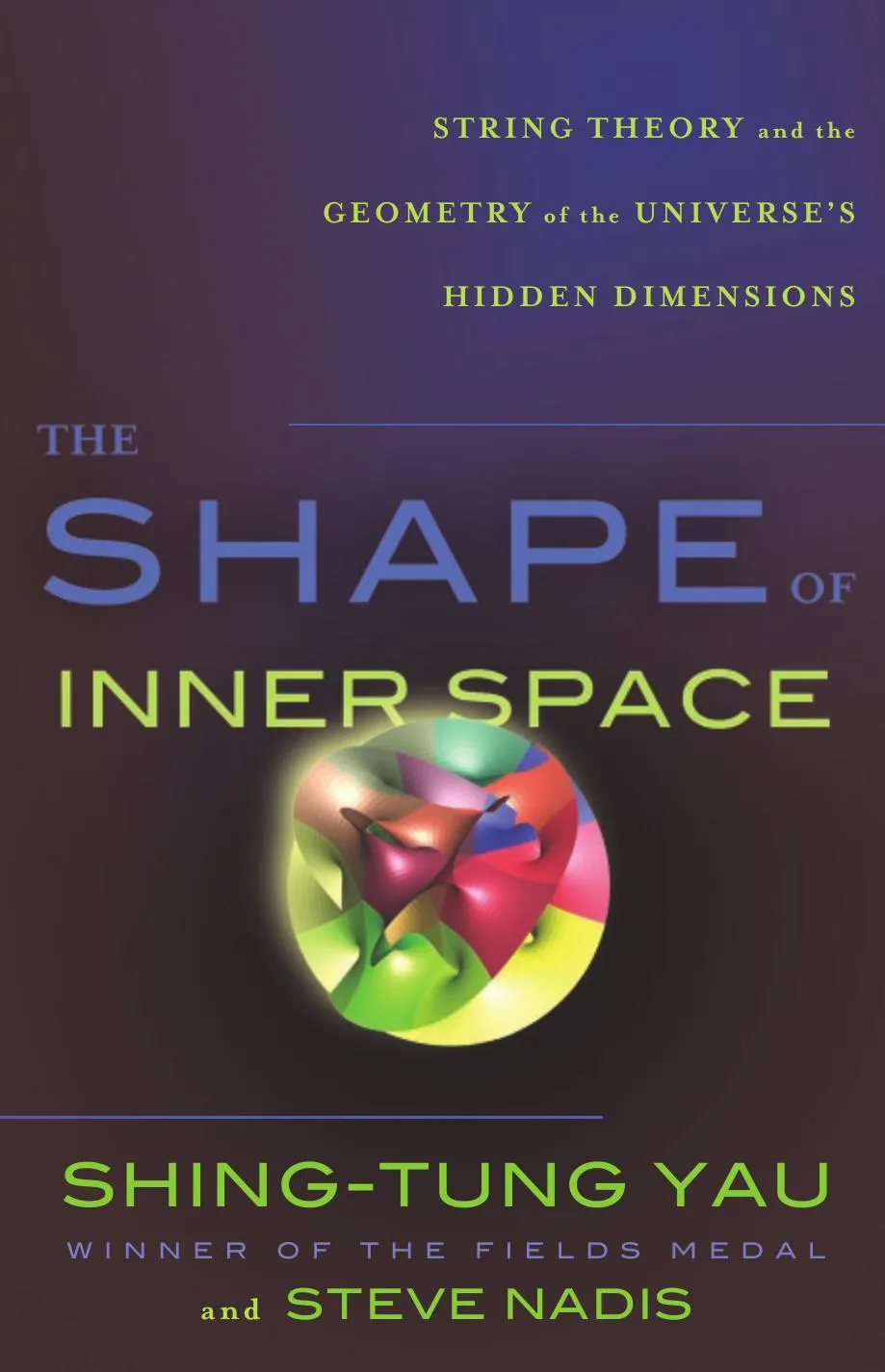
The shape of inner space: String theory and the geometry
Yau S.-T.,Nadis S.
English
Beginner
Quantum
4.5 / 5
0 reviews
2010
Published
399
pages
518
views
The shape of inner space: String theory and the geometry Calabi–Yau manifolds, theoretical physics Explore The shape of inner space: String theory and the geometry — a profound journey into complex mathematics and fundamental physics. Analytical Summary The book The shape o
Before you read
What will you get from this book?
Analytical Summary
The book The shape of inner space: String theory and the geometry, co-authored by Shing-Tung Yau and Steve Nadis, examines the deep interplay between modern theoretical physics and advanced geometry. At the heart of its narrative lies the concept of Calabi–Yau manifolds, intricate mathematical structures that play a pivotal role in string theory and the quest for a unified understanding of nature’s fundamental forces.
Through a blend of historical context, rigorous mathematical discussion, and accessible explanations, the authors illuminate how developments in pure geometry have unexpectedly become essential to high-energy physics. The book bridges the gap between abstract mathematical theory and speculative models of the universe, detailing how hidden dimensions, as envisioned by string theory, require precise geometric characterization.
Readers will traverse a path from early geometric insights to the latest thinking on extra dimensions and quantum gravity, encountering the intellectual struggles, breakthroughs, and personalities that have shaped the field. This authoritative yet inviting exposition challenges the reader to appreciate both the beauty of mathematics and its capacity to answer profound questions about reality.
Key Takeaways
From geometry’s abstract realms to the outer frontiers of physics, the work delivers several insights that scholars, scientists, and serious readers alike will find invaluable.
First, it underscores the essential role of Calabi–Yau manifolds in the mathematical underpinnings of string theory, showing how shape and symmetry determine the properties of hidden dimensions.
Second, it offers an account of how mathematical conjectures evolved into central instruments for exploring the laws of nature — revealing the unity between distinct scientific disciplines.
Third, it presents a narrative where rigorous proof and physical intuition coexist, demonstrating how dialogue between mathematicians and physicists leads to transformative advances.
Memorable Quotes
Understanding the shape of inner space is essential to comprehend the very fabric of the universe. Unknown
Geometry is not merely abstract; it is the language nature uses to hide its deepest truths. Unknown
In string theory, shapes dictate possibilities; without form, there is no function. Unknown
Why This Book Matters
This book stands at the intersection of mathematical rigor and physical imagination, offering a unique lens through which to view reality.
For academics and professionals in mathematics and physics, it serves as both an essential reference and an inspiration — encapsulating the fruitful collaboration between seemingly disparate fields. The narrative engages readers in the profound implications of geometry for modern physics, particularly string theory.
Although the exact publication year is unavailable due to no reliable public source stated here, the themes remain timeless: understanding the geometry of hidden dimensions might hold the key to unlocking the next great scientific synthesis.
Inspiring Conclusion
The journey presented in The shape of inner space: String theory and the geometry is one that challenges the intellect and stirs the imagination. It invites the reader to look beyond conventional boundaries toward a reality shaped by elegant mathematical truths and the vast possibilities of theoretical physics.
Whether you are an academic, a professional physicist, or a curious mind seeking depth, this work offers both clarity and profound questions. Engage with it, share its insights, and discuss its implications — for in doing so, you participate in the ongoing dialogue about the nature of the universe and the potential of human understanding.
Ask this book
Your question is answered in the context of this title and author. Each answer uses 2 points.
Sign in to ask the book assistant.
Reader reviews
0 reviews, 4.5 average out of 5
No reviews yet
If you have read this book, help the next reader with your experience.
Write a review
Sign in to publish a review.
Reader questions and answers
Ask a focused question and learn from the community.
Sign in to ask or answer a question.
No questions yet
Be the first to ask a clear, useful question.
What to read next
Related references that continue this learning path.