

Geometric Aspects of Functional Analysis: Israel Seminar 2004–2005
S. Alesker (auth.),Vitali D. Milman,Gideon Schechtman (eds.)
2007
View book
Book guide and evaluation
Shing-Tung Yau,Steve Nadis
0 reviews
Published
pages
views
Introduction to "The Shape of Inner Space" "The Shape of Inner Space: String Theory and the Geometry of the Universe's Hidden Dimensions" is an exploration of one of the most profound mysteries of modern science: the hidden dimensions of our universe. Jointly authored by F
Before you read
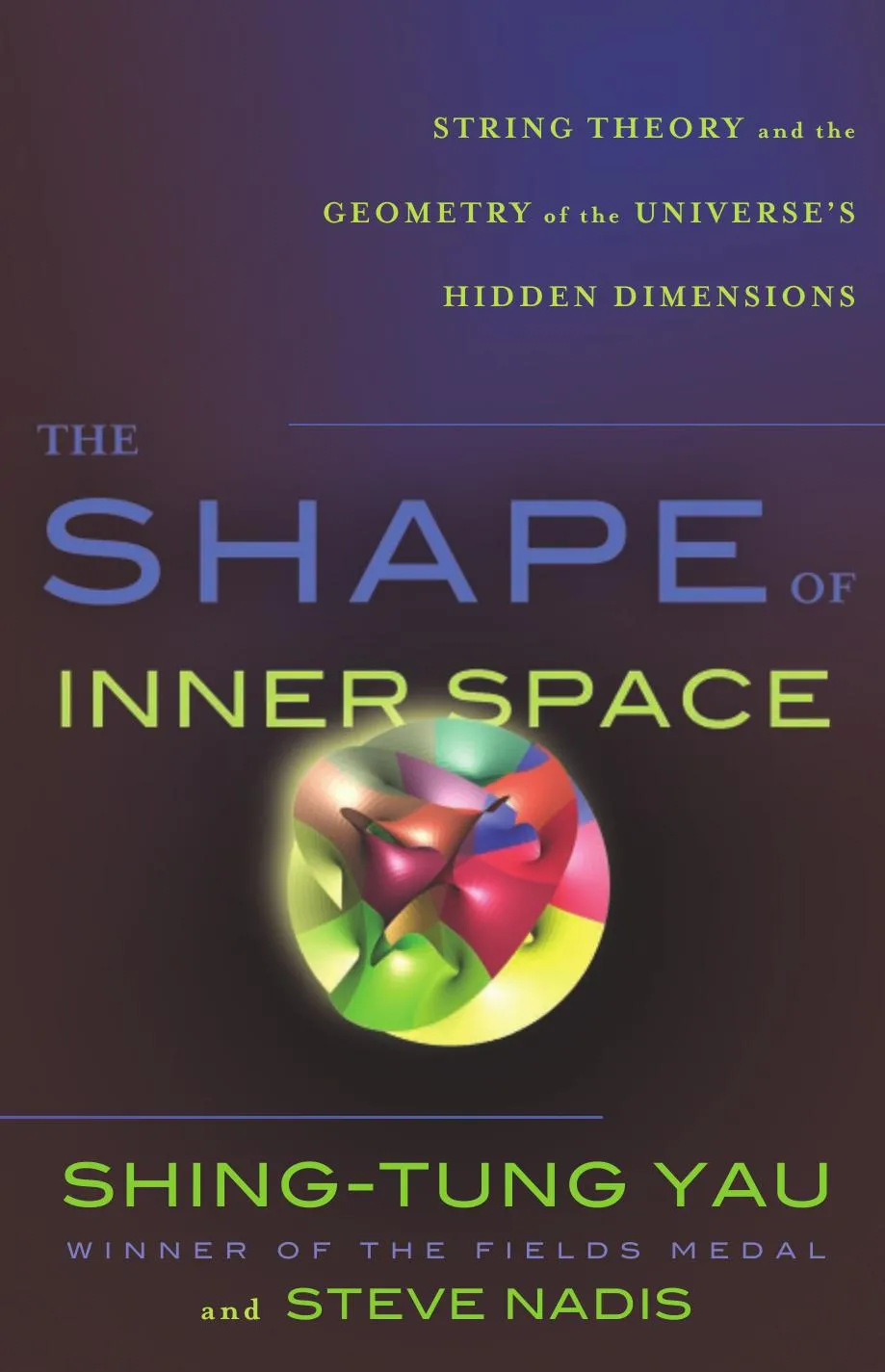
"The Shape of Inner Space: String Theory and the Geometry of the Universe's Hidden Dimensions" is an exploration of one of the most profound mysteries of modern science: the hidden dimensions of our universe. Jointly authored by Fields Medal-winning mathematician Shing-Tung Yau and acclaimed science writer Steve Nadis, this book delves into how geometry and physics intersect to explain the reality that governs our cosmos.
At its core, this book explores one of the cornerstones of string theory — the idea that our universe may consist of additional spatial dimensions curled up into intricate geometric shapes. Yau, in particular, is a pioneering figure in this field, best known for his work on Calabi-Yau manifolds, which play a critical role in string theory’s framework. Through clear writing and deep scientific insight, the authors detail how complex mathematical concepts underlie the structure of existence and help explain the origins of the universe.
Beyond mathematics and physics, the book also offers a fascinating glimpse into the lives of the people who have shaped these groundbreaking ideas — from mathematicians and physicists to theoretical pioneers. By weaving the narrative of discovery with rigorous science, the book creates a compelling case for why geometry isn't just an abstract branch of mathematics but a key to understanding the fundamental workings of our universe.
The book begins by laying the groundwork for understanding the marriage between geometry and physics. The authors explore the ancient interplay of mathematics and the natural world, drawing lines from classical times to modern theories. Early chapters dive into the fundamental principles of string theory, explaining how this theory proposes that all particles are tiny, vibrating strings within a multi-dimensional framework. The curiosity surrounding the “extra dimensions” is examined in great detail, emphasizing the significance of Calabi-Yau manifolds, named partly after Yau himself, which mathematically describe the shape of these dimensions.
The later chapters focus on the cutting-edge implications of these ideas, such as solving longstanding problems in theoretical physics, connecting string theory to reality, and finding experimental evidence for these hidden dimensions. Along the way, the book highlights the collaborative nature of scientific discovery and the diverse minds that shaped this discipline. Through geometry, string theory provides an elegant explanation for some of the most perplexing mysteries of the universe, like the unification of general relativity and quantum mechanics.
The narrative does not shy away from challenges and unanswered questions. Yau and Nadis make it clear that much work remains to be done to verify these ideas. In doing so, they invite the reader to reflect on the nature of progress in science — a discipline driven by both inspiration and rigor.
"Geometry is not just a branch of mathematics; it is a key to unlocking the secrets of the universe."
"The hidden dimensions of our universe may hold the answers to the questions we’ve struggled to solve for centuries."
"Every discovery we make is a small piece of the larger puzzle that is our existence."
"The Shape of Inner Space" is more than just a book about string theory and geometry; it’s an invitation to ponder the very nature of reality. Shing-Tung Yau and Steve Nadis bridge the divide between abstract mathematics and our tangible universe, showing how these ideas have the potential to solve some of physics’ greatest questions. The book’s relevance lies not just in its detailed explanation of key concepts but also in its ability to inspire curiosity and wonder about the cosmos.
With a grounding in both mathematical rigor and scientific storytelling, the book appeals to a wide spectrum of readers — from those with a passion for mathematics and physics to curious individuals seeking to understand the universe better. By intertwining human stories with abstract theories, it humanizes the scientific endeavor, making it accessible and relatable to non-specialists.
In a time when many questions about the universe remain unanswered, "The Shape of Inner Space" reminds us of the pivotal role of collaboration, exploration, and creativity in advancing science. It’s a book that not only informs but also inspires, urging readers to look beyond visible reality and imagine the unseen dimensions that shape our world.
Your question is answered in the context of this title and author. Each answer uses 2 points.
0 reviews, 4.5 average out of 5
Sign in to publish a review.
Ask a focused question and learn from the community.
Related references that continue this learning path.
S. Alesker (auth.),Vitali D. Milman,Gideon Schechtman (eds.)



Michael Spivak