
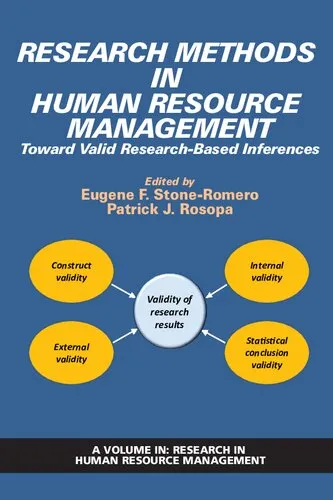
Research Methods in Human Resource Management: Toward Valid Research-Based Inferences
Eugene F. Stone-Romero (editor),Patrick J. Rosopa (editor)
2020
View book
Book guide and evaluation
Catherine Cassell,Ann L. Cunliffe
0 reviews
Published
pages
views
The SAGE Handbook of Qualitative Business and Management Research Methods offers a robust, comprehensive, and thought-provoking exploration of qualitative research methodologies within the business and management fields. As a critical resource for both emerging and established
Before you read
The SAGE Handbook of Qualitative Business and Management Research Methods offers a robust, comprehensive, and thought-provoking exploration of qualitative research methodologies within the business and management fields. As a critical resource for both emerging and established scholars, this handbook provides a diverse collection of qualitative research strategies, underpinning theories, and offers guidance for implementing innovative research techniques.
The handbook is structured into two comprehensive volumes: one focusing on "History and Traditions" and the other on "Methods and Challenges." It carefully outlines the diverse, yet interconnected, perspectives of qualitative research that have evolved over time. In doing so, it not only acknowledges the historical evolution of qualitative methods but also delves into contemporary practices and reflections aimed at shaping future methodologies.
The volume on "History and Traditions" addresses the foundational elements and philosophical assumptions that form the backdrop of qualitative research. Through examining various traditions including phenomenology, ethnography, and grounded theory, the book creates a platform for understanding the significance of these methodological routes in forming business strategies and management practices.
Meanwhile, the "Methods and Challenges" volume addresses the mechanics of conducting qualitative research. This includes detailed discussions on advanced techniques such as narrative analysis, discourse analysis, and mixed-methods approaches. The design encompasses both ideals and practical challenges, reflecting on the intricate nature of qualitative research within real-world business contexts.
"Qualitative research in business and management offers unique insights into the complexity of the human side of businesses, addressing the nuanced reality of organizational behavior and decision-making."
"The relationship between researcher and subject is not merely observational but participatory, driving a deeper understanding of the contextual business problem."
In the realm of business and management, where quantitative data often dominates decision-making, qualitative research presents a necessary counterbalance. The SAGE Handbook of Qualitative Business and Management Research Methods is important because it elevates the discussion around qualitative research's role in providing actionable insights into organizational life. It equips scholars and practitioners with the tools to deeply explore the why's and how's of business phenomena, rather than just the what and how much.
The handbook also matters as it draws attention to the evolving landscape of qualitative methods amid technological advancements and cultural shifts. By engaging with ethical considerations and reflexive practices, it trains researchers to conduct work that is conscientious and impactful. As the business world continues to face complex challenges—such as globalization, digital transformation, and social responsibility—this handbook serves as an essential guide for researchers endeavoring to produce meaningful, context-rich insights that influence business theory and practice.
Your question is answered in the context of this title and author. Each answer uses 2 points.
0 reviews, 4.5 average out of 5
Sign in to publish a review.
Ask a focused question and learn from the community.
Related references that continue this learning path.
Eugene F. Stone-Romero (editor),Patrick J. Rosopa (editor)
Fiona Jane Robson;Rita Fontinha;(Principal lecturer) Valerie Anderson
Hubert, Cindy;O'Dell, Carla S
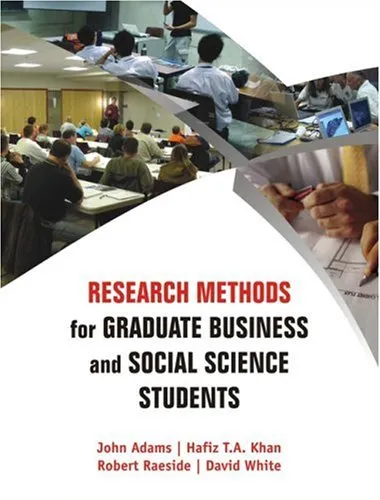
John Adams,Hafiz T A Khan,Robert Raeside,David I White