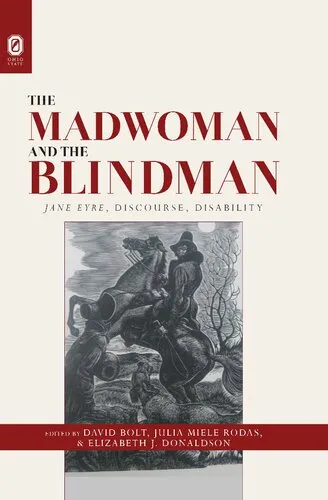
The madwoman and the blindman : Jane Eyre, discourse, disability
Julia Miele Rodas;David Bolt;Elizabeth J. Donaldson
2012
View book
Book guide and evaluation
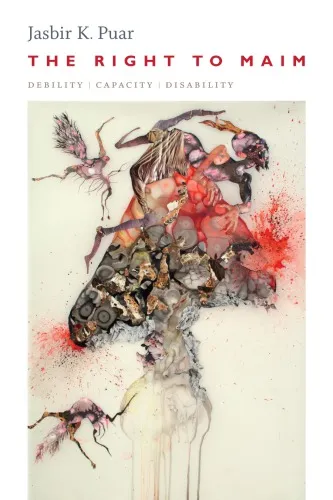
Jasbir K Puar
0 reviews
Published
pages
views
The Right to Maim: Debility, Capacity, Disability An intellectual dive into the intertwined narratives of disability, humanitarianism, neoliberalism, and colonialism, Jasbir K. Puar's work explores the geopolitics of bodily injury and capacity through the concept of "the right
Before you read
An intellectual dive into the intertwined narratives of disability, humanitarianism, neoliberalism, and colonialism, Jasbir K. Puar's work explores the geopolitics of bodily injury and capacity through the concept of "the right to maim."
In "The Right to Maim: Debility, Capacity, Disability," Jasbir K. Puar extends her groundbreaking insights into the nexus of sexuality, race, and geopolitics. This book presents an incisive critique of state mechanisms and biopolitical governance, focusing particularly on how states deploy the capacity to injure populations. Moving beyond the binary of disability and ability, Puar introduces the concept of "debility" as a broader framework to understand the systemic production of physical injury and socio-economic impoverishment.
Puar argues that the contemporary state often fails to care for the sick and the wounded, instead perpetuating conditions that ensure their ongoing incapacity. Through an interdisciplinary approach that combines disability studies, queer theory, and postcolonial critique, she exposes how states utilize the ability to maim as part of their socio-political arsenal, manipulating bodies and populations for economic and political ends.
Her analysis particularly focuses on Israel's occupation of Palestine, using this geopolitical context to illustrate the ways in which "the right to maim" functions not only as a practice of war but as a normalized mode of governance and control. This work resonates across various fields, elucidating the entwined fates of various marginalized populations across the globe.
"Debility is meant to disrupt the binary of ability and disability, putting pressure on the former's unmarked status."
"The 'right to maim' functions as a biopolitical mechanism — and in some instances literally as a weapon — that maximizes profit generation while allowing the state to disclaim its role in the ongoing conditions of debility."
Jasbir K. Puar's "The Right to Maim" matters because it challenges longstanding assumptions about disability and the role of the state in both creating and managing physical and economic bodies. Its critical lens on the geopolitics of injury and disability broadens our understanding of disability as not solely a medical or personal condition but as an embedded structure within global political economies and militarized strategies.
Whether one is engaging with the text from the perspective of disability studies, queer theory, postcolonial studies, or human rights, Puar's insights encourage a reevaluation of how we comprehend ability and debility and their utility in governance practices. This work importantly offers a critical framework for activists, scholars, and policymakers committed to understanding and dismantling systemic inequality and violence.
Your question is answered in the context of this title and author. Each answer uses 2 points.
0 reviews, 4.5 average out of 5
Sign in to publish a review.
Ask a focused question and learn from the community.
Related references that continue this learning path.
Julia Miele Rodas;David Bolt;Elizabeth J. Donaldson