Book guide and evaluation
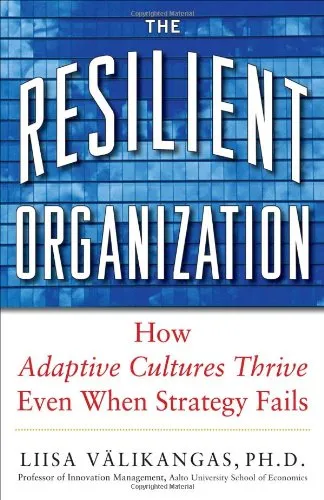
The Resilient Organization: How Adaptive Cultures Thrive Even When Strategy Fails
Liisa Valikangas
English
Beginner
Economics
4.8 / 5
0 reviews
2010
Published
286
pages
383
views
Introduction to "The Resilient Organization: How Adaptive Cultures Thrive Even When Strategy Fails" In today's dynamic and fast-paced business environment, the ability to adapt and thrive amidst challenges is more critical than ever. "The Resilient Organization: How Adapti
Before you read
What will you get from this book?
Introduction to "The Resilient Organization: How Adaptive Cultures Thrive Even When Strategy Fails"
In today's dynamic and fast-paced business environment, the ability to adapt and thrive amidst challenges is more critical than ever. "The Resilient Organization: How Adaptive Cultures Thrive Even When Strategy Fails" provides a comprehensive exploration of how organizations can foster resilience through adaptive cultures. This book delves into the intricacies of organizational behavior, offering insights into building cultures that endure beyond strategic setbacks.
Detailed Summary of the Book
The book offers a deep dive into the concept of organizational resilience, emphasizing that resilience goes beyond mere survival. It is about thriving in adversity, leveraging change as an opportunity rather than a threat. The text dissects the layers of organizational culture, uncovering how values, beliefs, and behaviors shape an organization's ability to respond to disruptions. Through a series of case studies and academic research, the book illuminates how resilient cultures are cultivated and nurtured over time.
One of the key themes of the book is that strategy is not the sole determinant of an organization's success. Instead, it is the cultural adaptability and resilience that often dictate long-term viability. The text details various organizational elements such as leadership, communication, diversity, and innovation, explaining their critical roles in creating a resilient organizational culture. Readers are guided through practical steps on how to embed resilience into the fabric of their organizations, enabling them to pivot, re-strategize, and sustain growth even when previous strategies become obsolete.
Key Takeaways
- Resilience is Cultural: Sustainable organizational resilience is rooted in a culture that embraces change as part of its operational ethos.
- Beyond Strategy: While strategic planning is essential, its success is intricately linked to the underlying organizational culture.
- Leadership Is Pivotal: Adaptive leadership that encourages open dialogue, experimentation, and learning is crucial for building resilience.
- Diversity and Inclusion: A diverse and inclusive workplace fosters multiple perspectives, enhancing problem-solving and resilience.
- Continuous Learning: Organizations that prioritize learning and adaptability are better equipped to handle uncertainty and change.
Famous Quotes from the Book
"An organization's true strength lies not in its strategic plans but in its ability to transform, adapt, and grow when the path forward is uncertain."
"Resilience is not a static trait; it is a dynamic capability built through experiences, diversity, and a culture open to innovation."
Why This Book Matters
In a world characterized by rapid technological advancements, economic uncertainties, and unforeseen global disruptions such as pandemics, the principles outlined in "The Resilient Organization" are more relevant than ever. This book serves as an invaluable resource for business leaders, organizational strategists, and scholars interested in understanding the deeper aspects of organizational resilience. By offering a framework for creating and maintaining adaptive cultures, it equips organizations with the necessary tools to not only survive but also thrive amid the most challenging circumstances.
Moreover, this book contributes to the academic discourse on resilience and organizational studies. It provides a fresh perspective that shifts the focus from rigid strategic frameworks to the human and cultural elements that powerfully influence an organization's adaptability. Ultimately, "The Resilient Organization" is a vital read for anyone committed to building robust, adaptive, and forward-thinking organizations capable of navigating the complex landscape of the modern business world.
Ask this book
Your question is answered in the context of this title and author. Each answer uses 2 points.
Sign in to ask the book assistant.
Reader reviews
0 reviews, 4.8 average out of 5
No reviews yet
If you have read this book, help the next reader with your experience.
Write a review
Sign in to publish a review.
Reader questions and answers
Ask a focused question and learn from the community.
Sign in to ask or answer a question.
No questions yet
Be the first to ask a clear, useful question.
What to read next
Related references that continue this learning path.
Phoenix leadership for business: an executive's strategy for relevance and resilience
Gokenbach,Valentina
2019
View book

Strategic Negotiation: Building Organizational Excellence: A Roadmap to Harnessing The Power of Alignment
Joshua Gordon,Gary Furlong
2023
View book