e-Development toward the Knowledge Economy : Leveraging Technology, Innovation and Entrepreneurship for 'Smart' Development
Elias G. Carayannis,Caroline M. Sipp
2006
View book
Book guide and evaluation
Michael Burawoy,Janos Lukacs
0 reviews
Published
pages
views
Introduction to 'The Radiant Past: Ideology and Reality in Hungary's Road to Capitalism' "The Radiant Past: Ideology and Reality in Hungary's Road to Capitalism" offers a comprehensive examination of Hungary's complex transition from socialism to capitalism. This book delv
Before you read
"The Radiant Past: Ideology and Reality in Hungary's Road to Capitalism" offers a comprehensive examination of Hungary's complex transition from socialism to capitalism. This book delves into the intricate weave of ideological narrative, political maneuvers, and socio-economic transformations that framed Hungary's path during a critical period of transition. With a meticulous analysis that combines historical insight and sociological depth, the authors Michael Burawoy and Janos Lukacs provide readers with an indispensable guide to understanding this transformative epoch in Hungary's history.
This scholarly work takes an in-depth look at Hungary's transition from socialism to capitalism, exploring the dynamic interplay of ideology and reality. The book offers a narrative that uncovers the unfolding of political strategies and economic reforms that were pivotal in reshaping Hungary's societal landscape post-socialism. Through a series of detailed analyses, it elucidates how the country's past ideologies have played a significant role in shaping perceptions and policies during the transition.
The authors explore the influence of historical legacies and how they were wielded both as tools of resistance and as instruments for new pragmatic approaches. The detailed ethnographic studies within the book highlight the diverse responses from various sectors of society. By scrutinizing these responses, the authors map a unique trajectory that underscores the complexities involved in shifting from a centrally planned economy to a market-oriented one. Through this focused lens, the book not only narrates Hungary's past but also offers insights into the broader processes that govern societal transformation.
The journey from socialism to capitalism in Hungary was neither uniform nor linear. Instead, it was marked by contradictions and a constant negotiation between past ideologies and emerging realities. This book emphasizes the importance of understanding the socio-political context and cultural elements that influenced the transition.
Another key takeaway is the role of narratives and how they can shape policy and perception. The text also highlights the resilience of the Hungarian people and the adaptation strategies they employed. It serves as a reminder that while economics and politics may drive structural changes, human agency is central to navigating these transformations.
"The Radiant Past" is not just a historical account; it is a critical tool for understanding the broader phenomena of post-socialist transitions. The insights provided by Burawoy and Lukacs are invaluable for researchers, historians, and sociologists exploring the impacts of ideological shifts on economic reforms. This book's emphasis on the symbiotic relationship between ideology and reality affords readers a profound comprehension of the nuances involved in socio-economic transformations.
Furthermore, in a global context that is constantly shifting and re-evaluating the balance between various economic and political systems, the lessons drawn from Hungary's transition offer timeless insights. They serve as both cautionary tales and beacons of possibility for other nations facing transformative crossroads.
Your question is answered in the context of this title and author. Each answer uses 2 points.
0 reviews, 4.9 average out of 5
Sign in to publish a review.
Ask a focused question and learn from the community.
Related references that continue this learning path.
Elias G. Carayannis,Caroline M. Sipp
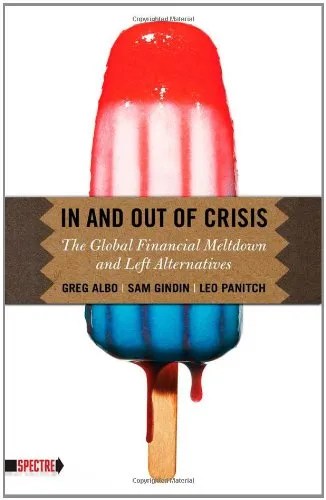
Greg Albo,Sam Gindin,Leo Panitch