The Digital Transformation Playbook: Rethink Your Business for the Digital Age
David L. Rogers
2016
View book
Book guide and evaluation
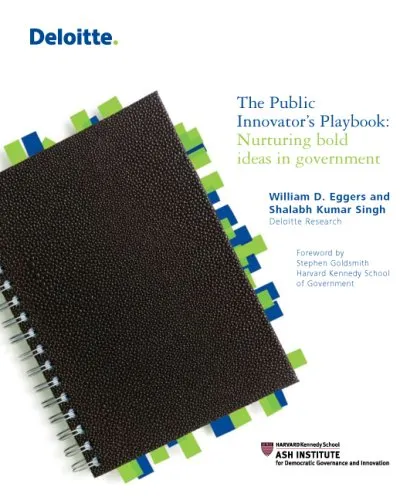
William D. Eggers,Shalabh Kumar Singh
0 reviews
Published
pages
views
Introduction to "The Public Innovator's Playbook: Nurturing Bold Ideas in Government" "The Public Innovator's Playbook: Nurturing Bold Ideas in Government" by William D. Eggers and Shalabh Kumar Singh is a groundbreaking guide to fostering innovation and implementing trans
Before you read
"The Public Innovator's Playbook: Nurturing Bold Ideas in Government" by William D. Eggers and Shalabh Kumar Singh is a groundbreaking guide to fostering innovation and implementing transformative change in the public sector. Governments around the world are often confronted with challenges such as resource constraints, bureaucratic hurdles, and increasing citizen expectations. This book offers a roadmap for addressing these complexities through structured innovation frameworks designed to spark creativity and deliver measurable results. Drawing from real-world case studies, tested strategies, and compelling insights, it equips public leaders with the tools they need to rethink governance and create impactful solutions.
Written with a clear focus on practicality, the book serves as an invaluable resource for policymakers, administrators, and innovators looking to escape traditional models of governance and embrace bold, ambitious ideas. By delving into key methodologies and principles of innovation, the authors explore how obstacles in public service can be turned into opportunities. This comprehensive playbook lays out the five key strategies for successful innovation and highlights ways to overcome systemic inertia, making it a vital read for anyone dedicated to transforming government operations.
In "The Public Innovator's Playbook," William D. Eggers and Shalabh Kumar Singh dissect the mechanisms of public innovation through five carefully designed strategies:
Throughout the book, real-world examples from various global governments illustrate these concepts in action, ranging from small-scale pilot programs to sweeping policy reforms. The authors also explore challenges such as resistance to change, failed initiatives, and unresponsive bureaucracies, providing actionable advice to address each issue. Ultimately, the playbook encourages public leaders to adopt a fearless approach to experimentation, collaboration, and learning in order to achieve transformative outcomes.
Here are some of the most important lessons from "The Public Innovator's Playbook":
"The public sector may seem resistant to change, but innovation is entirely possible when we focus on experimentation, collaboration, and bold thinking."
"True innovation in government happens when we stop asking, 'Can we do this?' and start asking, 'How can we achieve what has never been done before?'"
"Public innovation is not about inventing the next big thing, but about improving lives through better services, policies, and governance."
"The Public Innovator's Playbook" is more than just a guidebook—it is a call to action for public-sector leaders to embrace transformative thinking in one of the most challenging arenas. With bureaucracies often perceived as rigid and change-resistant, this playbook shows that innovation is not only possible but also essential to addressing the evolving needs of modern societies.
The book’s strategies apply to a wide range of governance contexts, including federal, state, and local levels, making it universally relevant. By bridging the gap between lofty ideas and actionable solutions, Eggers and Singh inspire readers to look beyond limitations and focus on creating real value for citizens. Whether you are a policymaker, public servant, or NGO leader, this book equips you with the mindset and tools needed to positively redefine governance in the 21st century.
At its core, "The Public Innovator's Playbook" matters because it doesn't just pose theoretical ideas—it provides a clear and structured blueprint for achieving meaningful, systemic progress in the public sector.
Your question is answered in the context of this title and author. Each answer uses 2 points.
0 reviews, 4.5 average out of 5
Sign in to publish a review.
Ask a focused question and learn from the community.
Related references that continue this learning path.
David L. Rogers
W. Chan Kim,Renée Mauborgne
Mark Hurd,Lars Nyberg