Book guide and evaluation
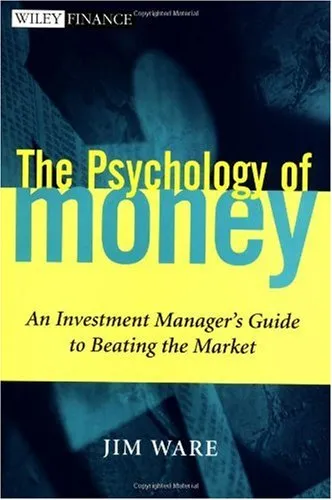
The Psychology of Money: An Investment Manager's Guide to Beating the Market (Wiley Finance)
Jim Ware
English
Intermediate
Personal Development
4.0 / 5
0 reviews
2000
Published
273
pages
666
views
Welcome to an exploration of the mind, markets, and the mechanics that drive our financial decisions. 'The Psychology of Money: An Investment Manager's Guide to Beating the Market' is a profound dive into the often overlooked yet crucial interplay between psychology and inves
Before you read
What will you get from this book?
Welcome to an exploration of the mind, markets, and the mechanics that drive our financial decisions. 'The Psychology of Money: An Investment Manager's Guide to Beating the Market' is a profound dive into the often overlooked yet crucial interplay between psychology and investing.
Summary of the Book
The book serves as a comprehensive guide for investment managers aiming to gain a competitive edge by understanding the psychological facets influencing market behavior. Jim Ware delves into how emotions, cognitive biases, and mental shortcuts shape investment strategies, often leading individuals and even seasoned professionals astray. It discusses how the stock market is not just a battleground of analysis and data, but also a psychological theater where human fear, greed, and irrationality play out.
The text is replete with real-world examples and research-backed findings that illuminate how our mental faculties can either fortify or fracture our investment goals. It is as much about understanding oneself as it is about dissecting the market. By recognizing the psychological traps and developing strategies to overcome them, readers are equipped to improve their decision-making process, thereby increasing their chances of outperforming the market consistently.
Key Takeaways
- Understanding behavioral finance is crucial for better investment outcomes.
- The importance of emotional regulation and discipline in investing.
- Identifying cognitive biases such as overconfidence, loss aversion, and confirmation bias.
- Strategies to mitigate the impact of psychological biases on investment decisions.
- How to apply behavioral insights to construct more resilient investment strategies.
Famous Quotes from the Book
"Your success as an investor will be determined not by the economy or the financial markets, but by your emotions and mental toughness."
"In investing, what is comfortable is rarely profitable."
"The strongest force in the universe is compound interest, but the most dangerous force is unchecked emotion."
Why This Book Matters
In the world of finance, where complex algorithms and quantitative analyses dominate, the nuanced and powerful impact of human psychology can often be underestimated. This book is pivotal because it bridges the gap between cold numerical analysis and the emotional, psychological components of investment decisions. It provides tools for investment managers to harness psychological insights for market success.
Jim Ware's insightful narrative compels readers to introspect on their behavioral patterns and offers actionable solutions to mitigate risks associated with those patterns. This is not just an investment book; it’s a manual for personal development crucial for any successful investor.
Ultimately, 'The Psychology of Money: An Investment Manager's Guide to Beating the Market' underscores that achieving financial success involves mastering both the market and oneself. It empowers readers with the knowledge to navigate the intricate interplay of market dynamics and human behavior, ensuring they are well-equipped to thrive in the ever-evolving world of finance.
Ask this book
Your question is answered in the context of this title and author. Each answer uses 2 points.
Sign in to ask the book assistant.
Reader reviews
0 reviews, 4.0 average out of 5
No reviews yet
If you have read this book, help the next reader with your experience.
Write a review
Sign in to publish a review.
Reader questions and answers
Ask a focused question and learn from the community.
Sign in to ask or answer a question.
No questions yet
Be the first to ask a clear, useful question.
What to read next
Related references that continue this learning path.
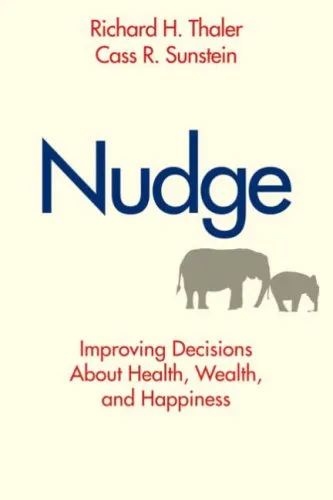
Nudge: Improving Decisions About Health, Wealth, and Happiness
Richard H. Thaler,Prof. Cass R. Sunstein
2008
View book