
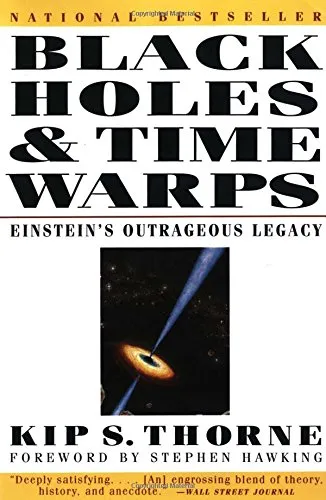
Black Holes and Time Warps: Einstein’s Outrageous Legacy
Kip S. Thorne,Stephen Hawking
1995
View book
Book guide and evaluation
Leo Blitz (auth.),Charles J. Lada,Nikolaos D. Kylafis (eds.)
0 reviews
Published
pages
views
Introduction to "The Physics of Star Formation and Early Stellar Evolution" The vast and dynamic process of star formation stands as one of the most transformative phenomena taking place in our universe. Authored and compiled by leading experts—Leo Blitz, Charles J. Lada, and
Before you read
The vast and dynamic process of star formation stands as one of the most transformative phenomena taking place in our universe. Authored and compiled by leading experts—Leo Blitz, Charles J. Lada, and Nikolaos D. Kylafis—this book, The Physics of Star Formation and Early Stellar Evolution, delves deeply into the intricate mechanisms, theories, and observations that define this spectacular process.
The birth of stars is not merely a spectacle for the night sky but a driving force behind the evolution of galaxies, planetary formation, and the conditions necessary for life as we know it. This book provides a comprehensive look at the physical principles governing star formation, from the collapse of interstellar clouds under gravity to the emergence of dense stellar cores and their subsequent evolution. It also addresses the early stages of stellar evolution, showcasing the profound interplay between stars and their surrounding environments.
The book begins by exploring the fundamental physics of interstellar matter, paying close attention to molecular clouds' role as the cradles of star formation. Readers encounter detailed discussions on topics such as the gravitational collapse of clouds, the effects of turbulence, magnetic fields, and the role of radiative feedback mechanisms. The authors meticulously piece together the stages that lead to the birth of a protostar, including the rich substructure within molecular clouds that determines the mass distribution of stars.
Moving forward, the narrative transitions into the early stellar evolution phase, where stars begin navigating the Hertzsprung-Russell diagram. This phase is depicted as a journey of unprecedented transformations, including accretion disks, bipolar outflows, and the interaction of young stars with their surrounding environments. Carefully structured chapters analyze observational data, theoretical frameworks, and simulations that outline critical aspects of proto-stellar and pre-main sequence evolution.
The book also critically examines key challenges in star formation theory, offering insights into diverse processes like cluster formation, the initial mass function (IMF), and the role of feedback from massive stars. By synthesizing cutting-edge research and observational insights, this volume offers a complete resource for enthusiasts, students, and researchers alike.
"The transformation of an invisible molecular cloud into the brilliance of a protostar epitomizes the profound beauty and complexity of star formation."
"Star formation is not simply the gravitational collapse of gas; it is a multifaceted symphony of physical processes converging to ignite the engines of light in the universe."
"The stars we see today are not isolated phenomena but the remnants of a cosmic history shaped by feedback and the interwoven threads of stellar evolution."
This book stands as a cornerstone in the field of astrophysics, offering a detailed exploration of star formation and early stellar evolution. Its significance lies in its ability to bridge the gap between theoretical astrophysics and observational astronomy, weaving a narrative that highlights the beauty and complexity of cosmic evolution.
Whether you are an astrophysics student aiming to grasp the fundamental concepts of star formation or an experienced researcher exploring advanced theories, this book delivers invaluable insights. By addressing both observational challenges and theoretical advancements, it equips readers to appreciate and contribute to the evolving field of stellar physics.
Ultimately, The Physics of Star Formation and Early Stellar Evolution fosters a deeper understanding of the origins of stars, galaxies, and planets, providing a robust foundation for comprehending the larger cosmic tapestry. Its careful blend of analytical rigor, observational data, and theoretical explorations renders it a timeless resource for students, professionals, and anyone intrigued by the stars.
Your question is answered in the context of this title and author. Each answer uses 2 points.
0 reviews, 4.5 average out of 5
Sign in to publish a review.
Ask a focused question and learn from the community.
Related references that continue this learning path.
Kip S. Thorne,Stephen Hawking

Frank Durham;Robert D. Purrington