Book guide and evaluation
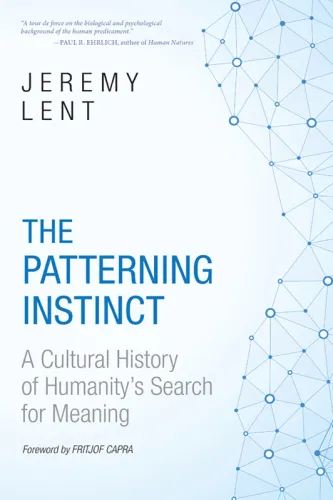
The Patterning Instinct: A Cultural History of Humanity’s Search for Meaning
Jeremy Lent
English
Unordered
Historical
4.6 / 5
0 reviews
2017
Published
569
pages
288
views
The Patterning Instinct: A Cultural History of Humanity’s Search for Meaning Cognitive history, cultural worldview evolution Explore The Patterning Instinct: A Cultural History of Humanity’s Search for Meaning, revealing humanity’s evolving worldviews. Analytical Sum
Before you read
What will you get from this book?
Analytical Summary
The Patterning Instinct: A Cultural History of Humanity’s Search for Meaning is a seminal work that investigates how human thought has evolved over thousands of years, tracing the mental patterns and symbolic frameworks that different cultures have used to interpret the world. Written to bridge disciplines such as cognitive science, history, anthropology, and philosophy, the book offers a panoramic view of humanity’s intellectual journey.
Through rigorous research and comparative analysis, the narrative starts from the earliest hunter-gatherer societies, moving through agricultural civilizations, the scientific revolution, and into contemporary global culture. At each stage, it examines how language, metaphor, and cultural stories shape human perception. This scholarly yet accessible approach makes it valuable for academics, professionals, and curious readers alike.
The author emphasizes that cognitive frames—shared mental structures—are not static; they evolve through historical events, societal needs, and ecological conditions. These cultural cognition patterns influence behavior, moral systems, and even our relationship to nature. Understanding these layers is essential for grappling with current global challenges.
Key Takeaways
The book distills complex historical and psychological insights into key themes that resonate with our era’s challenges and opportunities.
First, it reveals how symbolic thought—the ability to assign abstract meaning—enabled the rise of civilizations but also created divergent worldviews that continue to shape geopolitical and social dynamics.
Second, it underscores the role of metaphors as hidden drivers of human culture. Our conceptual metaphors around nature, progress, and the self govern societal priorities and technological ambitions.
Third, it invites the reader to reflect on modernity's dominant worldview, rooted in Western scientific rationalism, and to consider how integrating other cultural perspectives could foster sustainability and collective well-being.
Memorable Quotes
The text offers thought-provoking statements that encapsulate its core message.
“The way we think shapes the world we create.”Unknown
“Every culture lives within a cognitive cosmos — an architecture of meaning invisible to its own inhabitants.”Unknown
“Our survival depends on transforming our collective mind.”Unknown
Why This Book Matters
This work matters because it connects deep history with urgent contemporary issues, offering a framework to understand and transform our shared future.
In an interconnected world facing ecological crisis, political polarization, and technological upheaval, the ability to critically examine the cultural patterns that guide our collective decisions is invaluable. The Patterning Instinct: A Cultural History of Humanity’s Search for Meaning provides tools for such examination.
For educators, policymakers, and thought leaders, the book serves as both a diagnostic and a guide, urging engagement with diverse cultural wisdom traditions and scientific insights to co-create a more just and sustainable world.
Inspiring Conclusion
The Patterning Instinct: A Cultural History of Humanity’s Search for Meaning is more than a historical analysis; it is an invitation to consciously shape the worldview of tomorrow.
By tracing humanity’s mental patterns through time, the book empowers us to recognize the invisible frameworks guiding our choices. In doing so, it encourages constructive dialogue across cultural divides, an imperative in today’s complex global landscape.
Readers who engage deeply with its insights may find themselves inspired to read, share, and discuss its themes with colleagues and communities, amplifying its potential impact on our collective future. The next step is clear: immerse yourself in this exploration, challenge your assumptions, and contribute to a more integrated vision of meaning.
Ask this book
Your question is answered in the context of this title and author. Each answer uses 2 points.
Sign in to ask the book assistant.
Reader reviews
0 reviews, 4.6 average out of 5
No reviews yet
If you have read this book, help the next reader with your experience.
Write a review
Sign in to publish a review.
Reader questions and answers
Ask a focused question and learn from the community.
Sign in to ask or answer a question.
No questions yet
Be the first to ask a clear, useful question.
What to read next
Related references that continue this learning path.