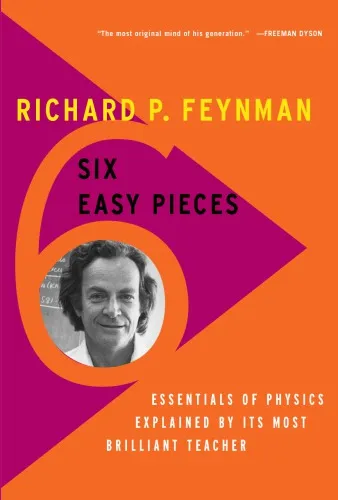
Six Easy Pieces: Essentials of Physics Explained by Its Most Brilliant Teacher
Richard P. Feynman,Robert B. Leighton,Matthew Sands
2011
View book
Book guide and evaluation
Robert Batterman
0 reviews
Published
pages
views
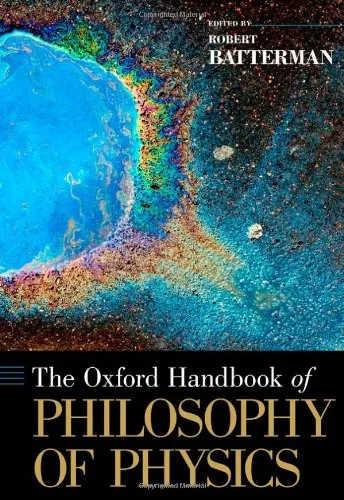
Introduction to 'The Oxford Handbook of Philosophy of Physics' 'The Oxford Handbook of Philosophy of Physics' serves as a comprehensive guide to the intricate and profound world of the philosophical issues surrounding physics. Edited by Robert Batterman, this volum
Before you read
'The Oxford Handbook of Philosophy of Physics' serves as a comprehensive guide to the intricate and profound world of the philosophical issues surrounding physics. Edited by Robert Batterman, this volume is a crucial resource for philosophers, physicists, and anyone interested in the intersection of philosophy and science. Its aim is to demystify and elucidate the profound questions that arise in the study of physics, spanning topics from the nature of time and space to the foundations of quantum mechanics.
This handbook is a meticulously curated collection of essays by some of the foremost thinkers in the field. Each chapter delves into a specific topic, offering diverse perspectives and in-depth analysis. The book covers traditional themes of philosophy such as metaphysics and epistemology within the context of physical theories. It also addresses more contemporary issues like the interpretation of quantum mechanics, the role of symmetries in physics, the nature of spacetime, and the challenges posed by theories of computation and simulation.
The volume is structured to guide the reader through the historical context of these debates while simultaneously exploring cutting-edge philosophical research. It provides a balance of classic philosophical inquiries and modern scientific challenges, showcasing how these two disciplines influence and inform each other. Each essay is penned by experts who offer a detailed examination of their respective topics, making the text an invaluable reference.
One of the book's key takeaways is the realization that philosophical questions are inherent and unavoidable within physics. It elucidates how these questions can lead to meaningful progress in both philosophical and scientific fields. Another significant insight is the emphasis on the methodological and conceptual underpinnings of physical theories, which often require philosophical analysis to fully understand their implications.
The book also highlights the importance of interdisciplinary collaboration. It suggests that philosophical and scientific pursuits are not isolated from each other but are intimately connected in the quest to understand reality. Readers will come away with a greater appreciation for the nuanced dialogue between philosophy and physics, and how each can enrich the other's understanding.
The book is sprinkled with thought-provoking quotes that capture its essence. These quotations serve not only as highlights of the text but also as entry points into deeper reflection and discussion. Each chapter offers memorable lines that summarize and provoke thoughts on the complexities of physics and philosophy.
Quotes from the book emphasize the intricate nature of the universe and the challenges involved in uncovering its secrets through human inquiry and perception.
'The Oxford Handbook of Philosophy of Physics' is a vital contribution to the academic landscape, bridging the gap between philosophical inquiry and physical sciences. It matters because it brings attention to the often-overlooked philosophical questions that underpin physical theories. These inquiries are crucial for advancing our understanding of fundamental concepts like time, space, causality, and reality itself.
The book also addresses the educational gap, serving both as a teaching resource and a research guide for students and scholars across disciplines. It challenges readers to think critically about the assumptions and conceptual foundations of physics, promoting a deeper comprehension that transcends technical knowledge alone.
Your question is answered in the context of this title and author. Each answer uses 2 points.
0 reviews, 4.5 average out of 5
Sign in to publish a review.
Ask a focused question and learn from the community.
Related references that continue this learning path.
Richard P. Feynman,Robert B. Leighton,Matthew Sands
Richard P. Feynman,Robert B. Leighton,Matthew Sands