
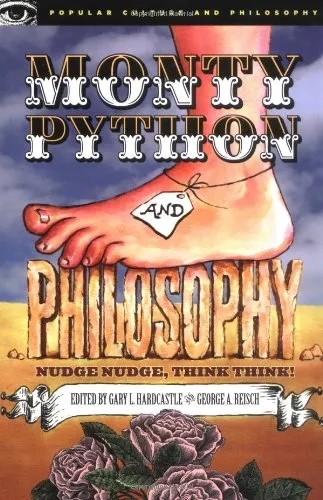
Monty Python and Philosophy: Nudge Nudge, Think Think! (Popular Culture and Philosophy 19)
Gary L. Hardcastle,George A. Reisch (eds.)
2006
View book
Book guide and evaluation
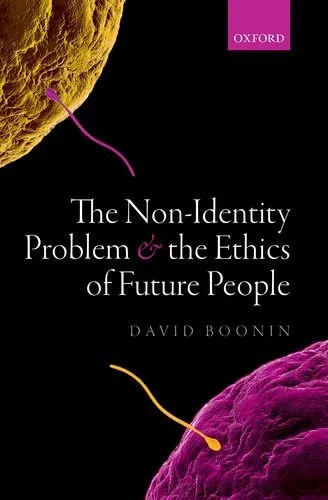
David Boonin
0 reviews
Published
pages
views
Introduction to "The Non-Identity Problem and the Ethics of Future People" David Boonin’s book, The Non-Identity Problem and the Ethics of Future People, delves into one of the most intriguing and complex ethical dilemmas in modern philosophy: the non-ide
Before you read
David Boonin’s book, The Non-Identity Problem and the Ethics of Future People, delves into one of the most intriguing and complex ethical dilemmas in modern philosophy: the non-identity problem. This problem forces us to confront a critical question—how do our actions today morally affect people who will exist in the future, particularly when those actions determine who those very future individuals will be? As environmental concerns, reproductive technologies, and intergenerational justice debates continue to shape public discourse, this book provides essential philosophical insights into how we evaluate these issues ethically.
The non-identity problem arises when decisions we make alter the identity of the people who will exist in the future. For example, choosing to act (or not act) on environmental crises does not merely impact living people—it shapes the context for future generations’ existence, influencing the people they will become. Despite its theoretical roots, the problem has profound implications for real-world moral and policy decisions.
In this book, Boonin systematically addresses the intellectual challenges surrounding this conundrum. Thought-provoking and deeply analytical, the work explores new ethical frameworks and applies existing theories to groundbreaking questions about how we balance our duties to current populations with those to future individuals. Through rigorous exploration, the book not only illuminates the theoretical underpinnings of this dilemma but also provides practical guidance for engaging with the ethics of our actions today and their consequences for tomorrow.
The book is meticulously divided into several core sections, each unraveling a layer of the non-identity problem and its ethical implications. Boonin begins by clearly defining the problem and situating it within the broader field of moral philosophy. He adeptly explains how the non-identity problem challenges our conventional approaches to ethics, including utilitarianism, deontology, and contractarianism.
Throughout the book, Boonin introduces an array of thought experiments to illustrate the practical relevance of the problem. For instance, he examines cases such as reproductive choices, genetic engineering, and environmental policies. One recurring theme is the puzzle of how to evaluate scenarios where harm can only be prevented by actions that affect the very identity of people yet to be born. Can we meaningfully say someone has been harmed if an alternative choice would result in a completely different person existing?
Boonin also addresses major critiques and counterarguments. The book thoroughly evaluates objections that question whether the non-identity problem is a genuine moral problem. Boonin’s careful analysis of these debates strengthens his case that understanding this problem is essential for issues like climate justice and intergenerational ethics.
"The puzzle of the non-identity problem, at its core, is a puzzle about the value of existence itself."
"Our actions today do not merely influence the world; they shape the persons yet to come into it. This places a profound responsibility on those of us alive in the present."
"To solve the non-identity problem is not merely an academic exercise—it is to decide the moral foundation upon which we build the future."
The Non-Identity Problem and the Ethics of Future People is more than an exploration of abstract philosophical questions; it is a call to carefully reconsider how we weigh our responsibilities to those who are not yet born. As the challenges of climate change, environmental depletion, and advancements in biotechnology demand urgent action, the ideas presented in this book are invaluable.
By offering a comprehensive exploration of one of modern philosophy’s most perplexing dilemmas, David Boonin provides readers with the tools to think critically and compassionately about how today’s choices shape tomorrow’s world. The book’s relevance extends beyond academia, serving as a guiding text for ethicists, policymakers, scientists, and anyone wrestling with the moral complexities of actions that reverberate across generations.
Your question is answered in the context of this title and author. Each answer uses 2 points.
0 reviews, 4.0 average out of 5
Sign in to publish a review.
Ask a focused question and learn from the community.
Related references that continue this learning path.
Gary L. Hardcastle,George A. Reisch (eds.)


Philip J. Davis,Reuben Hersh,Elena Anne Marchisotto (auth.)

Edited by Cary L. Cooper