React Interact: Situations for Communication, Third Edition
Donald R. H. Byrd,Isis C. Clemente
2001
View book
Book guide and evaluation
Robin Williams
0 reviews
Published
pages
views
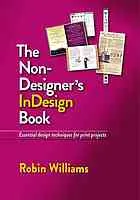
Introduction to "The Non-Designer’s InDesign Book: Essential Design Techniques for Print Projects" Welcome to the world of design, where creativity and usability meet to produce compelling print projects. Whether you're a budding designer, curious hobbyist, or someone who simp
Before you read
Welcome to the world of design, where creativity and usability meet to produce compelling print projects. Whether you're a budding designer, curious hobbyist, or someone who simply dabbles in design to fulfill workplace needs, "The Non-Designer’s InDesign Book" is your comprehensive guide to mastering Adobe InDesign—without requiring years of professional experience or formal training.
Written with clarity, wit, and practicality, this book empowers non-designers to create polished, professional-quality print materials. From brochures to newsletters, posters to advertisements, the techniques introduced here will transform your design skills. You don’t need a degree in graphic design to utilize these principles. Instead, the tools and tips provided in this book will help you harness the potential of Adobe InDesign to structure layouts, set typography, and use color effectively, all while adhering to modern design standards.
"The Non-Designer’s InDesign Book" is divided into intuitive and accessible sections that walk you step-by-step through the core features of Adobe InDesign.
The journey starts with understanding the software itself. Adobe InDesign, a powerful desktop publishing tool, may feel intimidating for those new to graphic design. However, by using beginner-friendly language and examples, this book helps demystify essential concepts like workspace customization, master pages, and working with layers.
Moving forward, readers learn design principles that serve as the foundation for visually appealing prints. These include contrast, alignment, repetition, and proximity—principles that non-designers might not be familiar with yet will find surprisingly intuitive to implement with InDesign’s features.
In subsequent chapters, you'll delve into creating various projects, such as flyers, marketing collateral, and business stationery, while incorporating typography, image placement, and grids for balanced designs. Throughout the book, there's a focus on practical, real-world applications, so readers can take immediate steps to produce better work—whether personal or professional.
Additionally, the book emphasizes how to troubleshoot common design challenges and avoid amateurish mistakes. The carefully curated examples and exercises ensure the learning experience is hands-on. By the end of the book, you’ll possess not only technical InDesign skills but also an appreciation for how design impacts communication and user experience.
This book is packed with motivational and insightful observations about design. Here are a few memorable quotes:
“Design is not just what it looks like; it’s how well it communicates.”
“Good design is invisible. It doesn’t scream, ‘Look at me!’ Instead, it guides the viewer effortlessly through the content.”
“You don’t need permission to design. All you need is an idea, a tool, and a willingness to learn.”
In today’s visually driven world, design is no longer optional—it’s essential. Whether you're creating marketing materials for a business, sharing your passion through a newsletter, or designing invitations for a personal event, how your project looks can make or break its impact.
"The Non-Designer’s InDesign Book" fills an important gap in the market by democratizing design education. Not everyone can enroll in a graphic design program, and not everyone wants to be a professional designer. However, everyone can benefit from understanding key design principles and how to use powerful tools like Adobe InDesign effectively. This book levels the playing field and provides non-designers with the confidence and skills they need to produce high-quality work.
Moreover, this book is more than just a technical manual. It’s a celebration of how design can change the way we communicate. It not only teaches the "how" of design, but also the "why." It encourages readers to think beyond aesthetics and focus on creating designs that serve a purpose—making information digestible, beautiful, and memorable.
Your question is answered in the context of this title and author. Each answer uses 2 points.
0 reviews, 4.5 average out of 5
Sign in to publish a review.
Ask a focused question and learn from the community.
Related references that continue this learning path.
Donald R. H. Byrd,Isis C. Clemente