
Discriminative Stimulus Properties of Drugs
Albert Weissman (auth.),Harbans Lal (eds.)
1977
View book
Book guide and evaluation
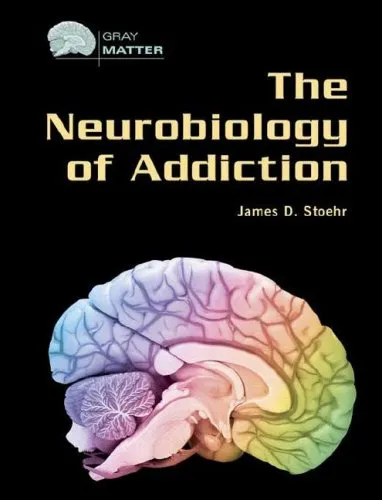
James D. Stoehr
0 reviews
Published
pages
views
Introduction to "The Neurobiology of Addiction" Addiction has long been viewed as a primarily behavioral problem, but over the past few decades, advances in neuroscience have revealed its complex biological underpinnings. In "The Neurobiology of Addiction," I aim to explore th
Before you read
Addiction has long been viewed as a primarily behavioral problem, but over the past few decades, advances in neuroscience have revealed its complex biological underpinnings. In "The Neurobiology of Addiction," I aim to explore the multifaceted nature of addiction, delving deeply into the intricate processes of the brain, the interplay of genetics, developmental factors, and environmental influences. This book unpacks addiction as a disease rather than a choice, offering insights grounded in research and lived experience. By presenting this information, I hope to bridge the gap between science and understanding, inspiring empathy and awareness about a condition that affects millions worldwide.
"The Neurobiology of Addiction" takes readers on a journey through the science behind substance use and compulsive behaviors. The book begins by laying a foundational understanding of how the brain works, highlighting key regions such as the prefrontal cortex, amygdala, and reward pathways dominated by dopamine and related neurochemicals. These brain systems are integral in both survival-driven behaviors and the mechanisms that foster addiction.
Subsequent chapters delve into topics such as the genetics of addiction, showing how inherited susceptibility interacts with an individual's environment. The role of stress, trauma, and early childhood experiences is emphasized, demonstrating how adverse conditions create vulnerabilities later in life. Importantly, the book doesn't just focus on substances like alcohol or opioids but also addresses behavioral addictions like gambling, internet addiction, and overeating, highlighting shared neurobiological pathways.
The book also explores the chronic and relapsing nature of addiction, explaining how repeated exposure to substances or behaviors alters brain circuitry, making recovery an uphill battle. Yet, it offers hope by elaborating on evidence-based treatments, notably pharmacological interventions and therapies like cognitive-behavioral therapy (CBT), mindfulness practices, and community-based support systems. By the end, readers are left with a comprehensive and empathetic understanding of addiction as both a personal and societal challenge.
“Addiction is not the triumph of will; it is the surrender of brain systems designed to ensure survival.”
“By understanding the brain’s role in addiction, we can move past blame and into treatment, past stigma and into compassion.”
“Neurobiology doesn’t absolve responsibility, but it reframes the conversation around what support and interventions are actually necessary to help individuals rebuild their lives.”
In an era where addiction continues to devastate individuals, families, and entire communities, understanding its roots has never been more critical. "The Neurobiology of Addiction" is significant because it doesn't just inform—it empowers readers to see addiction through a scientific and compassionate lens. Too often, discussions around addiction are couched in misunderstanding and judgment, perpetuating stigma and, ultimately, sabotaging recovery efforts.
By presenting accessible scientific explanations, this book equips healthcare workers, educators, loved ones, and individuals facing addiction themselves with tools to identify, address, and approach addiction constructively. Further, it contributes to societal conversations, shaping how policies, healthcare systems, and organizations approach addiction treatment and prevention. Ultimately, this book is a call to action, urging readers to shift from blame to support, from ignorance to awareness, and from stigma to solutions rooted in science.
Your question is answered in the context of this title and author. Each answer uses 2 points.
0 reviews, 4.5 average out of 5
Sign in to publish a review.
Ask a focused question and learn from the community.
Related references that continue this learning path.
Albert Weissman (auth.),Harbans Lal (eds.)
Travis Thompson,Roy Pickens (auth.),Travis Thompson,Roy Pickens (eds.)
Douglas Braun-Harvey MA,MFT,CGP,CST,Michael A. Vigorito LMFT,LCPC,CGP