Umberto Eco, The Da Vinci Code, and the Intellectual in the Age of Popular Culture
Douglass Merrell (auth.)
2017
View book
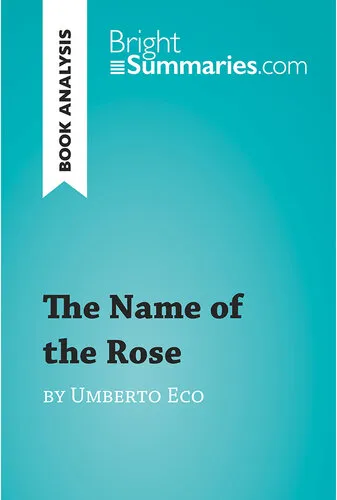
Book guide and evaluation
Bright Summaries
0 reviews
Published
pages
views
Introduction Welcome to the comprehensive analysis of "The Name of the Rose" by Umberto Eco, a captivating work that brilliantly intertwines historical fiction with a detective story. This guide will delve into the intricate facets of Eco's masterpiece, offering readers
Before you read
Welcome to the comprehensive analysis of "The Name of the Rose" by Umberto Eco, a captivating work that brilliantly intertwines historical fiction with a detective story. This guide will delve into the intricate facets of Eco's masterpiece, offering readers an in-depth understanding of its themes, characters, and complexities.
Umberto Eco, an Italian novelist and semiotician, crafts an enigmatic narrative set in the 14th century, where philosophy, theology, and literary analysis converge within the confines of a medieval monastery. "The Name of the Rose" is much more than a mere historical narrative; it is a stimulating intellectual adventure, a work of historical metaphysics complemented by mystery and suspense. This book analysis aims to unravel the layers of Eco's text, offering insights into its historical background, philosophical reflections, and the profound questions it raises.
Spanning over 500 pages, Eco's novel is rich with symbolic elements, enigmatic characters, and long-forgotten scholarly debates. As you embark on this analytical journey, you'll explore various dimensions of the text, each carefully dissected to provide a clearer picture of Eco's expansive world. From the subtlety of the semiotic clues to the reverberations of theological inquiries, every corner of this narrative awaits discovery.
This section provides an exhaustive summary of "The Name of the Rose," capturing its essence while guiding you through its intricate plot. The story is set in 1327 and follows the Franciscan friar William of Baskerville and his novice, Adso of Melk, during their visit to a Benedictine monastery in Italy. As they arrive for a theological debate, a series of bizarre deaths unfolds, propelling William and Adso into a whirlwind of secrets and intrigue.
William, a character inspired by Sherlock Holmes, employs logic and deductive reasoning to solve the mystery, unraveling themes of power, corruption, and the eternal struggle between faith and reason. As you delve deeper into this analysis, you will discover how Eco deftly intertwines these elements with historical events of the time, offering a narrative that resonates with universal human concerns.
"The Name of the Rose" presents multiple key takeaways, prompting readers to reflect on significant philosophical and theological questions.
Eco's novel is replete with memorable quotes that encapsulate its profound themes. Here are a few:
"Books are not made to be believed, but to be subjected to inquiry."
"Wherever there is light, there is also shadow."
"The library is a metaphor for society and, like society, can either be a place of shared knowledge or one of suppressive upheaval."
"The Name of the Rose" is a seminal work that transcends time, offering relevance to contemporary audiences. The novel's significance lies in its multifaceted exploration of humanity's quest for meaning in an ever-complex world.
The ethical dilemmas and ideological conflicts portrayed mirror modern-day challenges, providing a timeless reflection on the human condition. Eco's rich narrative not only entertains but also encourages readers to question the societal structures around them and their perceptions of truth and morality.
Through this guide, you will gain a deeper appreciation for Eco's literary craftsmanship and the enduring impact of "The Name of the Rose." Whether you are an ardent scholar or a casual reader, this analysis seeks to enrich your understanding of one of the 20th century's most pivotal novels.
Your question is answered in the context of this title and author. Each answer uses 2 points.
0 reviews, 4.0 average out of 5
Sign in to publish a review.
Ask a focused question and learn from the community.
Related references that continue this learning path.
Douglass Merrell (auth.)