

Essential Cell Biology,
Bruce Alberts,Dennis Bray,Karen Hopkin,Alexander Johnson,Julian Lewis,Martin Raff,Keith Roberts,Peter Walter
2004
View book
Book guide and evaluation
Michael Khan,Stella Pelengaris
0 reviews
Published
pages
views
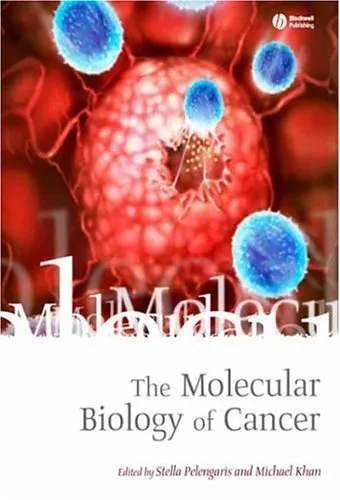
The Molecular Biology of Cancer Cancer cell signaling, oncogene research A definitive guide to understanding The Molecular Biology of Cancer through clear analysis and expert insight. Analytical Summary Written by Michael Khan and Stella Pelengaris, The Molecular
Before you read
Written by Michael Khan and Stella Pelengaris, The Molecular Biology of Cancer is an authoritative resource that unpacks the cellular and molecular mechanisms driving one of the most complex diseases of our time. Designed for students, researchers, and healthcare professionals, the book offers a rigorous yet accessible exploration of the intricate processes underlying cancer development, progression, and treatment.
Through its carefully structured chapters, the text examines how genetic mutations, epigenetic changes, and environmental factors converge to transform normal cells into malignant ones. It covers essential topics such as oncogenes, tumor suppressor genes, cell-cycle regulation, apoptosis, metastasis, and cancer immunology. The authors integrate recent advancements in molecular diagnostics and targeted therapies, ensuring readers understand both theoretical foundations and practical applications.
The structure promotes incremental learning—starting with the biology of normal cells before delving into pathological changes. Case studies, schematic diagrams, and molecular pathways are explained in a way that balances depth with clarity, making complex information more digestible without sacrificing precision.
At its core, The Molecular Biology of Cancer equips readers with a framework for understanding cancer at the molecular and cellular levels, fostering the critical thinking needed to interpret research findings and clinical data.
Key insights include:
• The central role of genetic instability in initiating and driving cancer progression.
• How disruption in key regulatory proteins can lead to uncontrolled cell proliferation.
• The importance of signaling pathways in tumor growth, angiogenesis, and metastasis.
• Advances in molecular diagnostics, allowing earlier and more precise detection.
• Integration of targeted therapies based on molecular profiling of individual cancers.
Understanding cancer requires not only mapping its genetic landscape but also interpreting the dynamic interplay of cellular systems. Unknown
Advances in molecular biology will continue to redefine how we diagnose and treat cancer in the coming decades. Unknown
Research into oncogenes and tumor suppressor genes has illuminated the path toward precision oncology. Unknown
Cancer remains a leading cause of death worldwide, and the need for comprehensive, accessible resources is more pressing than ever. The Molecular Biology of Cancer bridges the gap between foundational theory and emerging clinical practice.
By presenting fundamental concepts alongside cutting-edge research, the authors empower readers to analyze current literature with confidence and apply molecular insights to real-world medical challenges. This dual emphasis on academic rigor and clinical relevance makes the text valuable not only to students but also to practicing oncologists, pathologists, and molecular biologists seeking to refresh or deepen their knowledge.
Its relevance extends beyond oncology; it informs fields like pharmacology, genetics, and public health, offering a versatile reference in an era where cross-disciplinary understanding is increasingly vital.
Reading The Molecular Biology of Cancer is more than an academic exercise—it is an invitation to join the global effort in combating one of humanity’s most persistent health challenges.
This book’s authoritative approach, grounded in the latest scientific research, provides a platform for informed discussion, collaborative exploration, and critical analysis. By engaging with its content, you not only broaden your scientific horizons but also equip yourself with the intellectual tools necessary to contribute meaningfully to oncology research and practice.
Whether you are an established professional, an ambitious student, or a passionate advocate for cancer awareness, the journey through The Molecular Biology of Cancer will inspire action. We invite you to read, share, and discuss the ideas found within, ensuring the knowledge continues to evolve and serve the needs of science, medicine, and humanity.
Your question is answered in the context of this title and author. Each answer uses 2 points.
0 reviews, 4.8 average out of 5
Sign in to publish a review.
Ask a focused question and learn from the community.
Related references that continue this learning path.
Bruce Alberts,Dennis Bray,Karen Hopkin,Alexander Johnson,Julian Lewis,Martin Raff,Keith Roberts,Peter Walter

John Davey,J. Michael Lord

Bruce Alberts,Dennis Bray,Karen Hopkin,Alexander Johnson,Julian Lewis,Martin Raff,Keith Roberts,Peter Walter
Bruce Alberts,Dennis Bray,Karen Hopkin,Alexander D Johnson,Julian Lewis,Martin Raff,Keith Roberts,Peter Walter