

Book guide and evaluation
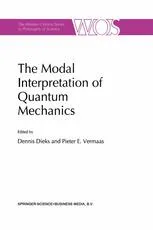
The Modal Interpretation of Quantum Mechanics
Dennis Dieks,Pieter E. Vermaas (auth.),Dennis Dieks,Pieter E. Vermaas (eds.)
English
Beginner
Physics
4.5 / 5
0 reviews
1998
Published
379
pages
156
views
Introduction to "The Modal Interpretation of Quantum Mechanics" Quantum mechanics is one of the most profound and perplexing theories in modern physics, and its interpretation remains a contested topic. "The Modal Interpretation of Quantum Mechanics," edited by Den
Before you read
What will you get from this book?
Introduction to "The Modal Interpretation of Quantum Mechanics"
Quantum mechanics is one of the most profound and perplexing theories in modern physics, and its interpretation remains a contested topic. "The Modal Interpretation of Quantum Mechanics," edited by Dennis Dieks and Pieter E. Vermaas, offers an in-depth exploration of one of the lesser-discussed but intellectually captivating approaches to understanding quantum physics — the modal interpretation. This book serves as both a foundational and advanced resource for readers who are intrigued by the conceptual framework of quantum theory, seamlessly blending physics, philosophy, and mathematical rigor.
Detailed Summary of the Book
The modal interpretation of quantum mechanics addresses some of the interpretational challenges that have plagued the theory since its inception. Unlike the more familiar interpretations, such as the Copenhagen interpretation or many-worlds interpretation, the modal interpretation adopts the stance that the quantum state does not directly represent reality as it is but instead encodes the potentialities or possibilities of physical systems.
Throughout the book, Dieks and Vermaas compile thoughtful contributions from leading researchers who discuss and expand upon major themes of the modal interpretation. The chapters delve into technical aspects, such as how modal interpretations deal with measurement problems, non-locality, and the nature of quantum probabilities. Yet, the text also maintains an approachable philosophical inquiry into how the theory challenges our classical intuitions of what constitutes "reality."
The book provides a multidimensional view of the subject by combining critical analysis, philosophical arguments, and formal structures. For readers who are interested in the conceptual foundations of quantum mechanics—as well as its implications for fields like metaphysics and epistemology—this comprehensive volume serves as an indispensable guide.
Key Takeaways
- The modal interpretation challenges the classical idea of definitive outcomes, proposing that quantum systems possess a range of potential properties.
- It incorporates a clear distinction between what is "actual" and "possible" in quantum systems, avoiding ontological commitments to wavefunction realism.
- The interpretation provides a fresh perspective on quantum measurement without collapsing wavefunctions or invoking parallel universes.
- The approach seeks to harmonize mathematical elegance with philosophical clarity, making it an attractive option for interpreters of science.
- Modal interpretations illuminate how non-locality and entanglement fit into a coherent account of quantum phenomena.
Famous Quotes from the Book
"The modal interpretation takes quantum mechanics seriously as a theory of the physical world while respecting the theory's mathematical structure."
"We do not replace the weirdness of the quantum world with classical intuitions but rather broaden our conceptual framework to embrace its strangeness."
"In the modal interpretation, probabilities are not merely epistemic but play a fundamental role in the very structure of physical reality."
Why This Book Matters
"The Modal Interpretation of Quantum Mechanics" matters because it ventures beyond the standard interpretations of quantum mechanics to provide a nuanced and mathematically consistent perspective. It bridges the gap between theoretical physics and philosophy of science, making it a valuable resource for physicists, philosophers, and students alike. The modal interpretation shines as an alternative framework that reconciles some of the troubling aspects of quantum mechanics, such as the measurement problem and the apparent lack of determinism.
Furthermore, this book exemplifies the importance of interdisciplinary collaboration. By bringing together researchers across fields, Dieks and Vermaas advance a richer understanding of quantum theory and stimulate fresh philosophical and practical questions. At a time when interpretational debates continue to evolve, this volume compels readers to rethink what quantum mechanics tells us about the nature of physical reality.
Ask this book
Your question is answered in the context of this title and author. Each answer uses 2 points.
Sign in to ask the book assistant.
Reader reviews
0 reviews, 4.5 average out of 5
No reviews yet
If you have read this book, help the next reader with your experience.
Write a review
Sign in to publish a review.
Reader questions and answers
Ask a focused question and learn from the community.
Sign in to ask or answer a question.
No questions yet
Be the first to ask a clear, useful question.
What to read next
Related references that continue this learning path.


Modern Computer Vision with PyTorch: A Practical Roadmap From Deep Learning Fundamentals to Advanced Applications and Generative AI, 2nd Edition
V Kishore Ayyadevara,Yeshwanth Reddy
2023
View book