Book guide and evaluation
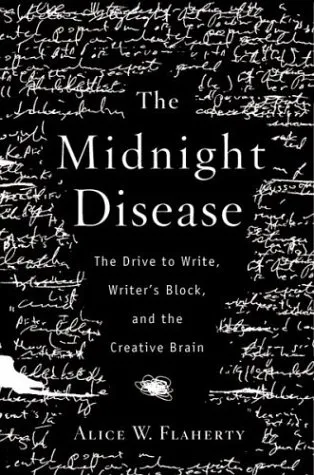
The Midnight Disease: The Drive to Write, Writer's Block, and the Creative Brain
Alice Weaver Flaherty
English
Beginner
writing
4.2 / 5
0 reviews
2004
Published
307
pages
483
views
Welcome to the enriched world of creativity, exploration, and understanding of the human brain through the prism of writing. "The Midnight Disease: The Drive to Write, Writer's Block, and the Creative Brain" by Alice Weaver Flaherty is an enlightening journey into the mysteri
Before you read
What will you get from this book?
Welcome to the enriched world of creativity, exploration, and understanding of the human brain through the prism of writing. "The Midnight Disease: The Drive to Write, Writer's Block, and the Creative Brain" by Alice Weaver Flaherty is an enlightening journey into the mysterious processes that compel writers to write and the barriers they struggle to overcome. This work brilliantly traverses the terrain of neurobiology, psychology, and the essential human drive to express oneself through the written word.
Detailed Summary of the Book
In "The Midnight Disease," Alice Weaver Flaherty invites readers into a thought-provoking exploration of the neurological and psychological components that underpin the act of writing. Grounded in Flaherty's own experiences as both a writer and a neurologist, the book balances scientific research with personal narrative to unravel why humans are driven to create with words.
Flaherty delves into the emotional and cognitive processes at play in the act of writing, exploring the neurological basis for both the impulse to write and the inhibiting condition of writer's block. This dual focus allows her to engage with questions that have long plagued writers: what fuels inspiration, and what causes the dreaded silence or stagnation in creative work?
As Flaherty unpacks the mysterious elements of hypergraphia, an overwhelming urge to write, she juxtaposes it with the debilitating paralysis of writer's block, bringing forward an intriguing discussion on how brain chemistry influences creativity. The interplay of various hormones and neurotransmitters sets the stage for understanding how artistic expression is profoundly linked to biological processes.
Key Takeaways
One of the essential insights from "The Midnight Disease" is the realization that writing is intricately connected to brain functions that govern emotional and cognitive processes. By recognizing this, Flaherty empowers writers and creatives to understand their drive or lack thereof from a scientific perspective.
- Creativity is biologically grounded, with specific brain regions like the temporal lobes playing a significant role.
- The book examines hypergraphia as not merely a symptom of neurological conditions but as an inherent creative force.
- Understanding the neurological underpinnings of writer's block can demystify and potentially mitigate its effects.
- The intricate balance of brain chemicals such as dopamine and norepinephrine can significantly influence creativity and productivity.
Famous Quotes from the Book
"The drive to write, like the drive to create any form of art, emerges out of a need to communicate something essential about our consciousness."
"Understanding the neurological basis of the creative process can be incredibly liberating for artists who struggle with blocks."
Why This Book Matters
"The Midnight Disease" is more than a scientific treatise; it's a vital tool for anyone who grapples with the forces that inspire or hinder creative work. Flaherty's unique position as both a neurologist and a writer offers her insights that are both clinically authoritative and experientially relatable. This book is important because it provides a bridge between two worlds that are often thought of as separate: the scientific and the artistic.
By bringing to light the biological and psychological drives behind writing, Flaherty offers readers a mirror to view their creative struggles and triumphs. Furthermore, her work encourages a deeper understanding and compassion for the self, an invaluable resource for writers confronting their own midnight diseases.
Ultimately, "The Midnight Disease" challenges preconceived notions about creativity and neurology, presenting a rich tapestry of ideas that continues to resonate with writers and creatives across disciplines.
Ask this book
Your question is answered in the context of this title and author. Each answer uses 2 points.
Sign in to ask the book assistant.
Reader reviews
0 reviews, 4.2 average out of 5
No reviews yet
If you have read this book, help the next reader with your experience.
Write a review
Sign in to publish a review.
Reader questions and answers
Ask a focused question and learn from the community.
Sign in to ask or answer a question.
No questions yet
Be the first to ask a clear, useful question.
What to read next
Related references that continue this learning path.