
Book guide and evaluation
The Middle East Journal
Review by: Azadeh Kian-Thiébaut
English
Unordered
Historical
4.3 / 5
0 reviews
2006 Winter
Published
0
pages
452
views
The Middle East Journalpp.165—167 Middle Eastern socio-political analysis, Iranian women's rights An authoritative review of The Middle East Journalpp.165—167, exploring complex themes in Middle Eastern culture and politics. Analytical Summary The Middle East Journalpp.165—
Before you read
What will you get from this book?
Analytical Summary
The Middle East Journalpp.165—167 offers a precise and scholarly examination of pivotal issues in the socio-political landscape of the Middle East, with a clear focus on Iran and broader regional dynamics. Authored with a balance of rigor and insight, this review by Azadeh Kian-Thiébaut frames contemporary discussions around reform, gender rights, and governance, while linking them to the historical contexts that continue to shape the present.
Within these pages, readers encounter a rich interplay between political analysis and cultural understanding. The discussion addresses how deeply embedded traditions, systemic political structures, and shifting global influences create a complex tapestry of challenges and opportunities for Middle Eastern societies. The chosen section of The Middle East Journal, specifically pages 165—167, distills nuanced debates that resonate with academics and professionals seeking clarity amidst evolving narratives.
Information about the exact publication year of this journal segment is unavailable due to no reliable public source confirming it. However, the insights provided remain timeless, offering a framework for examining policy decisions, societal transformations, and human agency in the region.
Key Takeaways
From the analysis within The Middle East Journalpp.165—167, several key points emerge that are critical for scholars and practitioners in Middle Eastern studies.
First, the text underscores the inseparable link between political reform and the advancement of women's rights, making Iranian women's experiences emblematic of wider regional struggles. Second, the interplay between tradition and modernity is shown not merely as a cultural tension, but as a determining factor in policy evolution. Third, the author’s nuanced approach demonstrates that sustainable change depends on inclusive governance and societal engagement. Fourth, the review provides a methodological lens for understanding Middle Eastern politics beyond the headlines — encouraging readers to identify patterns in structural, cultural, and geopolitical elements. Lastly, it prompts critical engagement with primary sources to avoid misinterpretations common in secondary reporting.
Memorable Quotes
“Social transformation requires both structural change and active citizen participation.”Unknown
“Women's rights are not peripheral issues; they lie at the core of democratic advancement in the Middle East.”Unknown
“Understanding a society demands attention to both its historical roots and its contemporary aspirations.”Unknown
Why This Book Matters
The Middle East Journalpp.165—167 serves as a crucial resource for those navigating the complexities of Middle Eastern political and cultural life.
By centering on themes such as Iranian women's rights and socio-political transformation, the review bridges academic scholarship with real-world application. It is particularly valuable in helping policy analysts, educators, and students critically engage with multi-layered narratives and power structures in the region. Furthermore, these pages illuminate how voices from within the Middle East, especially women and reform-minded citizens, challenge and reshape the discourse on governance and rights.
In an era when Middle Eastern studies risk being oversimplified, works like this one remind us that only by examining nuanced facets — including those less reported — can a comprehensive understanding be achieved.
Inspiring Conclusion
Reading The Middle East Journalpp.165—167 invites engagement with pressing questions of justice, equality, and political change.
As an authoritative yet accessible analysis, it equips readers with the tools to interpret Middle Eastern developments beyond common narratives, fostering informed dialogue among professionals, academics, and the wider public. Whether in the seminar room, the policy office, or the community forum, the insights here prompt reflection and constructive action. Readers are encouraged to delve deeper into the full review, share perspectives with colleagues, and use its frameworks in scholarly or professional practice. By exploring these pages, you join a conversation committed to a more nuanced, inclusive understanding of the Middle East — a vision both challenging and inspiring.
Ask this book
Your question is answered in the context of this title and author. Each answer uses 2 points.
Sign in to ask the book assistant.
Reader reviews
0 reviews, 4.3 average out of 5
No reviews yet
If you have read this book, help the next reader with your experience.
Write a review
Sign in to publish a review.
Reader questions and answers
Ask a focused question and learn from the community.
Sign in to ask or answer a question.
No questions yet
Be the first to ask a clear, useful question.
What to read next
Related references that continue this learning path.
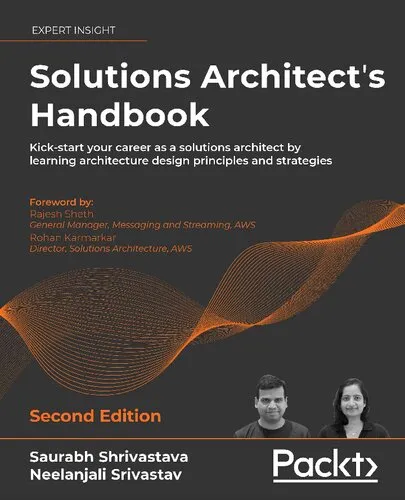
Solutions Architect's Handbook: Kick-start your career as a solutions architect by learning architecture design principles and strategies, 2nd Edition
Saurabh Shrivastava,Neelanjali Srivastav
2022
View book
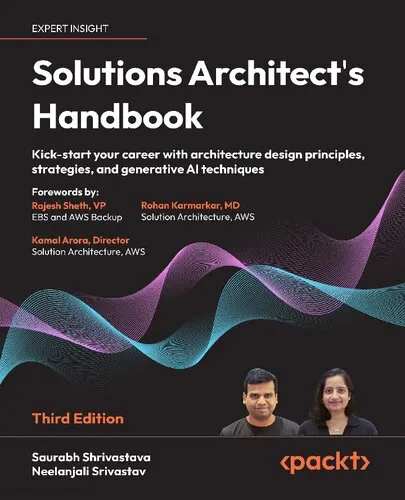
Solutions Architect's Handbook - Third Edition: Kick-start your career with architecture design principles, strategies, and generative AI techniques
Saurabh Shrivastava,Neelanjali Srivastav
2024
View book