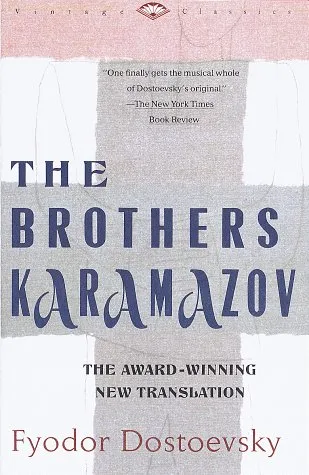
The Brothers Karamazov (Vintage Classics) (Everyman's Library, #70)
Fyodor Dostoyevsky, Richard Pevear, Larissa Volokhonsky;Malcolm V. Jones
1992
View book
Book guide and evaluation
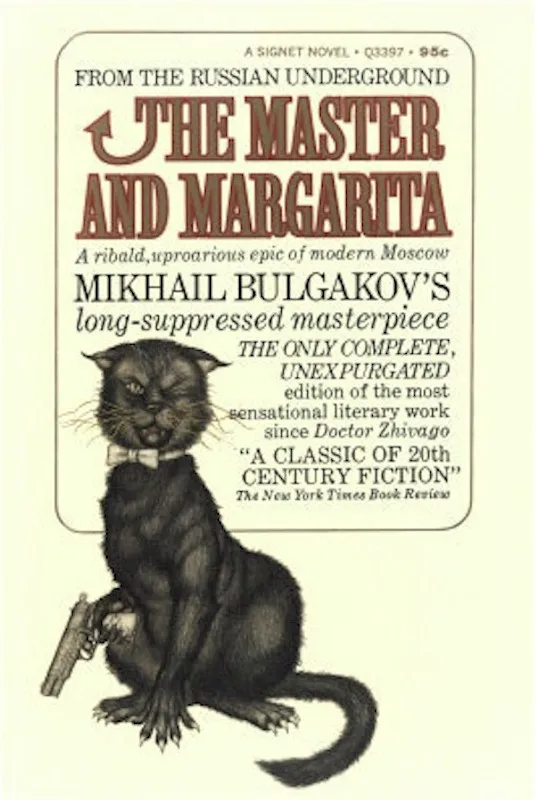
Mikhail Bulgakov,Michael Glenny (Transl.)
0 reviews
Published
pages
views
Welcome to an exploration of 'The Master and Margarita', a literary masterpiece by Mikhail Bulgakov. This profound novel intricately weaves themes of the supernatural, romance, and societal satire, creating a narrative that has captivated readers across the world. Deta
Before you read
Welcome to an exploration of 'The Master and Margarita', a literary masterpiece by Mikhail Bulgakov. This profound novel intricately weaves themes of the supernatural, romance, and societal satire, creating a narrative that has captivated readers across the world.
'The Master and Margarita' is set in two distinct but interwoven worlds. The first is 1930s Moscow under the Soviet regime, depicted with a satirical lens as Bulgakov critiques the oppressive political climate. The second world is a fantastical retelling of the biblical tale of Pontius Pilate and Yeshua Ha-Notsri (Jesus of Nazareth), presented alongside a chaotic visit by Satan—or Woland, as he is named in this novel—to the Soviet capital.
The narrative opens with Woland and his bizarre entourage arriving in Moscow, bringing disorder, dark humor, and supernatural events in their wake. Their presence disrupts the lives of many, including the Master—a beleaguered writer—and his devoted lover, Margarita. Through magic and mystery, Margarita becomes the heroine, embarking on a quest to reunite with her beloved Master.
Bulgakov masterfully blends this plot with the ancient Yershalaim narrative, delving into themes of courage, cowardice, and redemption as Pilate grapples with his role in the crucifixion of Yeshua. The connection between these two storylines reveals profound insights into human nature and morality.
One of the central themes of 'The Master and Margarita' is the critique of societal and political oppression. Bulgakov uses satire to highlight the absurdities and injustices of Soviet society, an act of defiance revealing the power of artistic freedom.
Another significant takeaway is the exploration of good and evil. Through Woland, Bulgakov suggests that neither can exist without the other, emphasizing the complexity of moral judgments. Furthermore, the novel underscores the idea of spiritual salvation, art's redemptive power, and the enduring nature of love.
'The Master and Margarita' is a cornerstone of 20th-century literature. Composed over many years and published posthumously, it reflects Bulgakov's personal struggles with censorship and his determination to speak out against despotism. Its rich symbolism and philosophical depth make it a profound examination of humanity's eternal struggles.
This book's unique blend of fantasy and reality, alongside its exploration of enduring themes like love and freedom, continues to resonate with readers worldwide. Its impact on Russian literature and its influence on later writers and artists underscore its importance as a timeless, provocative work that challenges and enchants.
Persian Summary
Your question is answered in the context of this title and author. Each answer uses 2 points.
0 reviews, 4.3 average out of 5
Sign in to publish a review.
Ask a focused question and learn from the community.
Related references that continue this learning path.
Fyodor Dostoyevsky, Richard Pevear, Larissa Volokhonsky;Malcolm V. Jones