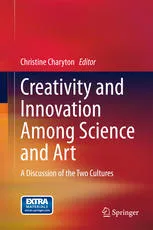
Creativity and Innovation Among Science and Art: A Discussion of the Two Cultures
Christine Charyton (eds.)
2015
View book
Book guide and evaluation
Itty Abraham
0 reviews
Published
pages
views
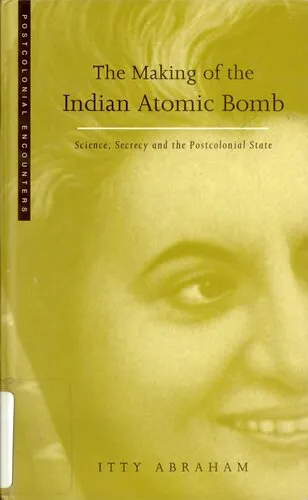
Introduction to "The Making of the Indian Atomic Bomb: Science, Secrecy and the Postcolonial State" "The Making of the Indian Atomic Bomb: Science, Secrecy and the Postcolonial State" is a groundbreaking exploration of India's journey into nuclear technology and its trajec
Before you read
"The Making of the Indian Atomic Bomb: Science, Secrecy and the Postcolonial State" is a groundbreaking exploration of India's journey into nuclear technology and its trajectory towards becoming a nuclear power. Written by Itty Abraham, a scholar deeply engaged with postcolonial studies and the sociology of science, the book examines how science, secrecy, and state power coalesce in postcolonial India to define its atomic ambitions. While often viewed through the lens of geopolitics or technological prowess, Abraham moves beyond common narratives to uncover profound insights into the sociopolitical and cultural conditions that facilitated India’s nuclear project.
This meticulously researched work investigates not only the technical and scientific milestones of India's nuclear program but also the complex relationship between knowledge production, state secrecy, and national identity in a postcolonial context. The book questions conventional frameworks of power and explores how the legacies of colonialism continue to shape modern states like India. It is an essential read for those seeking a deeper understanding of the interconnected politics of technology and nationalism, especially in the Global South.
The book opens by situating India’s nuclear program within its broader geopolitical and historical contexts. After gaining independence in 1947, India inherited a colonial legacy of inequality, technological dependency, and political subjugation. Itty Abraham examines how this historical backdrop shaped the postcolonial state’s desire for self-sufficiency and modernity, both symbolized by nuclear technology. The narrative delves into the fascinating history of India's atomic projects, from its inception in the 1940s under Homi Bhabha to the 1974 Pokhran-I nuclear test.
Through a multidisciplinary lens, Abraham uncovers the decisive role of secrecy in India's nuclear development. Unlike transparent democratic processes, the construction of the Indian atomic bomb thrived within an opaque system, necessitating the prioritization of state control over scientific inquiry. The book critiques this model of secretive governance and its implications for the relationship between science and civil society within a democracy.
Furthermore, Abraham explores the symbolic importance of the bomb, which became a marker of national achievement and prestige despite its contentious use in global politics. He draws parallels between India’s postcolonial challenges and its nuclear ambitions, arguing that the atomic bomb ultimately served as a tool for asserting sovereignty in a world dominated by Western powers. The book concludes by questioning the ethics and future direction of India's nuclear strategy, placing it within broader debates about postcolonial identity and global inequality.
"The making of the Indian atomic bomb was as much about building a nation in the aftermath of colonialism as it was about building a weapon."
"It is through secrecy that the state gains power over science, but it is also through secrecy that science is tied to the state’s vision of itself."
"The bomb, though destructive, also holds the contradictory promise of sovereignty and self-reliance to postcolonial nations."
"The Making of the Indian Atomic Bomb" is more than just a historical account of India’s nuclear program; it is a profound exploration of the intersections between technology, politics, and identity in a postcolonial world. It sheds light on the complexities of state power, secrecy, and science while challenging dominant Western-centric narratives about nuclear proliferation. Itty Abraham’s work is especially significant today as political debates about nationalism, scientific development, and global inequality remain at the forefront of international discourse.
By situating India's atomic journey within the broader sociopolitical framework of postcoloniality, the book speaks to scholars of international relations, science and technology studies, and South Asian history. It invites readers to think critically about the global hierarchies that shape technological achievements and to question the ethical implications of viewing nuclear weapons as symbols of national power. In doing so, the book remains a relevant and thought-provoking contribution to the fields of political science and postcolonial studies.
Your question is answered in the context of this title and author. Each answer uses 2 points.
0 reviews, 4.3 average out of 5
Sign in to publish a review.
Ask a focused question and learn from the community.
Related references that continue this learning path.
Christine Charyton (eds.)

Daniel Andler (auth.),Mauricio Suárez,Mauro Dorato,Miklós Rédei (eds.)