
Book guide and evaluation
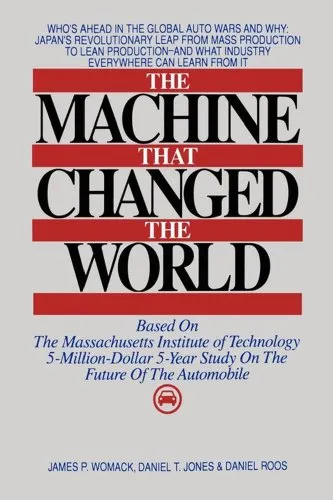
The Machine That Changed the World : Based on the Massachusetts Institute of Technology 5-Million-Dollar 5-Year Study on the Future of the Automobile
James P. Womack
English
Beginner
Operations Management
4.5 / 5
0 reviews
1990
Published
167
pages
462
views
Introduction Welcome to the pivotal exploration of the automotive industry's transformative journey: "The Machine That Changed the World." This book encapsulates a comprehensive five-year study conducted by the Massachusetts Institute of Technology, meticulously examining
Before you read
What will you get from this book?
Introduction
Welcome to the pivotal exploration of the automotive industry's transformative journey: "The Machine That Changed the World." This book encapsulates a comprehensive five-year study conducted by the Massachusetts Institute of Technology, meticulously examining the evolution and future of the automobile industry. As automobiles continue to be integral to modern society, this book offers insights into the profound changes that have shaped not only the production processes but also the philosophical approaches embraced within the industry.
Detailed Summary of the Book
The book delves into the revolutionary transition from traditional mass production to lean production, a concept championed by Toyota and now widely adopted by leading automotive companies worldwide. Lean production, characterized by efficiency and quality over sheer volume, has fundamentally redefined the manufacturing landscape. This study, backed by a $5-million investment, thoroughly investigates the production operations and strategies of various automotive giants. By contrasting distinct production philosophies, the book reveals how lean production delivers superior quality, shorter lead times, and significantly reduced manufacturing costs, outperforming the traditional mass production techniques conceived by Henry Ford.
Key Takeaways
Lean production emphasizes a holistic approach that integrates all aspects of the manufacturing process, promoting continuous improvement and waste elimination.
The Toyota Production System stands as a benchmark for lean manufacturing, prioritizing quality assurance, employee involvement, and supplier integration.
Traditional mass production, focused on economies of scale, often results in overproduction, inefficiencies, and quality inconsistencies.
The shift to lean manufacturing requires a paradigm change in management philosophy, focusing on cultivating a culture of excellence and innovation.
Adoption of lean principles extends beyond automotive manufacturing, influencing industries globally, and transforming production practices across sectors.
Famous Quotes from the Book
"Lean production is ‘lean’ because it uses less of everything compared with mass production—half the human effort in the factory, half the manufacturing space, half the investment in tools, half the engineering hours to develop a new product in half the time."
"At its core, lean thinking is about producing only what is needed when it’s needed and in the amount needed, thereby eliminating waste and creating value for the end consumer."
Why This Book Matters
"The Machine That Changed the World" is more than a historical account; it is a critical analysis of the forces that continually shape and redefine industries. Understanding the impact of lean production is crucial for current and future leaders in any manufacturing sector. This book matters because it presents a clear, evidence-based narrative on how the adoption of lean principles can lead to superior competitive advantage and innovation in production. By advocating for these fundamental shifts in approach and mindset, it aids businesses in achieving a sustainable future. Furthermore, its insights reach beyond automotive manufacturing, affecting various sectors seeking efficiency and excellence. The book illustrates the compelling need for ongoing transformation and adaptability in the face of ever-evolving global demands and technological advancements.
Ask this book
Your question is answered in the context of this title and author. Each answer uses 2 points.
Sign in to ask the book assistant.
Reader reviews
0 reviews, 4.5 average out of 5
No reviews yet
If you have read this book, help the next reader with your experience.
Write a review
Sign in to publish a review.
Reader questions and answers
Ask a focused question and learn from the community.
Sign in to ask or answer a question.
No questions yet
Be the first to ask a clear, useful question.
What to read next
Related references that continue this learning path.
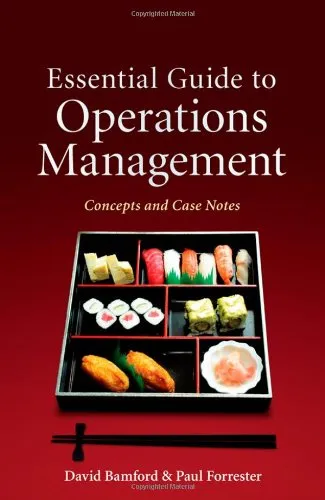
Essential Guide to Operations Management: Concepts and Case Notes (Wiley)
David Bamford,Paul Forrester
2010
View book
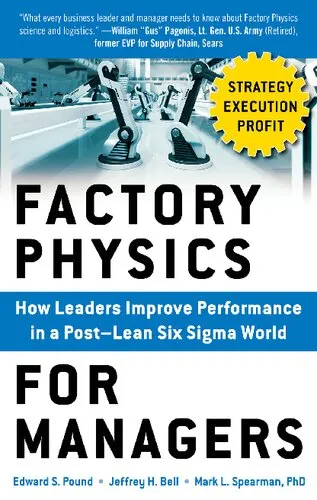
Factory Physics for Managers: How Leaders Improve Performance in a Post-Lean Six Sigma World
Edward Pound,Jeffrey Bell,Mark Spearman
2014
View book