
The 7 habits of highly effective people: restoring the character ethic
Stephen R. Covey
2004
View book
Book guide and evaluation
Dietrich Dorner
0 reviews
Published
pages
views
Introduction In an ever-increasingly complex world, understanding the intricacies of decision-making and problem-solving is essential. "The Logic Of Failure: Recognizing And Avoiding Error In Complex Situations" by Dietrich Dorner explores the intricate pathways that lead to f
Before you read
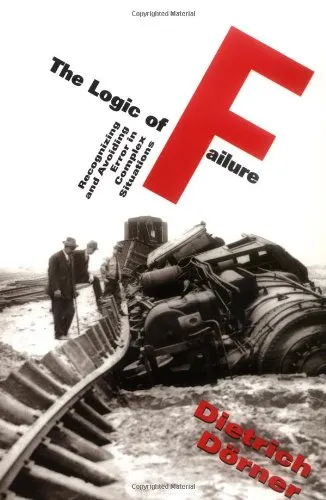
In an ever-increasingly complex world, understanding the intricacies of decision-making and problem-solving is essential. "The Logic Of Failure: Recognizing And Avoiding Error In Complex Situations" by Dietrich Dorner explores the intricate pathways that lead to failure, offering profound insights into the mechanics of failure and how one can steer clear of errors in complex systems.
The core premise of the book revolves around understanding how people manage complex, dynamic problems and why they often fail in such endeavors. Dorner, through a series of experimental simulations, delves into the cognitive processes that underpin human decision-making and highlights the typical shortcomings in our approach to managing complexity. The book takes the reader through various scenarios where individuals are asked to manage and control simulated ecosystems, economies, and political situations, allowing for an examination of how decisions are made and what factors lead to failures.
Dorner identifies several common patterns that contribute to errors, such as neglecting the long-term consequences of decisions or failing to consider the interrelatedness of variables within a system. He argues that many failures stem from cognitive limitations or biases, inadequate heuristics, and a lack of understanding of systems dynamics. By analyzing these patterns, the book serves as a guide to not only recognize these pitfalls but also develop strategies to overcome them.
The book offers numerous insights that are crucial for anyone looking to improve their decision-making skills, especially in complex and unpredictable environments:
"A decision maker... cannot avoid influencing a system, even though he may not want to change it, because he must first find out what he needs to know in order to avoid making mistakes."
"We have to do something about problems in terms of their system nature."
In "The Logic Of Failure," Dorner sheds light on the often-overlooked psychological and cognitive aspects of decision-making. At a time when individuals and organizations face unprecedented levels of complexity, understanding the dynamics of failure is more critical than ever. This book acts as a practical guide, equipping readers with the necessary tools to understand and navigate complex scenarios effectively.
By embracing the insights provided by Dorner, decision-makers can enhance their ability to anticipate and adjust to evolving situations, resulting in better outcomes. The book's deep examination of the cognitive traps and systematic errors that lead to failures makes it an invaluable resource for anyone involved in critical decision-making processes, thus cementing its importance in the fields of organizational management, policy design, and beyond.
Your question is answered in the context of this title and author. Each answer uses 2 points.
0 reviews, 4.9 average out of 5
Sign in to publish a review.
Ask a focused question and learn from the community.
Related references that continue this learning path.
Stephen R. Covey