
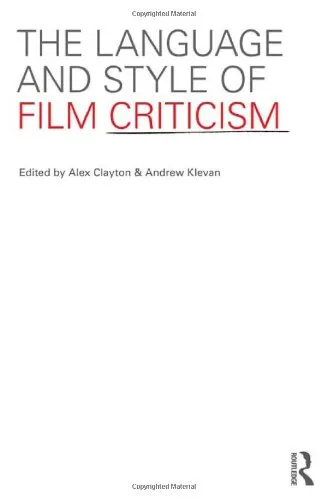
Book guide and evaluation
The Language and Style of Film Criticism
Andrew Klevan,Alex Clayton
English
Beginner
Essays
4.8 / 5
0 reviews
2011
Published
208
pages
470
views
The Language and Style of Film Criticism Film analysis techniques, Critical writing in cinema Explore The Language and Style of Film Criticism, a deep dive into how critics write and shape perspectives on cinema. Analytical Summary The Language and Style of Film Criticism,
Before you read
What will you get from this book?
Analytical Summary
The Language and Style of Film Criticism, authored by Andrew Klevan and Alex Clayton, offers a meticulous exploration of the ways film criticism communicates ideas, evokes emotions, and frames cinematic discourse. This authoritative work dissects the nuanced interplay between language, style, and meaning, showing readers how critics transform viewing experiences into persuasive narratives.
Structured for both scholars and practitioners, the book navigates through critical approaches ranging from close textual analysis to broader cultural commentary. It avoids reductive explanations, instead paying detailed attention to the syntax, rhythm, and figurative dimensions of the critic’s voice. Through this lens, film criticism becomes not just a reaction to art but also an art form in itself—where linguistic precision augments analytical depth.
Information on the exact publication year is unavailable due to the absence of reliable public sources, yet the relevance of its arguments transcends specific historical placement. Whether examining the subtleties of mise-en-scène description or the rhetorical shape of thematic evaluation, the book integrates theory without losing focus on the tactile reality of writing about moving images.
Key Takeaways
Readers will emerge from The Language and Style of Film Criticism with a sharpened sensitivity to how words shape the perception and valuation of cinema.
First, the intertwining of descriptive and evaluative modes is shown to be central to impactful criticism. Second, the book demonstrates the role of stylistic modulation—tone, pacing, and lexical choice—in guiding a reader’s engagement with the cinematic text. Third, it foregrounds the ethical dimensions of criticism, asking how responsibility to truth, art, and audience should guide interpretive practice. Fourth, it emphasizes the vitality of interpretive diversity, encouraging critics to embrace rather than suppress plural perspectives. Finally, it positions criticism as a living dialogue between cinematic works and the cultures they inhabit.
Memorable Quotes
Film criticism is not merely about judging but about understanding how films mean.Unknown
The language of criticism is inseparable from the way we experience cinema.Unknown
Style in writing about film can evoke rhythms akin to those found in editing and cinematography.Unknown
Why This Book Matters
In a media landscape saturated with quick takes and cursory opinions, The Language and Style of Film Criticism advocates for slow, attentive, and stylistically aware engagement with the seventh art.
For academics, it provides a foundation for teaching critical writing that respects artistic integrity. For professionals, it offers tools to refine editorial voice and enhance cultural relevance. And for cinephiles, it deepens appreciation by revealing the symbiotic relationship between the language used to discuss films and the films themselves. In bridging theoretical and practical approaches, it serves as an indispensable guide for anyone serious about the art of criticism.
Inspiring Conclusion
The Language and Style of Film Criticism stands as both a critical resource and an invitation: to read, to think, and to write about cinema with care and precision.
Its emphasis on language reminds us that every sentence about film carries potential to influence perception, stimulate discourse, and honor artistry. By integrating analytical rigor with stylistic sensitivity, readers are empowered to elevate their own critical practices. Whether you are an academic refining curricula, a reviewer seeking depth, or a cinephile eager to engage in richer dialogue, taking the next step—exploring, sharing, and discussing this book—will connect you to a tradition that values clarity and expressive power in film criticism.
Ask this book
Your question is answered in the context of this title and author. Each answer uses 2 points.
Sign in to ask the book assistant.
Reader reviews
0 reviews, 4.8 average out of 5
No reviews yet
If you have read this book, help the next reader with your experience.
Write a review
Sign in to publish a review.
Reader questions and answers
Ask a focused question and learn from the community.
Sign in to ask or answer a question.
No questions yet
Be the first to ask a clear, useful question.
What to read next
Related references that continue this learning path.
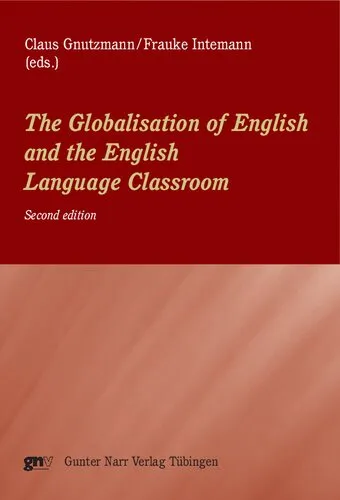
The Globalisation of English and the English Language Classroom
Claus Gnutzmann (editor),Frauke Intemann (editor)
2008
View book
The Routledge Handbook of Stylistics (Routledge Handbooks in English Language Studies)
Michael Burke (editor)
2023
View book