

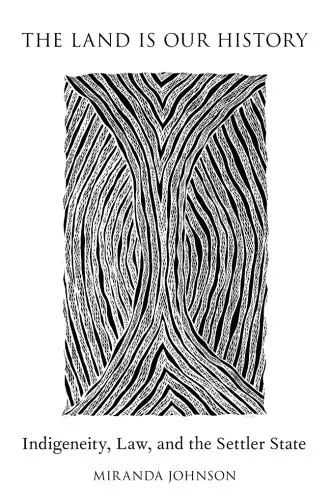
Book guide and evaluation
The land is our history: indigeneity, law, and the settler state
Miranda C. L. Johnson
English
Unordered
Economics
4.5 / 5
0 reviews
2016
Published
249
pages
529
views
The land is our history: indigeneity, law, and the settler state Indigenous sovereignty, settler colonial legal frameworks Exploring The land is our history: indigeneity, law, and the settler state – a profound study of law, rights, and Indigenous identity. Analytical Summar
Before you read
What will you get from this book?
Analytical Summary
The land is our history: indigeneity, law, and the settler state is a meticulously researched work that delves into the complex intersections between Indigenous histories, legal structures, and the enduring impact of settler colonialism. Authored by historian Miranda C. L. Johnson, this book offers readers a profound exploration of how law has functioned both as a mechanism of dispossession and as a potential tool for recognition and redress. It examines the relationships between Indigenous peoples and the states that colonized their lands, tracing narratives through landmark legal cases, constitutional reforms, and grassroots activism.
Johnson employs a comparative framework, drawing on examples from Australia, Canada, and New Zealand to illuminate the broader patterns of legal engagement between Indigenous communities and settler governments. This approach allows for a nuanced understanding of how different jurisdictions have acknowledged, resisted, or reshaped Indigenous rights. It is a scholarly work firmly grounded in historical analysis, yet equally attentive to contemporary political and legal debates.
Readers encounter not simply a chronicle of the past but an ongoing conversation about sovereignty, self-determination, and the legal recognition of Indigenous peoples’ distinct status within modern nation-states. The narrative handles the tensions between historical memory and legal precedent, demonstrating how Indigenous identity is continually negotiated through law and public policy.
Key Takeaways
This work provides several vital insights into the legal and political landscapes shaped by settler colonialism and Indigenous resistance.
First, it underscores the importance of historical consciousness in legal reforms. By showing how past injustices inform contemporary claims, Johnson connects the threads between memory and law.
Second, the book illustrates the paradox of legal systems that both marginalize and empower Indigenous voices. This tension is central to understanding Indigenous sovereignty and settler colonial legal frameworks today.
Third, The land is our history: indigeneity, law, and the settler state challenges readers to think critically about the foundations of their own legal and national systems. It invites reflection on how histories of colonization continue to shape societal structures.
Finally, it offers the prospect of transformation through sustained activism, informed policy-making, and intercultural dialogue.
Memorable Quotes
“Law remembers differently than people do; its records are selective, and its memory is archival rather than lived.” Unknown
“To see the land as history is to acknowledge the stories embedded in its soil and the claims sustained across generations.” Unknown
“Indigenous sovereignty is not granted by law; it exists despite it.” Unknown
Why This Book Matters
The land is our history: indigeneity, law, and the settler state is a cornerstone text for understanding the legal-political dynamics of colonial and postcolonial societies.
Its comparative analysis equips scholars, legal professionals, and policy-makers with the tools to engage meaningfully with Indigenous claims. By confronting the legacies of dispossession, this book fosters a deeper appreciation of the ongoing struggles for justice, sustainability, and cultural survival faced by Indigenous communities worldwide.
Moreover, its interdisciplinary nature makes it valuable not only to historians and legal scholars but also to anthropologists, political scientists, and activists seeking to bridge the gap between theory and practice.
Inspiring Conclusion
The land is our history: indigeneity, law, and the settler state invites readers into an informed and critical examination of how past and present intertwine in the shaping of Indigenous futures.
This book stands as a testament to the necessity of engaging with history, law, and identity in ways that honor Indigenous voices. It challenges scholars, practitioners, and citizens alike to consider their role in either perpetuating or dismantling the structures of colonial power.
The journey through its pages reveals that understanding legal frameworks is not sufficient – one must also listen to the lived realities and historical continuities that shape those laws. As you close the cover on The land is our history: indigeneity, law, and the settler state, take the next step: discuss its insights, share its challenges, and integrate its lessons into your work and community engagement.
Ask this book
Your question is answered in the context of this title and author. Each answer uses 2 points.
Sign in to ask the book assistant.
Reader reviews
0 reviews, 4.5 average out of 5
No reviews yet
If you have read this book, help the next reader with your experience.
Write a review
Sign in to publish a review.
Reader questions and answers
Ask a focused question and learn from the community.
Sign in to ask or answer a question.
No questions yet
Be the first to ask a clear, useful question.
What to read next
Related references that continue this learning path.
Transactions and Creations: Property Debates and The Stimulus of Melanesia
Eric Hirsch (Editor),Marilyn Strathern (Editor)
2004
View book

International Sales Law: A Guide to the CISG
Ingeborg Schwenzer;Christiana Fountoulakis;Mariel Dimsey
2019
View book