
Book guide and evaluation
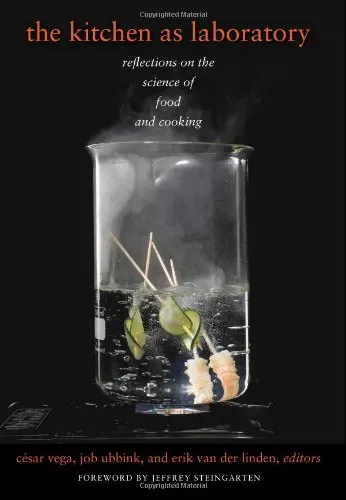
The Kitchen as Laboratory: Reflections on the Science of Food and Cooking
César Vega,Job Ubbink,Erik van van der Linden
English
Beginner
Cooking & Culinary Arts
4.4 / 5
0 reviews
2012
Published
337
pages
267
views
Introduction to "The Kitchen as Laboratory: Reflections on the Science of Food and Cooking" Bridging the gap between the art of cooking and the science of food, The Kitchen as Laboratory offers an engaging, thought-provoking exploration of how science transforms our unde
Before you read
What will you get from this book?
Introduction to "The Kitchen as Laboratory: Reflections on the Science of Food and Cooking"
Bridging the gap between the art of cooking and the science of food, The Kitchen as Laboratory offers an engaging, thought-provoking exploration of how science transforms our understanding and appreciation of cooking. Co-written by César Vega, Job Ubbink, and Erik van der Linden, this book brings together a collection of essays from food scientists, chefs, and culinary experts who unravel the scientific principles behind preparing, cooking, and enjoying food.
More than just a recipe book, this work challenges its readers to think critically about their culinary practices, illuminating the hidden dynamics and complex reactions that unfold behind every dish. The authors masterfully blend storytelling, experiments, and data to captivate food enthusiasts, chefs, and curious minds alike. With its unique structure and relatable tone, The Kitchen as Laboratory proves that science and cooking aren't just compatible—they're indispensable partners in a quest for flavor, texture, and innovation.
Detailed Summary of the Book
The book is structured as a series of essays, each written by a specialist in food science or culinary arts. It tackles topics ranging from the chemistry of flavor development to the physics of emulsions and the sensory experience of taste and smell. Readers are taken on a journey through practical examples, like why chocolate melts differently at various temperatures, how to optimize sous-vide cooking, or what roles air and water play in creating texture. The authors delve into the scientific curiosity that underpins these phenomena, helping readers understand how cooking involves more than just intuition—it’s an intricate, measurable process.
The essays are not only educational but also practical, offering nuggets of wisdom and techniques that can be applied in both home kitchens and professional culinary environments. On topics such as the Maillard reaction or the relationship between acidity and sweetness, the writers deconstruct complexities into accessible terms. The Kitchen as Laboratory thus serves as both a scientific primer and a hands-on guide to elevating culinary expertise.
Key Takeaways
- Cooking is a blend of art, science, and creativity, all working together to produce extraordinary sensory experiences.
- Understanding the scientific principles behind food allows for greater precision, consistency, and innovation in the kitchen.
- Simple everyday practices, like boiling pasta or whipping cream, are regulated by techniques that rely on chemistry and physics.
- A small change in variables like time, temperature, or pH can have profound effects on a dish's final outcome.
- Collaboration between scientists and chefs can revolutionize culinary possibilities, pushing boundaries while maintaining respect for tradition.
Famous Quotes from the Book
"The kitchen is not just a place to cook. It is a laboratory where imagination, creativity, and science converge."
"Cooking is a thoughtful dance between understanding ingredients and controlling processes."
"Being a good cook is not just about following recipes—it's about learning the why behind every technique."
Why This Book Matters
The Kitchen as Laboratory matters because it empowers both amateur cooks and seasoned chefs to rethink food preparation through the lens of science. In a world where culinary experimentation is shaping gastronomy, this book offers the knowledge to creatively tackle challenges in the kitchen. By opening the door to food science, it pushes boundaries and expands perspectives, equipping readers with the tools to succeed in the ever-evolving culinary landscape.
This compilation of essays also serves as a celebration of curious minds—chefs asking “why” and translating those answers into delicious experiences. Beyond the kitchen, the book encourages lifelong learning by emphasizing the importance of mixing creativity with a thirst for understanding. It stands as a monument to the idea that food is not just sustenance, but an evolving dialogue between science, culture, and the human experience.
Ask this book
Your question is answered in the context of this title and author. Each answer uses 2 points.
Sign in to ask the book assistant.
Reader reviews
0 reviews, 4.4 average out of 5
No reviews yet
If you have read this book, help the next reader with your experience.
Write a review
Sign in to publish a review.
Reader questions and answers
Ask a focused question and learn from the community.
Sign in to ask or answer a question.
No questions yet
Be the first to ask a clear, useful question.
What to read next
Related references that continue this learning path.


Modern Computer Vision with PyTorch: A Practical Roadmap From Deep Learning Fundamentals to Advanced Applications and Generative AI, 2nd Edition
V Kishore Ayyadevara,Yeshwanth Reddy
2023
View book