
Book guide and evaluation
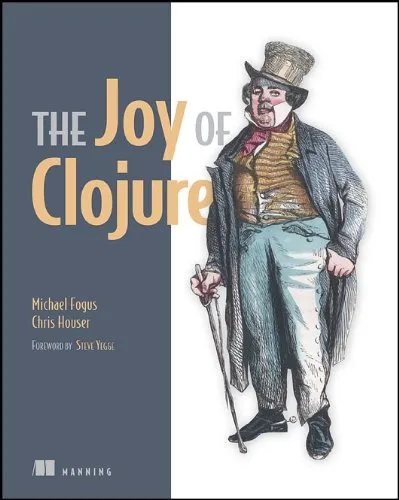
The Joy of Clojure: Thinking the Clojure Way
Michael Fogus,Chris Houser
English
Intermediate
Programming Languages
4.0 / 5
0 reviews
2011
Published
362
pages
710
views
Introduction to "The Joy of Clojure: Thinking the Clojure Way" "The Joy of Clojure: Thinking the Clojure Way" is a comprehensive dive into the Clojure programming language, offering readers an opportunity to explore Clojure's unique features, its underlyi
Before you read
What will you get from this book?
Introduction to "The Joy of Clojure: Thinking the Clojure Way"
"The Joy of Clojure: Thinking the Clojure Way" is a comprehensive dive into the Clojure programming language, offering readers an opportunity to explore Clojure's unique features, its underlying philosophy, and its practical applications in the world of modern software development. This book is a must-read for both experienced programmers and beginners who wish to expand their knowledge and embrace the functional programming paradigm through the elegant and expressive language of Clojure.
Detailed Summary of the Book
The book begins with an overview of Clojure’s foundational concepts, guiding readers through the principles that make Clojure a distinct and powerful language. From immutability and functional programming to concurrency and Java interoperability, the early chapters lay the groundwork for understanding how Clojure operates and why it is structured the way it is.
As readers progress, they will encounter deeper discussions on topics such as lazy sequences, recursion, and macros. The authors emphasize code simplicity and expressiveness, demonstrating through examples how to write concise and maintainable Clojure code. The book also delves into the practicalities of building robust programs, tackling error handling, and leveraging Clojure's strengths in data transformation and manipulation.
Additionally, the book explores Clojure's concurrency model, showcasing how the language facilitates safe and efficient parallel processing. With practical examples and philosophical insights sprinkled throughout, "The Joy of Clojure" ensures a holistic understanding of not just the language syntax, but the joy that comes from using it effectively.
Key Takeaways
- Embrace immutability for better, more predictable program behavior.
- Understand the power and elegance of functional programming.
- Leverage concurrency primitives in Clojure for efficient parallel programming.
- Write more concise code using macros and higher-order functions.
- Integrate with the broader Java ecosystem seamlessly.
Famous Quotes from the Book
“Programming, like poetry, is the art of using simple yet powerful tools to create something beautiful.”
“Clojure encourages you to think about your program’s structure, to attack complexity with simplicity.”
“In Clojure, data is king. Transformations are the soldiers that carry data from its humble beginnings to the zenith of utility.”
Why This Book Matters
"The Joy of Clojure" stands out not only because of its comprehensive coverage of Clojure but also due to its philosophical approach to programming. The authors, seasoned programmers themselves, offer insights that transcend language syntax and delve into the art of thinking functionally. This book is not just about learning Clojure; it’s about transforming your approach to coding, making it an indispensable resource in a programmer's library.
By elucidating the beauty and power of simplicity, immutability, and functional programming, this book helps programmers write code that is not only efficient but also elegant and intuitive. In an era where software complexity is an ever-present challenge, "The Joy of Clojure" teaches the wisdom of tackling problems with clarity and thoughtfulness. Whether you’re adopting Clojure for a project or looking to sharpen your programming acumen, this book is your gateway to mastering a language that champions clarity, robustness, and joy.
Audio introductions
Persian Summary
Ask this book
Your question is answered in the context of this title and author. Each answer uses 2 points.
Sign in to ask the book assistant.
Reader reviews
0 reviews, 4.0 average out of 5
No reviews yet
If you have read this book, help the next reader with your experience.
Write a review
Sign in to publish a review.
Reader questions and answers
Ask a focused question and learn from the community.
Sign in to ask or answer a question.
No questions yet
Be the first to ask a clear, useful question.
What to read next
Related references that continue this learning path.
Java 8 in Action: Lambdas, Streams, and functional-style programming
by Raoul-Gabriel Urma,Mario Fusco,Alan Mycroft
2014
View book
Functional Programming Patterns in Scala and Clojure: Write Lean Programs for the JVM
Michael Bevilacqua-Linn
2013
View book