Book guide and evaluation
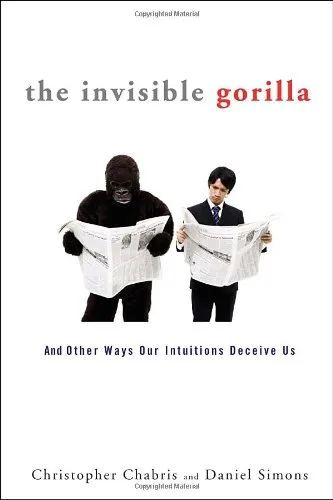
The Invisible Gorilla: And Other Ways Our Intuitions Deceive Us
Christopher Chabris,Daniel Simons
English
Intermediate
Personal Development
4.5 / 5
0 reviews
2010
Published
322
pages
554
views
Welcome to an insightful journey through the depths of human intuition and perception. "The Invisible Gorilla: And Other Ways Our Intuitions Deceive Us," authored by Christopher Chabris and Daniel Simons, delves into the pervasive and often surprising gaps between how we think
Before you read
What will you get from this book?
Welcome to an insightful journey through the depths of human intuition and perception. "The Invisible Gorilla: And Other Ways Our Intuitions Deceive Us," authored by Christopher Chabris and Daniel Simons, delves into the pervasive and often surprising gaps between how we think we perceive the world and how our minds truly work. This book challenges our assumptions and reveals profound insights into the ways our brains deceive us every day.
Detailed Summary of the Book
The book begins with the famous "invisible gorilla" experiment, where participants watching a video of individuals passing a basketball often fail to notice a person in a gorilla suit walking through the scene. This experiment exemplifies how selective attention can blind us to significant details. Chabris and Simons explore several cognitive illusions, highlighting ways in which our intuitions can be deceptive.
Throughout the book, the authors discuss various psychological phenomena such as "change blindness," the "illusion of memory," and the "confidence test." These concepts illustrate how our memory can be inaccurate, how we can miss dramatic changes in the environment, and how unjustified confidence in memory and knowledge can lead us astray.
Chabris and Simons also address the "illusion of knowledge," pointing out how people often overestimate their understanding of the world. They argue that these cognitive illusions have serious implications in modern society, affecting decision-making in areas like healthcare, finance, and law.
Each chapter combines engaging storytelling with rigorous scientific research, leaving readers with a deeper understanding of how our mind works—and fails. By drawing on a wide array of psychological studies and real-world examples, the authors make a convincing case that recognizing these illusions is critical to improving our thought processes.
Key Takeaways
- Selective attention can cause us to overlook unexpected events, as demonstrated in the "invisible gorilla" experiment.
- Memory is not as reliable as we think. It can be flawed and susceptible to alterations over time.
- People's confidence in their memory and knowledge can often exceed their actual ability.
- Awareness of cognitive illusions can enhance decision-making and foster realistic expectations of human perception.
- Understanding these illusions is vital for improving judgement in critical fields such as healthcare, finance, and law.
Famous Quotes from the Book
"The main point of the invisible gorilla illusion is not that people fail to notice the unexpected, but that they should be ready to expect the unexpected."
"Knowing that these illusions of attention exist can help us become more vigilant observers."
Why This Book Matters
"The Invisible Gorilla" is crucial in helping us understand the gap between perception and reality. By exposing how our intuitions can lead us astray, Chabris and Simons provide the tools needed to critically evaluate our thought processes. In an ever-complex world where information overload is common, the insights from this book can significantly impact how we interpret events around us and make informed decisions.
Furthermore, the authors emphasize the importance of acknowledging and understanding our cognitive limitations. Doing so can lead to enhanced personal and professional growth, bridging the gap between what we perceive and what actually is, and ultimately contributing to more effective communication and better societal outcomes.
In summary, "The Invisible Gorilla" offers a compelling invitation to challenge our perceptions and reassess the intuitive judgments we rely on daily. By doing so, we empower ourselves to recognize the true fabric of reality, thus avoiding the pitfalls of cognitive illusions.
Ask this book
Your question is answered in the context of this title and author. Each answer uses 2 points.
Sign in to ask the book assistant.
Reader reviews
0 reviews, 4.5 average out of 5
No reviews yet
If you have read this book, help the next reader with your experience.
Write a review
Sign in to publish a review.
Reader questions and answers
Ask a focused question and learn from the community.
Sign in to ask or answer a question.
No questions yet
Be the first to ask a clear, useful question.
What to read next
Related references that continue this learning path.