

Book guide and evaluation
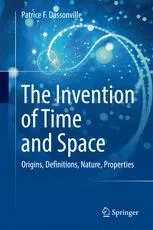
The Invention of Time and Space: Origins, Definitions, Nature, Properties
Patrice F. Dassonville
English
Beginner
Physics
4.9 / 5
0 reviews
2017
Published
184
pages
256
views
Welcome to the intriguing exploration of one of the most fundamental concepts in human understanding: the intertwined notions of time and space. In "The Invention of Time and Space: Origins, Definitions, Nature, Properties," author Patrice F. Dassonville delves deep into th
Before you read
What will you get from this book?
Welcome to the intriguing exploration of one of the most fundamental concepts in human understanding: the intertwined notions of time and space. In "The Invention of Time and Space: Origins, Definitions, Nature, Properties," author Patrice F. Dassonville delves deep into the roots of these dimensions, offering a comprehensive examination that challenges conventional perceptions. Through this narrative, readers are invited to question, to ponder, and to expand their understanding of time and space beyond the usual boundaries.
Detailed Summary of the Book
The book begins with a compelling exploration of the origins of time and space, tracing these concepts from ancient philosophies to modern scientific interpretations. Each chapter examines a different era or approach, providing insights into how human thought has shaped our understanding of these essential dimensions. Dassonville meticulously analyzes historical and contemporary theories, ranging from Aristotle's musings to Einstein's relativity.
As the book progresses, it delves into the definitions of time and space, scrutinizing the semantics and semantics that have evolved over millennia. The author offers a penetrating look into the nature of these dimensions, contemplating their existence both independently and interdependently. By examining how various cultures and intellectual movements have perceived time and space, the book presents a multidimensional view that encourages readers to reconsider their own perceptions.
Key Takeaways
- Time and space are not just scientific constructs but are deeply embedded within cultural, historical, and philosophical contexts.
- The perception of time as linear and space as static is a modern interpretation that has evolved significantly from ancient beliefs.
- Different cultures and societies have diverse understandings and representations of time and space, which influences technology, science, and daily life.
- Scientific advancements, particularly in physics, continually redefine and challenge our understanding of these fundamental dimensions.
Famous Quotes from the Book
"Time and space are the canvas upon which the universe paints its history, yet they remain the most enigmatic of the brushstrokes."
"Understanding time and space is akin to unraveling a tapestry woven through the epochs of human thought."
Why This Book Matters
"The Invention of Time and Space" is a crucial read for anyone interested in the philosophical and scientific underpinnings of these concepts. Its importance lies not only in its thorough historical analysis but also in its challenge to the reader to rethink accepted paradigms. As modern science continues to push the boundaries of knowledge, understanding the foundations upon which these ideas were built grants a greater appreciation of their complexity and significance.
Furthermore, Dassonville’s work acts as a bridge between the philosophical ponderings of the past and the scientific inquiries of the present, making it relevant to a wide audience, including philosophers, scientists, and the intellectually curious. By emphasizing the interconnectivity of time and space with human history and culture, the book underscores the universal quest for comprehension that spans all areas of human endeavor.
In conclusion, "The Invention of Time and Space" is not just a book; it's an invitation to embark on a journey through the corridors of time and across the expanses of space, inspiring readers to imagine and discover. Whether you're a seasoned scholar or a curious mind seeking understanding, this book offers valuable insights into the enigmatic dimensions that define our universe.
Ask this book
Your question is answered in the context of this title and author. Each answer uses 2 points.
Sign in to ask the book assistant.
Reader reviews
0 reviews, 4.9 average out of 5
No reviews yet
If you have read this book, help the next reader with your experience.
Write a review
Sign in to publish a review.
Reader questions and answers
Ask a focused question and learn from the community.
Sign in to ask or answer a question.
No questions yet
Be the first to ask a clear, useful question.
What to read next
Related references that continue this learning path.


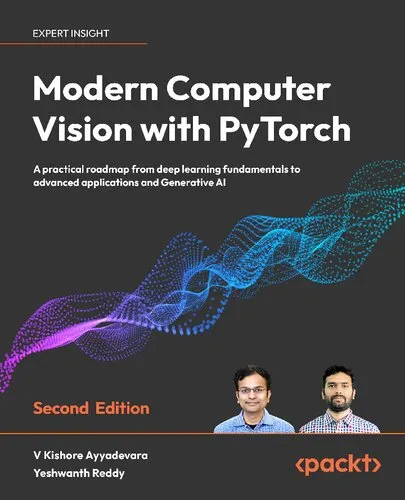
Modern Computer Vision with PyTorch: A Practical Roadmap From Deep Learning Fundamentals to Advanced Applications and Generative AI, 2nd Edition
V Kishore Ayyadevara,Yeshwanth Reddy
2023
View book