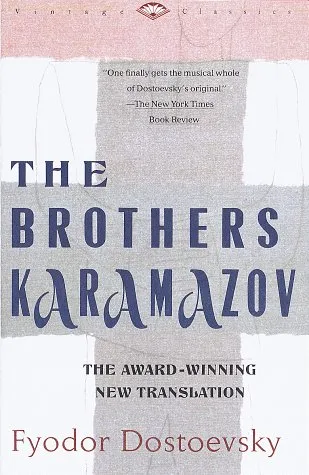
The Brothers Karamazov (Vintage Classics) (Everyman's Library, #70)
Fyodor Dostoyevsky, Richard Pevear, Larissa Volokhonsky;Malcolm V. Jones
1992
View book
Book guide and evaluation
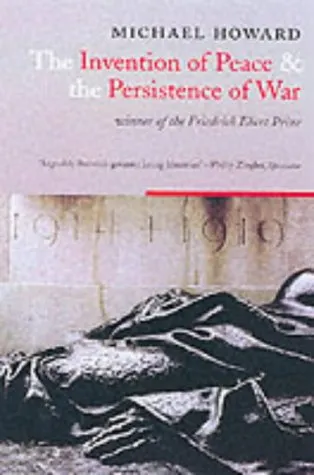
Michael Howard
0 reviews
Published
pages
views
Introduction Welcome to 'The Invention of Peace and the Reinvention of War: Reflections on War and International Order', a compelling exploration of the paradoxes of war and peace by renowned historian Michael Howard. This thought-provoking book delves into the complex d
Before you read
Welcome to 'The Invention of Peace and the Reinvention of War: Reflections on War and International Order', a compelling exploration of the paradoxes of war and peace by renowned historian Michael Howard. This thought-provoking book delves into the complex dynamics of international relations and the ongoing quest for global peace amidst the recurring outbreaks of war. With a unique blend of historical insight and contemporary analysis, this book invites readers to reconsider the established notions of peace and conflict in the modern world.
The book explores the idea that while peace is a noble aspiration for any society, its realization is often fraught with challenges. Michael Howard traces the evolution of the concept of peace from the Treaty of Westphalia in 1648, which laid the groundwork for the modern state system, to the current international order. He discusses how the ideals of peace have consistently been undermined by the realities of war due to political, religious, and economic factors. Through historical examples, the book highlights how the pursuit of national interests frequently leads to conflicts, as states resort to war to resolve disputes or enhance their power.
Howard examines how peace was thought to be achievable in the 20th century with the establishment of international organizations like the United Nations. However, the Cold War, regional conflicts, and the rise of non-state actors like terrorist organizations demonstrated the limitations of these institutions. The book also analyzes the transformations in warfare, from conventional battles to asymmetric warfare, cyber conflicts, and the proliferation of nuclear weapons, which have dramatically altered the landscape of international relations.
By challenging the traditional dichotomy between war and peace, the book argues that peace requires more than just the absence of war. It demands the presence of justice, mutual respect, and collaborative problem-solving among nations. Michael Howard encourages readers to consider the roles of diplomacy, international law, and economic cooperation as vital elements in sustaining peace in an interdependent world.
“Peace is not the product of a victory or a command. It has to be cultivated like a flower."
“War has reinvented itself in the age of technology, challenging our old notions of conflict resolution."
This book is crucial for understanding the persistent nature of war and the elusive nature of peace. It provides a profound historical context and analysis that is pertinent to policymakers, historians, and anyone interested in international relations. Michael Howard's insights into how new forms of war impact global peace efforts are invaluable for comprehending current global tensions. By probing the intricacies of maintaining peace in a world fraught with conflict, the book equips readers with the understanding needed to engage in informed discussions about peace and security in today's globalized society.
Persian Summary
Your question is answered in the context of this title and author. Each answer uses 2 points.
0 reviews, 3.7 average out of 5
Sign in to publish a review.
Ask a focused question and learn from the community.
Related references that continue this learning path.
Fyodor Dostoyevsky, Richard Pevear, Larissa Volokhonsky;Malcolm V. Jones


Leo Tolstoy,Richard Pevear,Larissa Volokhonsky,John Bayley