

A Comprehensive Introduction to Differential Geometry, Vol. 1, 3rd Edition
Michael Spivak
1999
View book
Book guide and evaluation
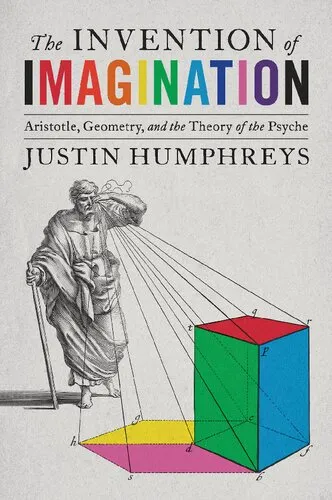
Justin Humphreys
0 reviews
Published
pages
views
Introduction to "The Invention of Imagination: Aristotle, Geometry and the Theory of the Psyche" In this groundbreaking book, "The Invention of Imagination: Aristotle, Geometry and the Theory of the Psyche," I invite readers on a profound journey into the philosophical a
Before you read
In this groundbreaking book, "The Invention of Imagination: Aristotle, Geometry and the Theory of the Psyche," I invite readers on a profound journey into the philosophical and psychological origins of human imagination. By delving deeply into the works of Aristotle, exploring the elegance of geometry, and synthesizing these with the emerging frameworks of the human psyche, this work reignites timeless questions about creativity, perception, and the mind's limitless potential. If you’ve ever wondered where imagination originates or how the ancient philosophers conceptualized the foundations of the human mind, this book will provide both answers and new avenues of curiosity.
At its core, this book examines the philosophical and intellectual lineage of imagination, tracing its conceptualization back to Aristotle's foundational ideas. Aristotle's philosophy, which anchors much of Western thought, considered imagination (or "phantasia") not merely as an abstract phenomenon but as a pivotal component of how we process reality, bridge knowledge, and generate insights. By integrating his theories with concepts from classical geometry, we uncover the structural aspects of imagination—tools by which the mind creates order, symmetry, and thought from a chaotic sensory world.
These ideas are then juxtaposed with modern understandings of psychology and the psyche, pulling from fields such as cognitive science and psychodynamic theory. The book aims to tether ancient philosophical views with modern theories, suggesting that imagination is not just a mental pastime but an evolutionary cornerstone of human cognition and innovation.
Readers will encounter not only an academic exploration but also practical applications of these philosophical ideas. Through examples from art, literature, and science, the book illustrates how imagination has shaped societies and advanced progress throughout history. Sections are dedicated to literary traditions that extended Aristotelian imagination, alongside famous case studies of visionary figures in history whose imaginations transformed the world.
These key insights demonstrate the enduring relevance of Aristotle's ideas when examined through the lenses of both ancient philosophy and contemporary science. The book also challenges readers to rethink how imagination influences their own cognition, creativity, and interactions with the world.
"The imagination is where reason meets wonder—a laboratory of the mind that builds bridges between reality and possibility."
"Aristotle’s imagination was far more than fancy; it was a machine of thought, assembling the known into something greater, the unknown."
"Just as geometry provides structure to shapes unseen, so too imagination provides clarity to thoughts unspoken."
These carefully crafted reflections capture the essence of the book’s exploration into the role and scope of imagination in human life.
In a time where creativity and innovation are prized more than ever, understanding the mechanics of imagination holds both academic and practical significance. "The Invention of Imagination" steps into this dialogue by drawing on the insights of one of history's greatest thinkers—Aristotle—and enriching them with interdisciplinary perspectives.
Machines may imitate human behavior, but imagination remains a uniquely human phenomenon that resists mechanization. This book serves as a timely reminder of how imagination underpins everything from empathy to invention. By recognizing its philosophical origins and psychological functions, readers are empowered to cultivate their own creative potential more consciously. Moreover, educators, psychologists, and thought leaders can view this book as a guide to fostering imagination, whether in individuals or in societal systems.
Ultimately, this work moves beyond theoretical deliberation, posing imagination as a powerful tool for progress and a source of profound personal insight. By rediscovering the intellectual and emotional dimensions of imagination, readers will not only uncover its historical significance but also embrace its relevance in navigating the complexities of the modern world.
Your question is answered in the context of this title and author. Each answer uses 2 points.
0 reviews, 4.6 average out of 5
Sign in to publish a review.
Ask a focused question and learn from the community.
Related references that continue this learning path.
Michael Spivak

Giovanna Corsi,Maria Luisa Dalla Chiara,Gian Carlo Ghirardi (Editors)