

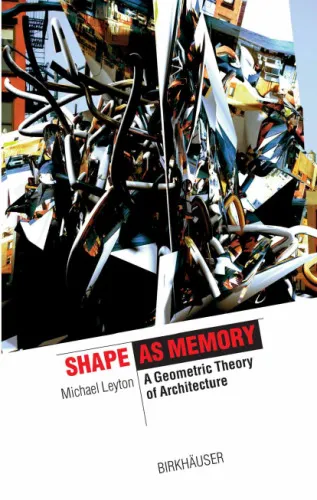
Book guide and evaluation
The Information Technology Revolution in Architecture
Michael Leyton
English
Unordered
Technology
4.5 / 5
0 reviews
2002
Published
93
pages
144
views
The Information Technology Revolution in Architecture digital architecture transformation, computational design strategies Exploring how The Information Technology Revolution in Architecture reshapes design, collaboration, and the future of the built environment. Analytical
Before you read
What will you get from this book?
Analytical Summary
The Information Technology Revolution in Architecture is a critical exploration of how the digital era has transformed architectural practice, theory, and education. Authored with a deep understanding of disciplinary history and technological evolution, it charts a journey from early computer-aided drafting to the sophisticated computational design environments we know today.
Underlying this work is the recognition that architecture, as both a creative and technical discipline, has always responded to the technological context of its time. Where once mechanical tools and industrial processes shaped the architect’s workflow, today’s designers navigate a landscape defined by algorithms, big data, and immersive virtual environments.
This book extends beyond a mere catalog of technological tools; it interrogates the cultural, philosophical, and methodological implications of integrating information technologies into architectural workflows. Readers will encounter an incisive study that bridges academic research and professional application, making it relevant to educators, practitioners, and policy thinkers alike.
Key Takeaways
Readers will emerge from The Information Technology Revolution in Architecture with a multi-layered understanding of technology’s role in reshaping not only individual projects but the very processes of conceiving, developing, and delivering architecture.
One major insight lies in recognizing the shift from representation to simulation—designers now work within environments that simulate structural, environmental, and experiential dimensions long before any material is committed to construction.
Another takeaway concerns the democratization of design tools. Where previously specialized skills and expensive hardware acted as barriers, there is now increasing accessibility through cloud-based platforms, open-source software, and collaborative online networks.
The book stresses that the integration of digital processes requires a corresponding evolution in professional ethics and responsibility, especially in light of data privacy, environmental impact, and the cultural implications of technological homogenization.
Memorable Quotes
“To design in the digital era is to choreograph a dialogue between human intuition and machine intelligence.” Unknown
“Information technology does not replace the architect; it redefines what being an architect means.” Unknown
“Every byte of data carries with it a material consequence in the built environment.” Unknown
Why This Book Matters
In a period when architectural education, practice, and research face rapid transformation, The Information Technology Revolution in Architecture offers a critical compass. It enables readers to not only keep up with the accelerating pace of innovation but to question, direct, and meaningfully contribute to it.
The text situates computational design strategies within a larger socio-technical context, connecting the digital turn to global economic shifts, environmental imperatives, and cultural change. This makes it invaluable for policymakers, industry leaders, and academics eager to understand the reciprocal relationship between technology and the built world.
By presenting both the promises and the pitfalls of technological integration, the book fosters balanced discourse—essential in a time when the allure of digital efficiency can sometimes overshadow long-term sustainability or cultural specificity.
Inspiring Conclusion
The Information Technology Revolution in Architecture stands as both a record and a roadmap for one of the most significant paradigm shifts in the history of the discipline. By engaging with its insights, readers are invited to participate actively in shaping how architecture evolves in concert with accelerating technological change.
Through its keen analysis and forward-looking vision, the book equips architects, students, and thought leaders to not merely adapt to digital transformation, but to harness it with intent and critical awareness. It is an open call to read, discuss, and share these perspectives—ensuring that the digital tools we embrace serve the enduring values of design excellence, cultural relevance, and human well-being.
Ask this book
Your question is answered in the context of this title and author. Each answer uses 2 points.
Sign in to ask the book assistant.
Reader reviews
0 reviews, 4.5 average out of 5
No reviews yet
If you have read this book, help the next reader with your experience.
Write a review
Sign in to publish a review.
Reader questions and answers
Ask a focused question and learn from the community.
Sign in to ask or answer a question.
No questions yet
Be the first to ask a clear, useful question.
What to read next
Related references that continue this learning path.
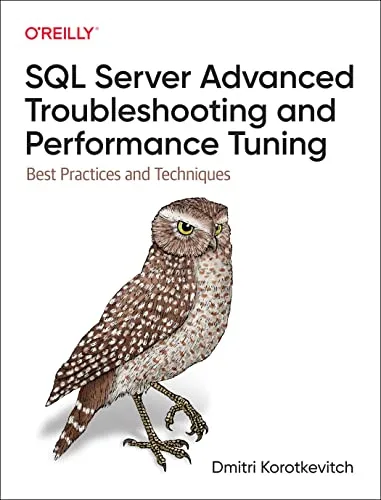
SQL Server Advanced Troubleshooting and Performance Tuning: Best Practices and Techniques
Dmitri Korotkevitch
2022
View book