
Williams Obstetrics, 26th Edition
F. Gary Cunningham,Kenneth J. Leveno,Jodi S. Dashe,Barbara L. Hoffman,Catherine Y. Spong,Brian M. Casey
2022
View book
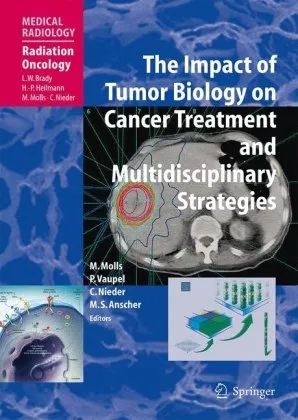
Book guide and evaluation
Michael J. Atkinson PhD,Soile Tapio PhD (auth.),Michael Molls MD,Peter Vaupel MD,MA,Carsten Nieder MD,Mitchell S. Anscher MD,FACR,FACRO (eds.)
0 reviews
Published
pages
views
The Impact of Tumor Biology on Cancer Treatment and Multidisciplinary Strategies Tumor microenvironment, Personalized oncology Explore The Impact of Tumor Biology on Cancer Treatment and Multidisciplinary Strategies in depth with expert insights for oncology professiona
Before you read
The book The Impact of Tumor Biology on Cancer Treatment and Multidisciplinary Strategies provides a rigorous and integrative exploration of how fundamental tumor biology directly informs and shapes therapeutic decisions in oncology. Written by leading experts from diverse disciplines—radiation oncology, tumor microenvironment research, translational biology—it bridges the gap between laboratory discovery and clinical application.
Tumor biology has evolved into a central pillar for individualized cancer care. This volume dissects critical biological processes such as angiogenesis, hypoxia, genetic instability, and immune evasion, emphasizing their role in treatment resistance and patient-specific outcomes. The secondary keywords, tumor microenvironment and personalized oncology, are woven throughout, underscoring how biological complexity dictates tailored strategies for surgery, radiotherapy, systemic therapy, and experimental protocols.
Information unavailable regarding the publication year and potential accolades, as no reliable public source confirms these details. Nevertheless, the content remains highly relevant for academic audiences, medical practitioners, and multidisciplinary teams seeking to deepen their understanding of tumor-host interactions and refine collaborative therapeutic approaches.
By contextualizing these biological insights within multidisciplinary strategies, the book fosters a nuanced appreciation of how oncologists, surgeons, radiologists, pathologists, and molecular scientists can coalesce in decision-making to improve survival rates and quality of life.
Readers will gain a multifaceted comprehension of both foundational and emergent knowledge, tying cellular mechanisms to practical treatment protocols in cancer care.
Understanding hypoxia’s role in radioresistance empowers clinicians to adapt dosimetry and target volumes effectively.
The significance of tumor microenvironment factors—from extracellular matrix composition to stromal cell signaling—is clarified, promoting integrated diagnostic and therapeutic workflows.
Advances in personalized oncology are anchored in biomarker-driven therapy; readers will appreciate how genetic and epigenetic profiling refine patient selection for novel agents.
Multidisciplinary cooperation amplifies patient care quality by ensuring biologically informed, evidence-based interventions.
“The more we understand the tumor microenvironment, the more effectively we can dismantle its defenses.”Unknown
“Personalized oncology transforms treatment from a standard protocol into a blueprint for each unique patient.”Unknown
“Multidisciplinary strategies are the proving ground where biology meets clinical courage.”Unknown
In an era of rapidly advancing cancer research, integrating tumor biology into everyday oncological decisions is vital.
This text emphasizes that every patient’s cancer embodies a distinct biological signature. By studying these signatures through the lens of tumor microenvironment and personalized oncology, medical teams can achieve better therapeutic precision.
Beyond theory, the book offers practical frameworks for multidisciplinary collaboration—critical in tackling the multifactorial nature of cancer. It supports the notion that biological context is not optional knowledge but a necessary component of comprehensive treatment planning.
For professionals, academics, and research-oriented clinicians, The Impact of Tumor Biology on Cancer Treatment and Multidisciplinary Strategies offers both an authoritative resource and a call to action.
By deepening your engagement with the concepts presented—ranging from the nuanced interplay of the tumor microenvironment to the promise of personalized oncology—you participate in evolving the standards of modern cancer care.
Read it, share its insights with your team, and discuss its implications in your next case review. Let the biological truths uncovered here fuel more effective, compassionate, and scientifically-grounded decisions for the patients who place their trust in your expertise.
Your question is answered in the context of this title and author. Each answer uses 2 points.
0 reviews, 4.8 average out of 5
Sign in to publish a review.
Ask a focused question and learn from the community.
Related references that continue this learning path.
F. Gary Cunningham,Kenneth J. Leveno,Jodi S. Dashe,Barbara L. Hoffman,Catherine Y. Spong,Brian M. Casey
Alan Partin,Craig Peters,Louis Kavoussi,Roger Dmochowski,Alan Wein
John E. Bennett &Raphael Dolin &Martin J. Blaser
Anna R Dover PhD FRCP(Ed) (editor),J. Alastair Innes BSc PhD FRCP Ed (editor),Karen Fairhurst PhD FRCGP (editor)