Book guide and evaluation
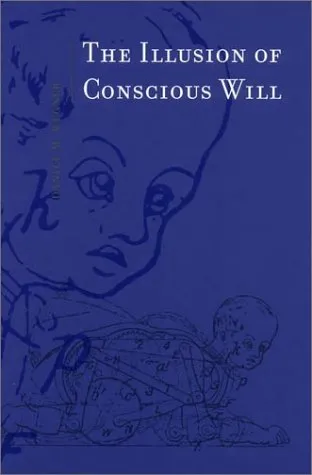
The Illusion of Conscious Will
Daniel M. Wegner
English
Intermediate
novel
4.5 / 5
0 reviews
2003
Published
416
pages
600
views
Welcome to the intriguing and thought-provoking book, The Illusion of Conscious Will, by Daniel M. Wegner. This book challenges our fundamental understanding of consciousness and free will, presenting a pioneering exploration into how our minds create the
Before you read
What will you get from this book?
Welcome to the intriguing and thought-provoking book, The Illusion of Conscious Will, by Daniel M. Wegner. This book challenges our fundamental understanding of consciousness and free will, presenting a pioneering exploration into how our minds create the experience of conscious will. This introduction provides an in-depth overview, important themes, notable quotes, and the significant impact of this work.
Detailed Summary of the Book
Daniel M. Wegner’s The Illusion of Conscious Will delves into one of the most profound questions of human existence: do we actually have free will, or is it merely an illusion created by our minds? Wegner explores this question by examining the phenomena where our experiences of will diverge from the actions we perform. His analysis draws from various fields, including psychology, neuroscience, and philosophy, to dissect the processes behind the perception of volition.
The author presents compelling evidence from experiments and case studies to illustrate that our sense of will is a feeling generated by our brain, rather than a causative agent for actions. Wegner elucidates how post hoc interpretations and the correlation between thought and action lead individuals to mistakenly attribute conscious causation. He uses examples such as automatism, hypnosis, and brain activity studies, leading to the conclusion that our conscious will does not necessarily influence behavior.
Key Takeaways
- Conscious will is a construct of the mind rather than a driver of our actions.
- Our experiences of will often follow the actions they supposedly instigate, rather than precede them.
- The distinction between automatic actions and consciously willed ones is more blurred than traditionally thought.
- Cultural and societal beliefs heavily influence our perception of free will.
- Understanding the illusion of conscious will has profound implications for concepts of morality, responsibility, and legal systems.
Famous Quotes from the Book
“The experience of will is a feeling, like the experience of love or anger. It is not a force, nor does it control movement.”
“We tend to presume that things happening in conjunction mean causation, a classic cognitive error that gives rise to perceived control over our actions.”
Why This Book Matters
The Illusion of Conscious Will holds significant importance in the contemporary study of psychology and human behavior. By challenging the conventional wisdom surrounding free will, it invites readers and scholars to reassess deeply held beliefs about autonomy and accountability. The book’s implications reach beyond academic circles to influence ethical debates, the philosophy of mind, and even legal considerations regarding responsibility and intent.
Wegner’s work acts as a crucial bridge between scientific exploration and philosophical inquiry. By providing a research-based perspective on a subject often dominated by metaphysical speculation, Wegner advances understanding and stimulates discussions that could change how society considers human agency.
Ask this book
Your question is answered in the context of this title and author. Each answer uses 2 points.
Sign in to ask the book assistant.
Reader reviews
0 reviews, 4.5 average out of 5
No reviews yet
If you have read this book, help the next reader with your experience.
Write a review
Sign in to publish a review.
Reader questions and answers
Ask a focused question and learn from the community.
Sign in to ask or answer a question.
No questions yet
Be the first to ask a clear, useful question.
What to read next
Related references that continue this learning path.
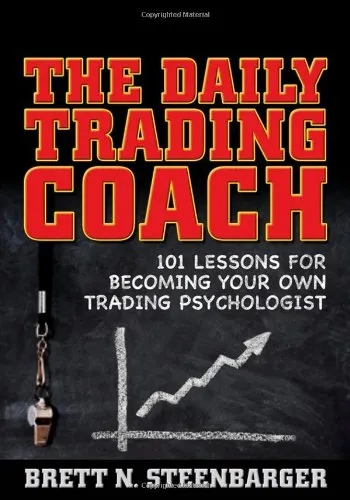
The Daily Trading Coach: 101 Lessons for Becoming Your Own Trading Psychologist (Wiley Trading)
Brett N. Steenbarger
2009
View book