Book guide and evaluation
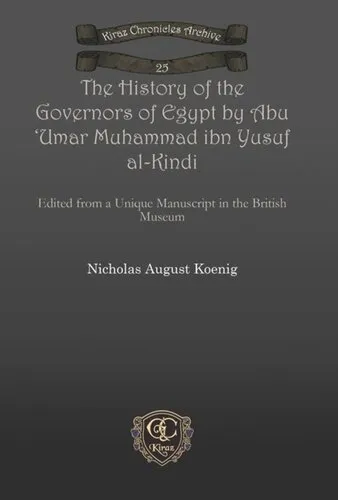
The History of the Governors of Egypt by Abu 'Umar Muhammad ibn Yusuf al-Kindi: Edited from a Unique Manuscript in the British Museum
Nicholas August Koenig
English
Intermediate
novel
4.3 / 5
0 reviews
2009
Published
74
pages
686
views
Introduction to "The History of the Governors of Egypt" Abu 'Umar Muhammad ibn Yusuf al-Kindi's The History of the Governors of Egypt is a seminal work that provides unique insights into the administrative and political history of Egypt during the Islamic caliphates. Edite
Before you read
What will you get from this book?
Introduction to "The History of the Governors of Egypt"
Abu 'Umar Muhammad ibn Yusuf al-Kindi's The History of the Governors of Egypt is a seminal work that provides unique insights into the administrative and political history of Egypt during the Islamic caliphates. Edited from a unique manuscript housed in the British Museum, this book is an invaluable resource for historians, scholars, and anyone interested in the rich tapestry of Egyptian governance throughout pivotal eras in Islamic history.
Detailed Summary of the Book
The book is a meticulous chronicle of the governors who ruled Egypt from the advent of Islamic governance until the era contemporary to al-Kindi himself. Structured as both a narrative and a repository of records, the manuscript offers detailed accounts of the socio-political landscape under various governors. It provides a chronological listing, accompanied by analysis and commentary on the governors' policies, military campaigns, and administrative reforms.
Al-Kindi, through his analytical prowess, captures the essence of governance challenges in medieval Egypt and the interplay of local and imperial politics. What makes this work stand out is its strategic perspective on the shifts in power dynamics and its examination of how these governors balanced local tribal alliances with the overarching interests of the caliphates they represented.
Key Takeaways
- Comprehensive record of Egypt’s administrative history under Islamic governance.
- Insightful analysis of power struggles between provincial governors and centralized caliphate authority.
- Understanding of socio-economic policies and their impacts on the region’s development.
- Exploration of the role of Egypt as a pivotal province in Islamic history.
Famous Quotes from the Book
Al-Kindi's work, while primarily historical, is rich with observations that resonate with universal themes of leadership and governance. Here are some poignant excerpts:
"The strength of a governor does not solely rest in his ability to wield power, but rather in his wisdom to wield it justly."
"In Egypt, the rivers of administration must flow with both knowledge and dedication, lest they become dry with tyranny."
Why This Book Matters
The significance of al-Kindi's work lies in its combination of scholarly depth and practical detail. It serves as both a historical document and a guide to the intricacies of governance during one of history's most formative periods. For researchers and students of Islamic history, the book provides rich empirical data and invaluable insights into the principles and practices that shaped one of the greatest civilizations.
In the broader context, understanding the governance of Egypt through al-Kindi's eyes allows contemporary readers to appreciate the enduring legacies of administrative leaders and their impact on modern governance structures. The meticulous preservation and editing of this unique manuscript from the British Museum highlights the ongoing importance of preserving historical texts that contribute to our understanding of global history.
Ask this book
Your question is answered in the context of this title and author. Each answer uses 2 points.
Sign in to ask the book assistant.
Reader reviews
0 reviews, 4.3 average out of 5
No reviews yet
If you have read this book, help the next reader with your experience.
Write a review
Sign in to publish a review.
Reader questions and answers
Ask a focused question and learn from the community.
Sign in to ask or answer a question.
No questions yet
Be the first to ask a clear, useful question.
What to read next
Related references that continue this learning path.