This Side of Paradise (Webster's Chinese-Traditional Thesaurus Edition)
F. Scott Fitzgerald
2006
View book
Book guide and evaluation
F. Scott Fitzgerald
0 reviews
Published
pages
views
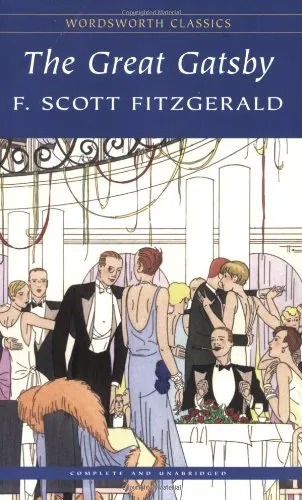
Introduction to 'The Great Gatsby' F. Scott Fitzgerald's 'The Great Gatsby' is a literary classic that continues to captivate readers with its exploration of wealth, love, and the American Dream. Set in the opulent society of 1920s America, this novel offers a
Before you read
F. Scott Fitzgerald's 'The Great Gatsby' is a literary classic that continues to captivate readers with its exploration of wealth, love, and the American Dream. Set in the opulent society of 1920s America, this novel offers a window into an era of both prosperity and moral decay. Through vibrant characters, poignant themes, and exquisite prose, Fitzgerald crafts a story that resonates across generations.
'The Great Gatsby' unfolds during the roaring twenties, a period marked by prosperity and change in America. The story is narrated by Nick Carraway, a Yale graduate and war veteran, who moves to West Egg, Long Island. He rents a modest house next to the lavish mansion of the mysterious Jay Gatsby, a wealthy and enigmatic man known for his extravagant parties.
As Nick befriends Gatsby, he learns that Gatsby is deeply in love with Daisy Buchanan, Nick's cousin and a woman of old money married to the wealthy but arrogant Tom Buchanan. Gatsby's love for Daisy and his opulent lifestyle are driven by his desire to win her back, having lost her years earlier to Tom due to his own lack of wealth.
The novel delves into themes of decadence, idealism, social upheaval, and excess, examining the American Dream's disintegration in an era of unprecedented prosperity. As the lives of these characters intertwine, the story reaches a tragic climax that reveals the isolation behind Gatsby's glittering facade and questions the integrity of the American Dream.
"So we beat on, boats against the current, borne back ceaselessly into the past."
"I hope she'll be a fool — that's the best thing a girl can be in this world, a beautiful little fool."
"Gatsby believed in the green light, the orgastic future that year by year recedes before us."
'The Great Gatsby' matters because it is a timeless examination of the human condition. It challenges readers to reflect on themes of desire, aspiration, and identity, and how these universal experiences shape our lives and society. Fitzgerald's sharp critique of the American Dream resonates in modern times, inviting conversations about success and fulfillment in a rapidly evolving world.
The novel's rich symbolism, complex characters, and eloquent prose continue to capture the imagination of readers and scholars alike. 'The Great Gatsby' stands as a monument to the transformative power of literature, proving its enduring relevance as a reflection and critique of society across time.
Your question is answered in the context of this title and author. Each answer uses 2 points.
0 reviews, 3.9 average out of 5
Sign in to publish a review.
Ask a focused question and learn from the community.
Related references that continue this learning path.
F. Scott Fitzgerald