
Book guide and evaluation
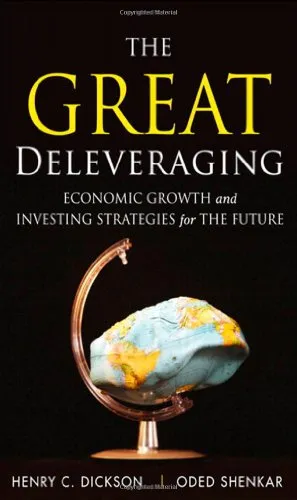
The Great Deleveraging: Economic Growth and Investing Strategies for the Future
Chip Dickson,Oded Shenkar
English
Beginner
Economics
4.0 / 5
0 reviews
2010
Published
331
pages
178
views
Introduction to "The Great Deleveraging: Economic Growth and Investing Strategies for the Future" In a world where economic cycles dictate the rise and fall of nations, businesses, and personal wealth, understanding the fundamentals of economic growth and investm
Before you read
What will you get from this book?
Introduction to "The Great Deleveraging: Economic Growth and Investing Strategies for the Future"
In a world where economic cycles dictate the rise and fall of nations, businesses, and personal wealth, understanding the fundamentals of economic growth and investment strategies has never been more crucial. "The Great Deleveraging: Economic Growth and Investing Strategies for the Future," authored by Chip Dickson and Oded Shenkar, delves deep into the critical concepts of deleveraging, its implications for the economy, and how individuals and institutions can make informed investment choices in light of these challenges.
This book comes at a time when global economies are grappling with the aftermath of financial crises, persistent debt burdens, and slow-growth scenarios. It explains what happens when economies, corporations, and even individuals exceed sustainable levels of debt, forcing an inevitable period of deleveraging. While this process is fraught with economic contraction and uncertainty, it also presents rare opportunities for investors and policymakers to reset priorities and rebuild healthier foundations for growth.
Written with clarity and filled with actionable insights, "The Great Deleveraging" is not just a guide—it is a roadmap for navigating the complexities of today’s economic reality. Whether you're an experienced investor, an economist, or simply an individual seeking to understand how macroeconomic trends impact your financial future, this book offers something incredibly valuable: the tools to thrive during turbulent times.
A Detailed Summary of the Book
At the heart of "The Great Deleveraging" lies a profound examination of the economic and financial forces driving deleveraging. The authors systematically break down how excesses in borrowing—across governments, corporations, and households—create imbalances that eventually need to be corrected. Unlike the post-crisis narratives focused solely on blame or policy failures, this book delves into the fundamental dynamics of debt and the inevitable cycles that occur when debt-fueled growth falters.
The book begins by exploring the history of leverage and its crucial role in economic growth. From boom periods fueled by easy credit to the busts brought on by unsustainable debt levels, the authors reveal why deleveraging is a natural counterpart to excessive borrowing. They present a historical perspective, comparing modern crises—such as the Great Recession—with earlier periods of economic adjustment fueled by debt unwinding.
Beyond the historical context, the authors outline a practical framework for decision-making. They build upon economic data and market analysis to guide readers in identifying investment opportunities and risks during periods of deleveraging. The book also scrutinizes the roles of policymakers, central banks, and global institutions in shaping economic outcomes. Through these discussions, the authors emphasize the importance of critical thinking, adaptability, and patience when navigating uncertain financial environments.
Key Takeaways
- Deleveraging is an inevitable and necessary process for resetting economic imbalances caused by excessive debt.
- Financial crises are opportunities for learning, adaptation, and building sustainable strategies for the future.
- Investors should focus on understanding macroeconomic trends to make informed decisions during uncertain times.
- Policymakers play a critical role in minimizing the adverse effects of deleveraging while ensuring long-term stability.
- A long-term investment perspective, backed by data and analysis, is essential during periods of economic upheaval.
Famous Quotes from the Book
"Economic growth driven by unsustainable levels of debt is a mirage that eventually vanishes, leaving behind a trail of financial hardship."
"Deleveraging is not the end of growth; it is the painful yet crucial step necessary to rebuild real and lasting prosperity."
Why This Book Matters
In an age of rapid financial innovation and unprecedented borrowing, "The Great Deleveraging" equips readers with the understanding and tools needed to navigate volatile economic landscapes. The book bridges the gap between macroeconomic theory and individual financial planning, making it uniquely practical for readers from all backgrounds.
By shedding light on how debt shapes economic cycles, Dickson and Shenkar empower readers to recognize warning signs, anticipate shifts, and make decisions grounded in historical and economic realities. Additionally, their balanced perspective provides hope and direction, emphasizing that while deleveraging is difficult, it is also an opportunity to build stronger economic systems and investment approaches.
For anyone seeking clarity in a world fraught with economic uncertainty, this book is an essential guide to understanding, adapting, and thriving in the face of inevitable financial cycles.
Ask this book
Your question is answered in the context of this title and author. Each answer uses 2 points.
Sign in to ask the book assistant.
Reader reviews
0 reviews, 4.0 average out of 5
No reviews yet
If you have read this book, help the next reader with your experience.
Write a review
Sign in to publish a review.
Reader questions and answers
Ask a focused question and learn from the community.
Sign in to ask or answer a question.
No questions yet
Be the first to ask a clear, useful question.
What to read next
Related references that continue this learning path.


Modern Computer Vision with PyTorch: A Practical Roadmap From Deep Learning Fundamentals to Advanced Applications and Generative AI, 2nd Edition
V Kishore Ayyadevara,Yeshwanth Reddy
2023
View book