Book guide and evaluation
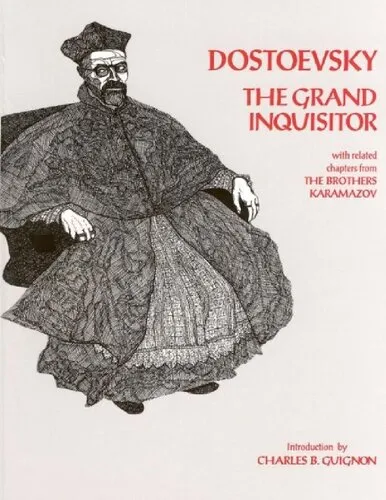
The Grand Inquisitor: with related chapters from The Brothers Karamazov
Fyodor Dostoevsky
English
Intermediate
novel
4.5 / 5
0 reviews
1993
Published
123
pages
726
views
Fyodor Dostoevsky's "The Grand Inquisitor: with related chapters from The Brothers Karamazov" is a profound exploration of faith, free will, and the human condition. Extracted from Dostoevsky's magnum opus, "The Brothers Karamazov," the narrative has deeply resonated with rea
Before you read
What will you get from this book?
Fyodor Dostoevsky's "The Grand Inquisitor: with related chapters from The Brothers Karamazov" is a profound exploration of faith, free will, and the human condition. Extracted from Dostoevsky's magnum opus, "The Brothers Karamazov," the narrative has deeply resonated with readers, offering an intense dialogue on the nature of spirituality and authority.
Detailed Summary of the Book
"The Grand Inquisitor" is a parable within "The Brothers Karamazov," recounted by Ivan Karamazov to his younger brother Alyosha. The story is set in 16th-century Seville, during the Spanish Inquisition. Christ returns to Earth, only to be imprisoned by the titular Grand Inquisitor. The narrative unfolds as an intense conversation between the atheist Ivan and the faith-driven Alyosha, examining deep philosophical themes encapsulated by the confrontation between Christ and the Inquisitor.
In this encounter, the Grand Inquisitor condemns Christ for granting humanity the burden of free will, arguing that people prefer security and order over freedom and spiritual truths. He suggests that the Church, in assuming control and coercing belief, provides the peace that Christ refused. This tale radically questions the structures of power, the nature of belief, and the role of religion in human life.
Key Takeaways
- The Nature of Free Will: The Grand Inquisitor articulates a pessimistic view of human freedom. By portraying Christ's gift of free will as a curse, the narrative probes into the complexities and responsibilities that accompany freedom.
- The Conflict Between Faith and Reason: This tale brings to light the tension between religious faith and rational skepticism, embodied in the contrasting characters of Ivan and Alyosha.
- Authority vs. Individual Conscience: The Inquisitor's argument highlights the allure of totalitarianism and questions the sacrifice of individual conscience and liberty for societal order and control.
Famous Quotes from the Book
'In the end they will lay their freedom at our feet and say to us, "Make us your slaves, but feed us."'
'Why hast Thou come now to hinder us? For Thou hast come to hinder us, and Thou knowest that.'
'So long as man remains free he strives for nothing so incessantly and so painfully as to find someone to worship.'
Why This Book Matters
"The Grand Inquisitor" is significant not only as part of "The Brothers Karamazov" but as a standalone philosophical text. Its exploration of existential questions continues to influence literary and philosophical discourse. The themes addressed challenge readers to reflect on their beliefs and the societal norms they accept.
Readers are invited to engage with the moral and spiritual inquiries that shape human behavior, scrutinizing systems of power and the validity of personal faith versus institutional control. Dostoevsky’s exploration of these timeless issues ensures the enduring relevance and profound impact of "The Grand Inquisitor" in contemporary society.
Ask this book
Your question is answered in the context of this title and author. Each answer uses 2 points.
Sign in to ask the book assistant.
Reader reviews
0 reviews, 4.5 average out of 5
No reviews yet
If you have read this book, help the next reader with your experience.
Write a review
Sign in to publish a review.
Reader questions and answers
Ask a focused question and learn from the community.
Sign in to ask or answer a question.
No questions yet
Be the first to ask a clear, useful question.
What to read next
Related references that continue this learning path.