Book guide and evaluation
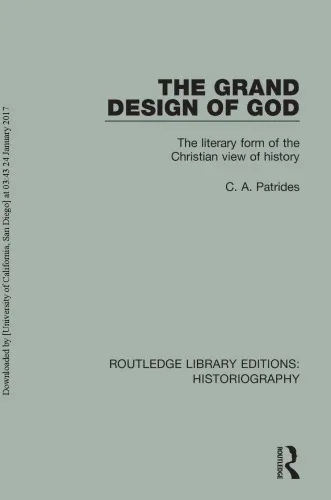
The Grand Design of God: The Literary form of the Christian View of History
C. A. Patrides
English
Intermediate
novel
4.3 / 5
0 reviews
2018
Published
186
pages
572
views
Introduction to 'The Grand Design of God: The Literary form of the Christian View of History' The tapestry of history unfolds not just in events, but through the profound shaping of narrative—a narrative intrinsically linked to the divine. 'The Grand Design of God: The Literar
Before you read
What will you get from this book?
Introduction to 'The Grand Design of God: The Literary form of the Christian View of History'
The tapestry of history unfolds not just in events, but through the profound shaping of narrative—a narrative intrinsically linked to the divine. 'The Grand Design of God: The Literary form of the Christian View of History' by C. A. Patrides explores this spectacular orchestration of history through the lens of Christian thought. This introduction delves into the book's intricate exploration of historical narrative seen through the Christian perspective, emphasizing its literary and philosophical dimensions.
Detailed Summary of the Book
The book ventures into the sweeping panorama of Christian history, inspecting how this view influences the understanding of human destiny and divine orchestration. Patrides meticulously studies various literary forms, from hagiographies to epic poetry, effectively demonstrating how these forms encapsulate the grand narrative of salvation and providence. By dissecting texts from the early church fathers to the elaborations of modern theologians, the book provides a chronological exploration of how Christians perceive history as a design directed by God's will.
Central to Patrides' argument is the concept that history is more than a sequence of random occurrences. Rather, it is a coherent story underpinned by the divine narrative set by God himself. This narrative reveals itself through monumental events and simple acts alike, as depicted across centuries of Christian literary tradition.
Key Takeaways
- The Christian historical perspective views history as a narrative directed by divine intervention, aiming towards a fulfillment in God's plan.
- Literature plays a critical role in how divine history is interpreted and narrated.
- Understanding the literary forms of Christian history helps unravel the theological interpretations of key historical events.
- The book highlights the seamless interplay between faith and narrative in shaping historical understanding in Western religious thought.
Famous Quotes from the Book
“History, in the Christian view, is the stage on which the drama of salvation is continually enacted.”
“The narrative of redemption is woven into the very fabric of time, seen through the timeless nature of divine providence.”
Why This Book Matters
The significance of Patrides' work lies in its ability to illuminate the profound connection between religious faith and historical narrative. In a world increasingly detached from omniscient frameworks, understanding these underpinnings is vital for both literary scholars and theologians. By bridging literature and theology, Patrides offers readers insight into how narratives shape belief systems and inform historical interpretation.
Furthermore, this exploration challenges modern readers to reflect on the narrative structures that define contemporary understandings of history and faith. Through this reflection, we grasp the enduring power of storytelling as a means of faith transmission across generations.
Ultimately, 'The Grand Design of God' is not merely a study of historical narratives but an invitation to engage with the cosmic story that these narratives seek to capture. Its analysis serves as a crucial resource for those wishing to delve deeper into the intricate relationship between narrative, history, and divine providence.
Ask this book
Your question is answered in the context of this title and author. Each answer uses 2 points.
Sign in to ask the book assistant.
Reader reviews
0 reviews, 4.3 average out of 5
No reviews yet
If you have read this book, help the next reader with your experience.
Write a review
Sign in to publish a review.
Reader questions and answers
Ask a focused question and learn from the community.
Sign in to ask or answer a question.
No questions yet
Be the first to ask a clear, useful question.
What to read next
Related references that continue this learning path.