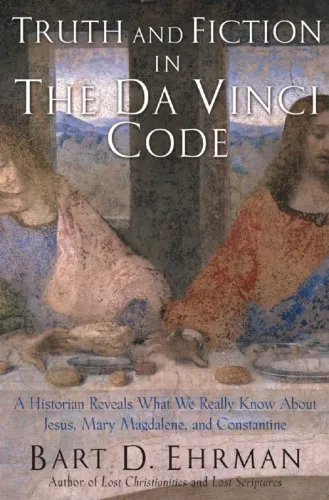
The truth behind the Da Vinci code: a historian explores what we really know about Jesus, Mary Magdalene, and Constantine
Emperor of Rome Constantine I;Brown, Dan;Saint Mary Magdalene;Ehrman, Bart D.;Jesus Christ
2004
View book
Book guide and evaluation
Elaine Pagels
0 reviews
Published
pages
views
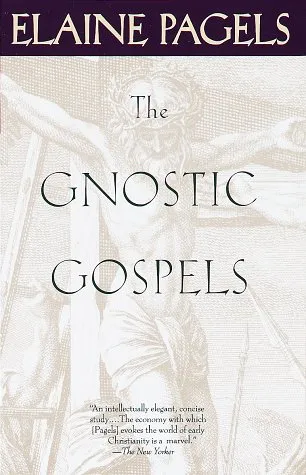
Introduction to 'The Gnostic Gospels' In 'The Gnostic Gospels,' Elaine Pagels unravels the complexities of early Christianity through the lens of the Gnostic texts discovered in Nag Hammadi, Egypt, in 1945. These ancient texts reveal a form of Christianity that was eventually
Before you read
In 'The Gnostic Gospels,' Elaine Pagels unravels the complexities of early Christianity through the lens of the Gnostic texts discovered in Nag Hammadi, Egypt, in 1945. These ancient texts reveal a form of Christianity that was eventually deemed heretical by emerging orthodox Christian traditions.
The Gnostic Gospels sheds light on the diversity of thought and belief in the early Christian era. These scriptures, which include gospels attributed to figures like Thomas, Mary Magdalene, and Judas, present a stark contrast to the canonical gospels. Pagels explores how the Gnostic views on divinity, salvation, and the role of church authority differed vastly from what became mainstream Christianity.
The central theme of 'The Gnostic Gospels' is the battle for legitimacy and authority within the early Christian community. The book delves into how the early church fathers, like Irenaeus and Tertullian, sought to consolidate Christian teaching and exclude Gnostic interpretations. Pagels explores the broader implications of these theological battles, suggesting that the suppression of Gnostic beliefs was not purely theological but also political.
"These discoveries suggest that the early Christianity as we know it represented only a small selection of specific sources, chosen from among dozens of others."
"What we call Christianity, then, and what we identify as Christian tradition, actually represent only a small selection of specific sources, chosen from among dozens of others."
'The Gnostic Gospels' is crucial for understanding not only the history of Christianity but also the dynamics of religious authority and the construction of orthodoxy. Elaine Pagels's work is seminal because it opens up the conversation about what might have been lost when Gnostic texts were suppressed. Her insights encourage readers to consider the multiplicity of early Christian voices, prompting a reevaluation of accepted doctrines and beliefs.
Moreover, the book offers a timeless exploration of how religious narratives are formed, controlled, and contested. In contemporary discussions about faith and the role of religion in society, Pagels's analysis provides a framework for examining how marginalized voices can offer rich alternative perspectives on spiritual experience.
Your question is answered in the context of this title and author. Each answer uses 2 points.
0 reviews, 4.4 average out of 5
Sign in to publish a review.
Ask a focused question and learn from the community.
Related references that continue this learning path.
Emperor of Rome Constantine I;Brown, Dan;Saint Mary Magdalene;Ehrman, Bart D.;Jesus Christ
Annette Yoshiko Reed