Charisma and Religious Authority: Jewish, Christian, and Muslim Preaching, 1200-1500
Katherine L. Jansen,Miri Rubin
2010
View book
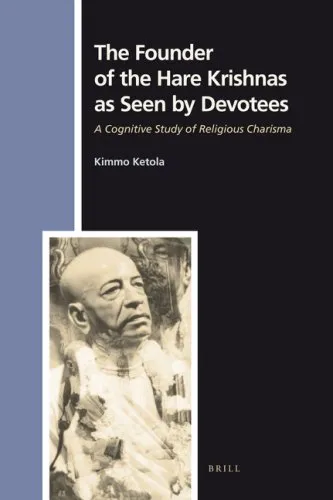
Book guide and evaluation
Kimmo Ketola
0 reviews
Published
pages
views
The book "The Founder of the Hare Krishnas as Seen by Devotees: A Cognitive Study of Religious Charisma" offers a unique exploration into the charismatic authority of the Hare Krishna movement’s founder, A.C. Bhaktivedanta Swami Prabhupada. It delves deep into the cognitive asp
Before you read
The book "The Founder of the Hare Krishnas as Seen by Devotees: A Cognitive Study of Religious Charisma" offers a unique exploration into the charismatic authority of the Hare Krishna movement’s founder, A.C. Bhaktivedanta Swami Prabhupada. It delves deep into the cognitive aspects that have sustained and proliferated the movement across the globe, providing valuable insights into the dynamics of religious charisma and its enduring influence.
This book provides an in-depth examination of A.C. Bhaktivedanta Swami Prabhupada, the founder of the International Society for Krishna Consciousness (ISKCON), popularly known as the Hare Krishnas. The author, Kimmo Ketola, employs a cognitive approach to analyze how Prabhupada's charisma is perceived by his followers and how it continues to impact the movement today. Ketola explores the intersection of cognition, emotion, and culture, offering a nuanced understanding of Prabhupada's influence as a charismatic leader.
The book is structured around key themes that highlight the significance of religious charisma in shaping a global movement. It discusses how Prabhupada's teachings and personal qualities have been idealized and mythologized by devotees, further fueling the growth and stability of the Hare Krishna movement. Ketola's analysis also touches upon the cognitive mechanisms that facilitate the reception and interpretation of Prabhupada's charisma, including storytelling, ritual practice, and community formation.
"Charisma, at its core, is not just a trait of an individual but a dynamic relationship between the leader and the followers, grounded in a mutual cognitive framework."
"Prabhupada's legacy is not merely in his teachings, but in the lived experiences of his devotees who continuously reinterpret and imbibe his charisma."
The book stands out as a significant contribution to the study of religious movements and charismatic leadership. Its cognitive approach offers a fresh perspective on how religious charisma is perceived and sustained. Scholars of religion, students of sociology, and those interested in the dynamics of spiritual movements will find Ketola's analysis both enlightening and thought-provoking.
Furthermore, the book provides crucial insights into the Hare Krishna movement, which has been a major force in the global spread of Hinduism. By examining Prabhupada's charismatic authority through the lens of his devotees, Ketola sheds light on the potential of religious leaders to foster a collective identity and inspire lasting devotion across diverse cultures.
Your question is answered in the context of this title and author. Each answer uses 2 points.
0 reviews, 3.8 average out of 5
Sign in to publish a review.
Ask a focused question and learn from the community.
Related references that continue this learning path.
Katherine L. Jansen,Miri Rubin
Haroro J. Ingram