

Book guide and evaluation
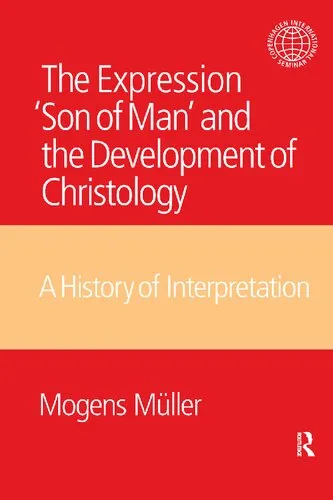
The Expression Son of Man and the Development of Christology: A History of Interpretation (Copenhagen International Seminar)
Mogens Mueller
English
Beginner
Historical
4.4 / 5
0 reviews
2011
Published
529
pages
205
views
The Expression "Son of Man" and the Development of Christology: A History of Interpretation Written by Mogens Mueller, this book is a profound exploration of the term "Son of Man" within biblical literature, tracing its complex historical, theological, and exegetic
Before you read
What will you get from this book?
The Expression "Son of Man" and the Development of Christology: A History of Interpretation
Written by Mogens Mueller, this book is a profound exploration of the term "Son of Man" within biblical literature, tracing its complex historical, theological, and exegetical evolution. As part of the Copenhagen International Seminar, the work offers readers a detailed study into one of the most debated christological expressions and its implications for understanding the identity and mission of Jesus Christ. Through meticulous historical and textual analysis, the book embarks on a journey across ancient Jewish literature, the New Testament, and the subsequent history of interpretation, addressing both the origins of the phrase and its theological significance.
Detailed Summary of the Book
In "The Expression Son of Man and the Development of Christology," author Mogens Mueller seeks to unravel the enigmatic meaning behind the phrase "Son of Man" by drawing upon the interpretative traditions that have emerged across centuries. The book begins by assessing the linguistic and conceptual roots of the expression as found in ancient Jewish texts, such as passages from the Hebrew Bible, the Book of Enoch, and the Dead Sea Scrolls. Mueller challenges earlier scholarship by proposing alternative readings of these sources and exploring their relationship to the New Testament's portrayal of Jesus.
Moving into the New Testament, Mueller investigates how Jesus uses the term "Son of Man" within the Gospels, unpacking its various interpretations in different contexts. Through detailed exegesis, the book highlights how the phrase shifts in meaning—from referring to earthly suffering and human mortality to symbolizing divine authority, judgment, and eschatological fulfillment. This variability complicates the traditional understanding of the concept but enriches its theological depth.
Finally, Mueller charts the history of interpretation following the New Testament period. From patristic writings to medieval theology and Reformation-era debates, the book illustrates how the phrase "Son of Man" has been pivotal in shaping christological doctrines. By examining its reception history, it becomes apparent that the evolution of Christology cannot be fully grasped without considering this foundational expression.
Key Takeaways
- The expression "Son of Man" is deeply rooted in Jewish apocalyptic traditions, heavily influenced by texts like Daniel 7:13.
- Jesus' self-identification as the "Son of Man" signifies both his humanity and his role in divine judgment and redemption.
- The meaning of "Son of Man" evolved across different historical contexts, reflecting shifting theological priorities within the Church.
- Modern debates over christology must reckon with the multilayered interpretations of the title "Son of Man" throughout history.
Famous Quotes from the Book
"The expression 'Son of Man' is not a static title, but a dynamic metaphor—a mirror in which each reader and community finds a reflection of their theological aspirations."
"The history of christology is, in many ways, the history of striving to understand what it means for humanity to encounter the divine through the lens of the Son of Man."
"To comprehend the meaning of the 'Son of Man' is to wrestle with the very nature of revelation and its unfolding through history."
Why This Book Matters
This book is not just a work of rigorous scholarship—it is a vital contribution to the field of biblical studies and an essential resource for anyone seeking to deepen their understanding of Christian theology. The term "Son of Man" serves as a cornerstone for interpreting who Jesus is and what his mission signifies, making this study critical for theologians, historians, and biblical scholars alike. By addressing both the historical origins and the theological implications of this term, Mueller's text bridges the gap between academia and personal faith, inviting readers to reconsider how they frame the relationship between Jesus' humanity and divinity.
In an era where the historical Jesus and the theological Christ are often studied in isolation, "The Expression Son of Man and the Development of Christology" offers an integrative approach that emphasizes the richness of the biblical tradition. It challenges readers to go beyond simplistic interpretations, uncovering the complex dynamics that have shaped both ancient and modern understandings of Jesus.
Ask this book
Your question is answered in the context of this title and author. Each answer uses 2 points.
Sign in to ask the book assistant.
Reader reviews
0 reviews, 4.4 average out of 5
No reviews yet
If you have read this book, help the next reader with your experience.
Write a review
Sign in to publish a review.
Reader questions and answers
Ask a focused question and learn from the community.
Sign in to ask or answer a question.
No questions yet
Be the first to ask a clear, useful question.
What to read next
Related references that continue this learning path.



Modern Computer Vision with PyTorch: A Practical Roadmap From Deep Learning Fundamentals to Advanced Applications and Generative AI, 2nd Edition
V Kishore Ayyadevara,Yeshwanth Reddy
2023
View book